Corsair
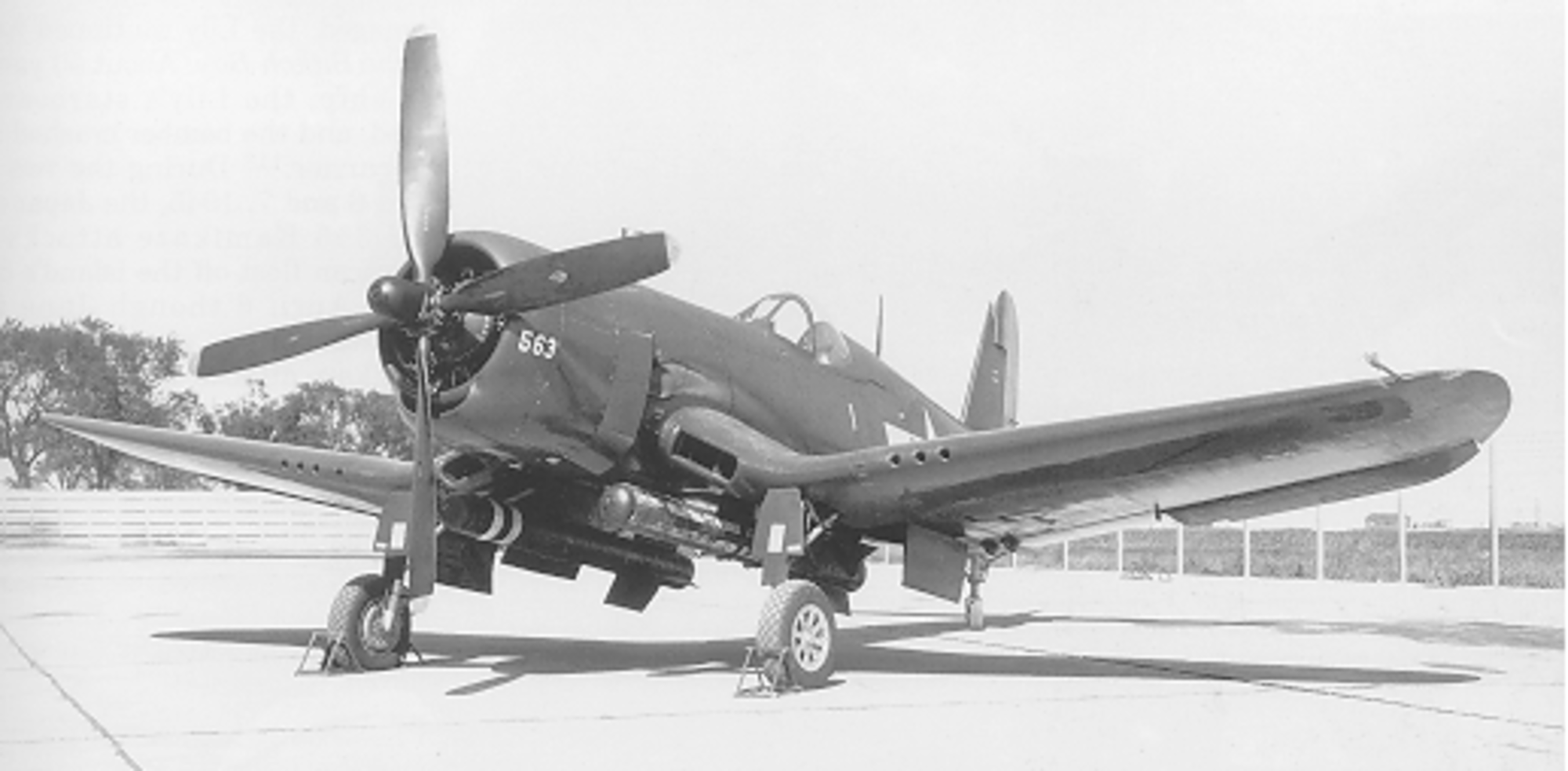
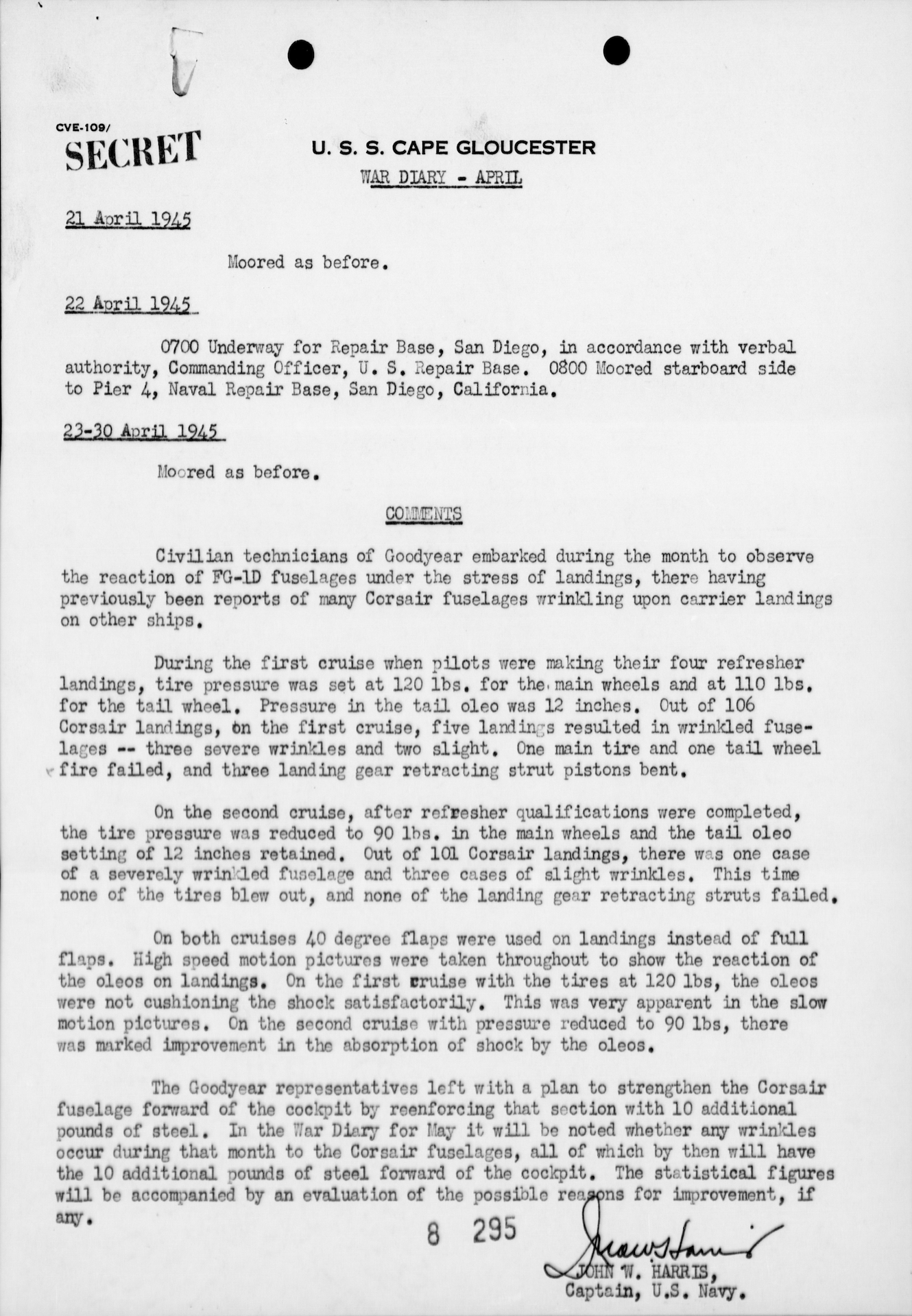
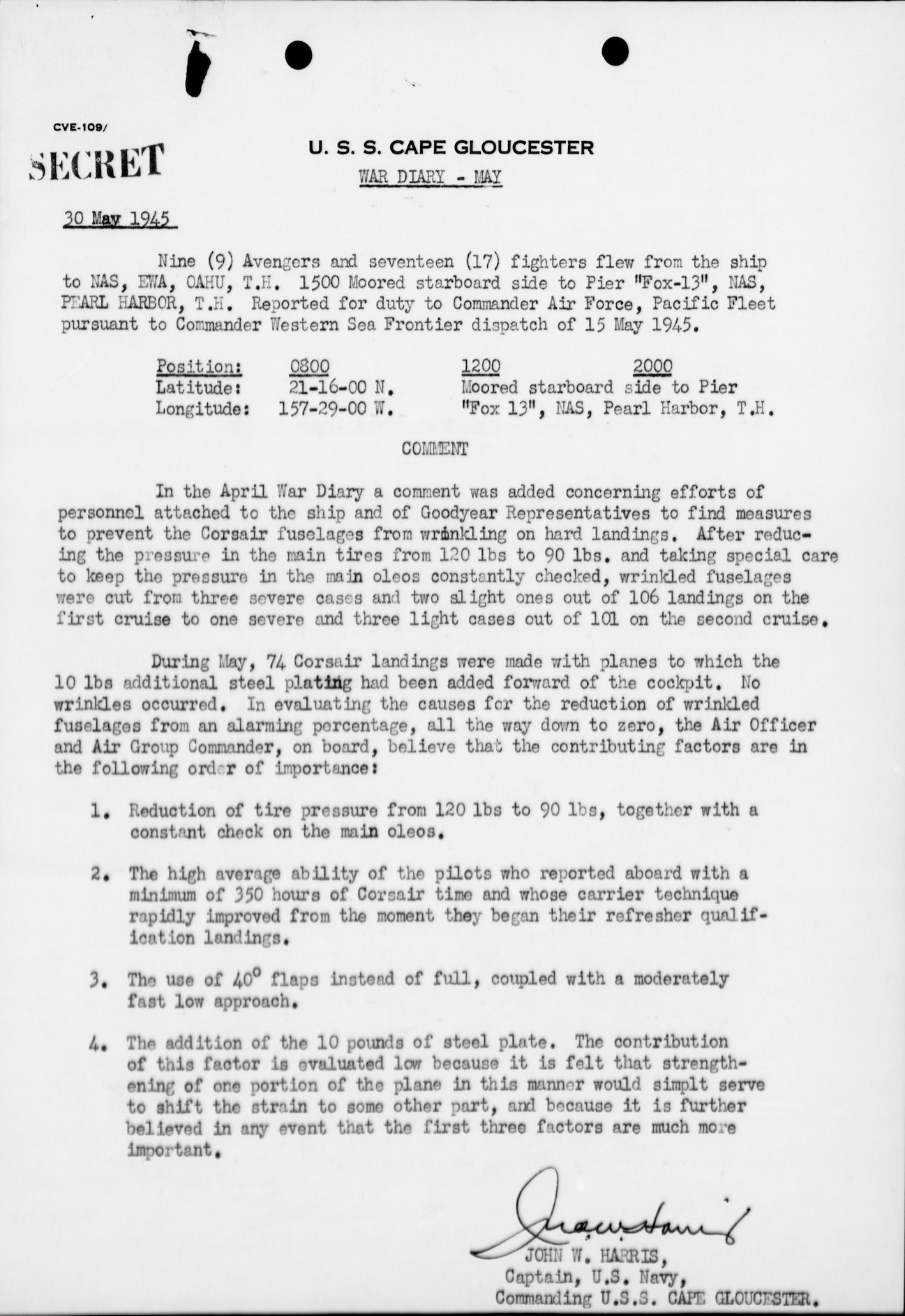
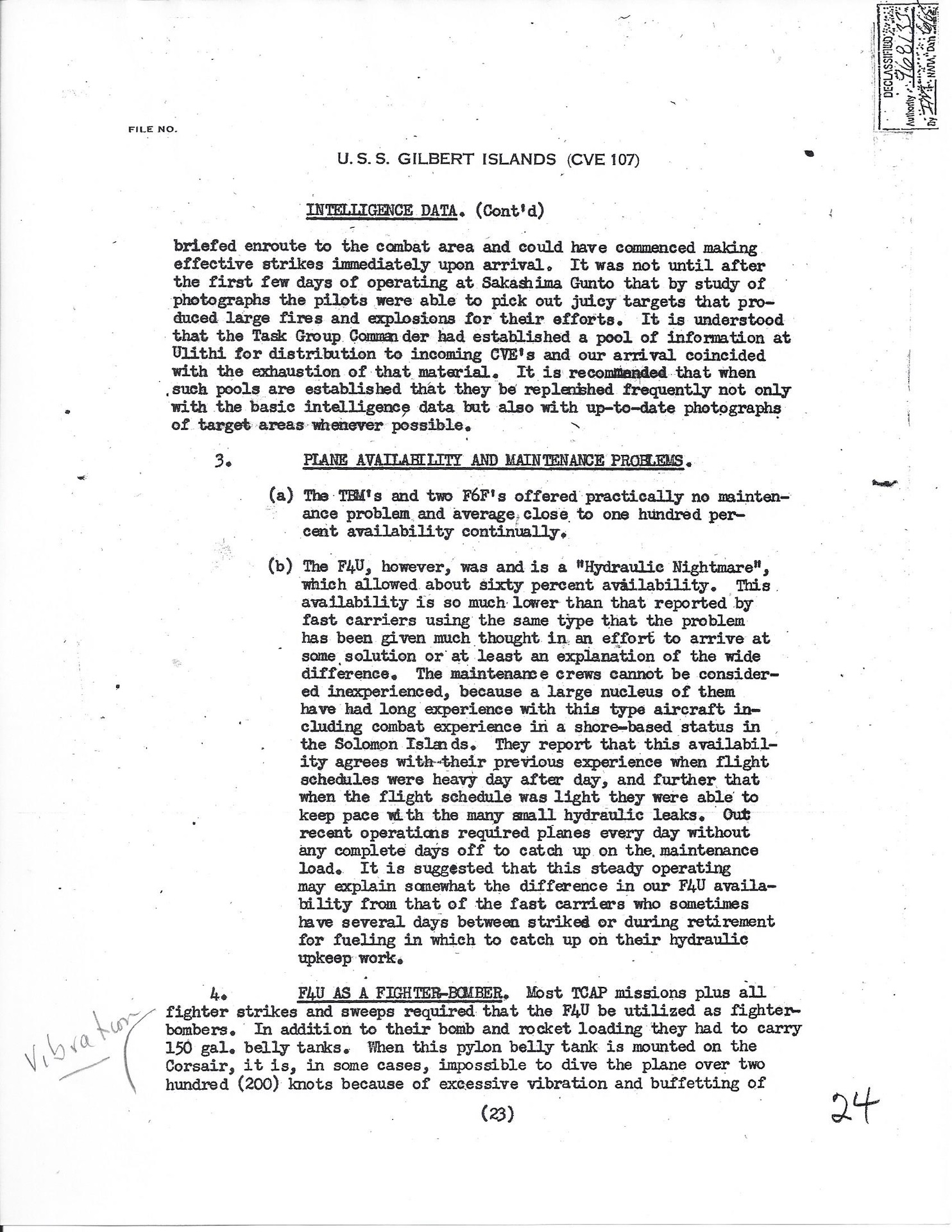
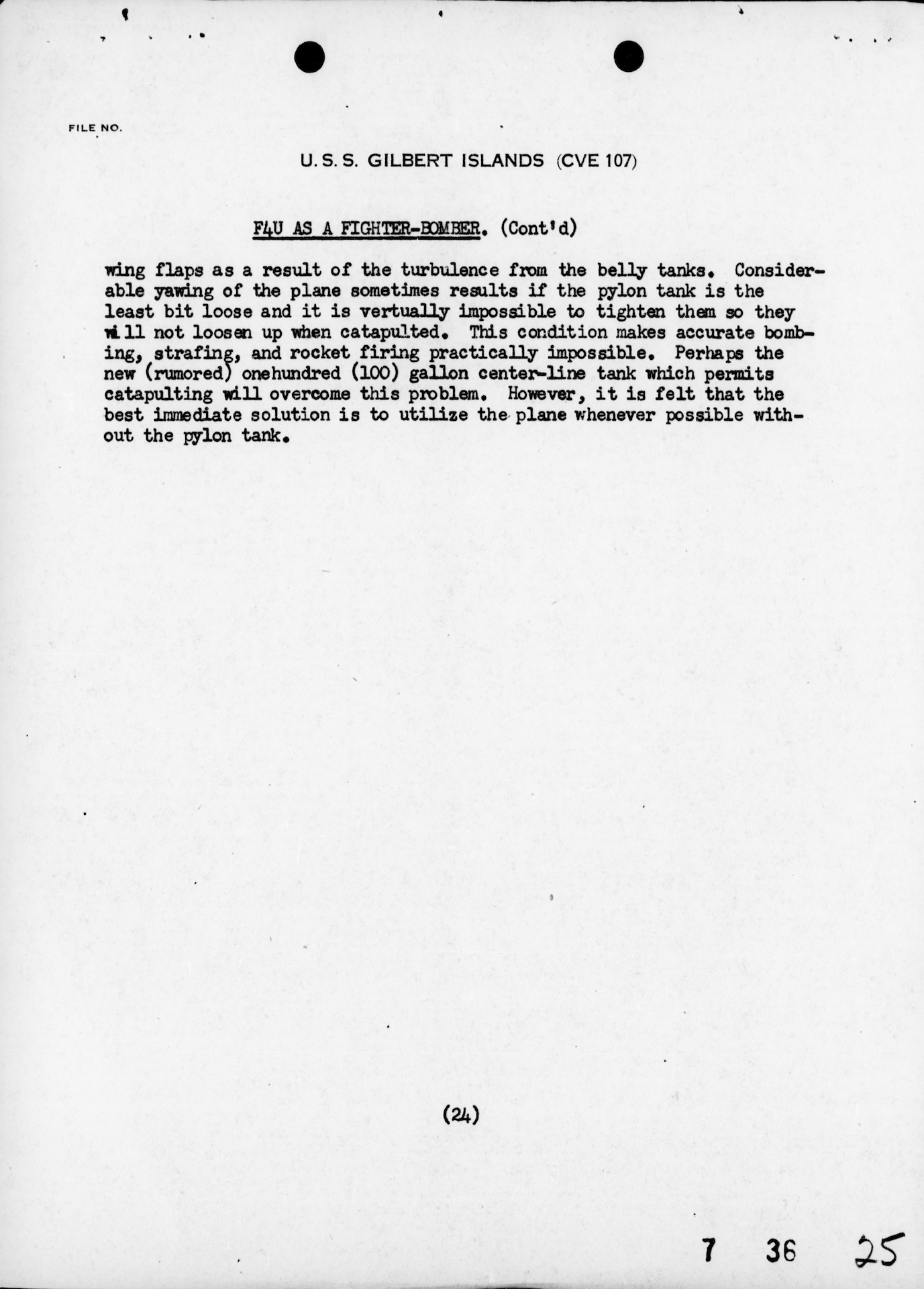
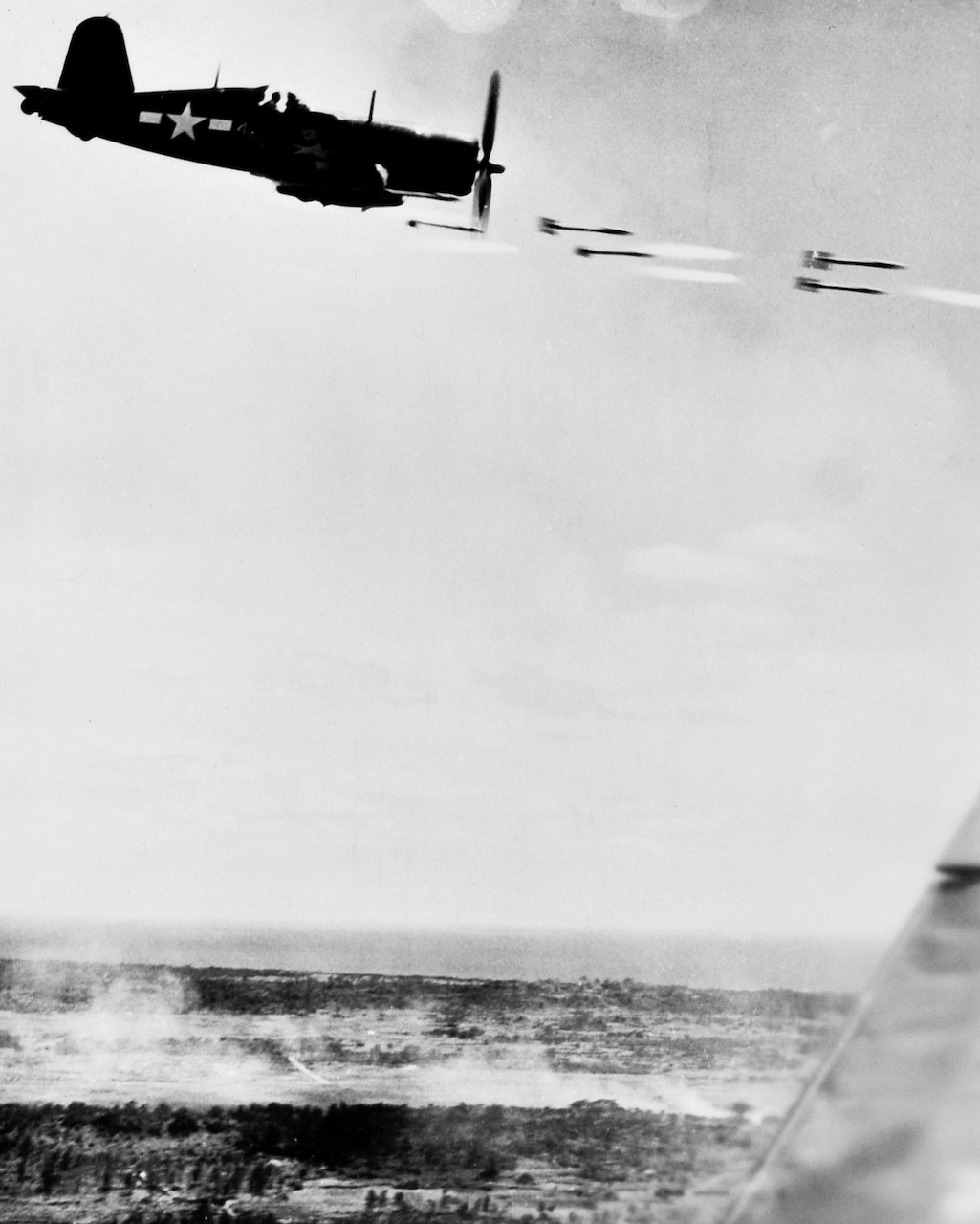
The F4U was developed in 1938 for the US Marine Corps. The first prototype XF4U-1 flew on May 29, 1940. The airplane went into production in 1942. Iterations of the design continued throughout the following years with ten variants designed and produced. VMF-512 were provided with 13 FG-1Ds and 5 F4U-1Ds. These were essentially the same design but manufactured by different companies (FG-1D being from Goodyear and F4U-1D being from Vought). The FG-1D/F4U-1D variant was designed as a fighter/bomber. As so, it featured a modified canopy, reinforced hardpoints for rocket and drop-tank carriage, and was the first variant officially cleared for routine carrier operations. In all, some 2,303 FG-1Ds and 1,675 F4U-1Ds were produced.
The plane had impressive performance specifications for the time:
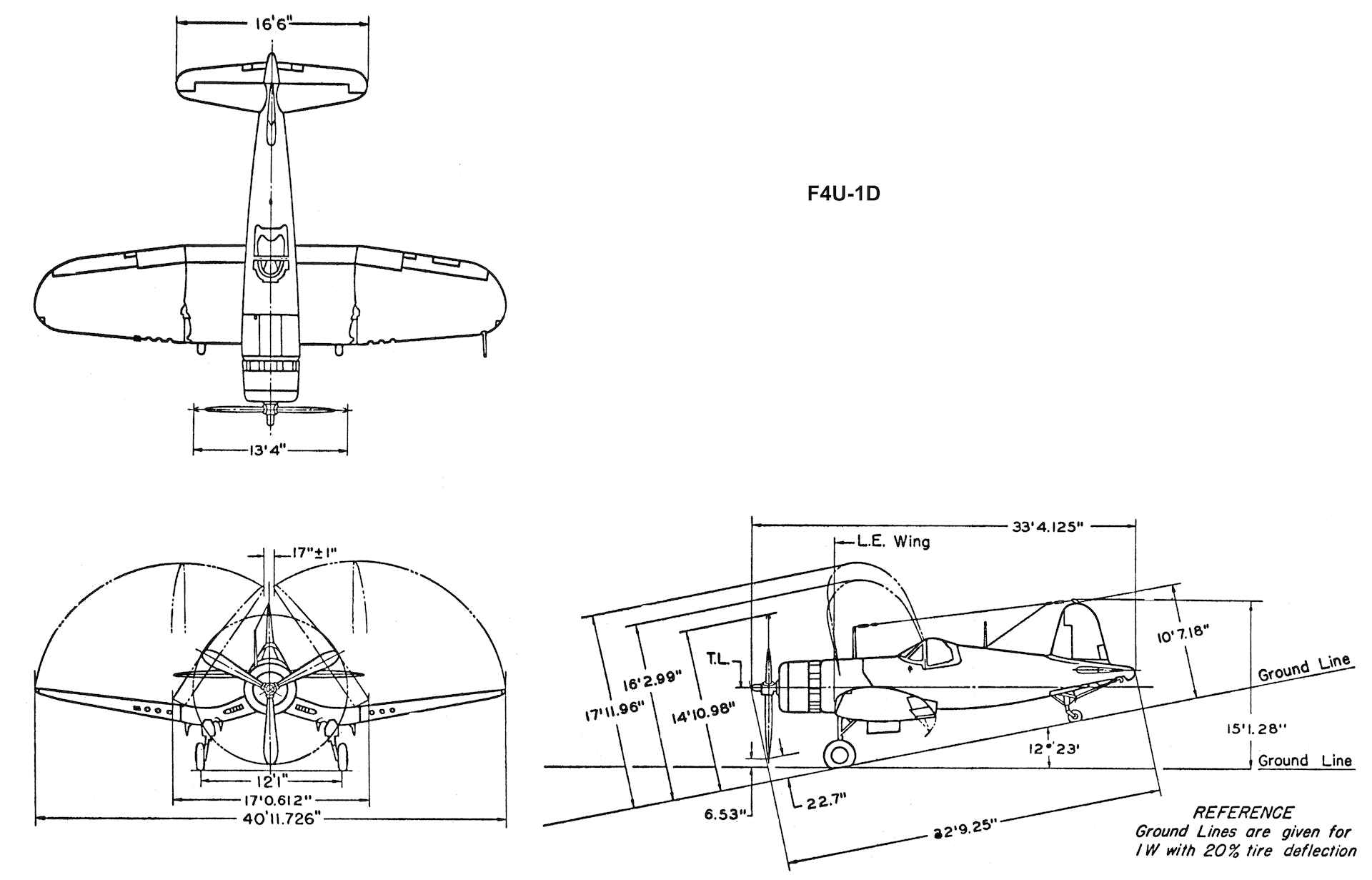
Length: 33 ft. 8 in.
Wingspan: 41 ft.
Empty Weight: 8,694 lbs
Loaded Weight: 11,093 lbs
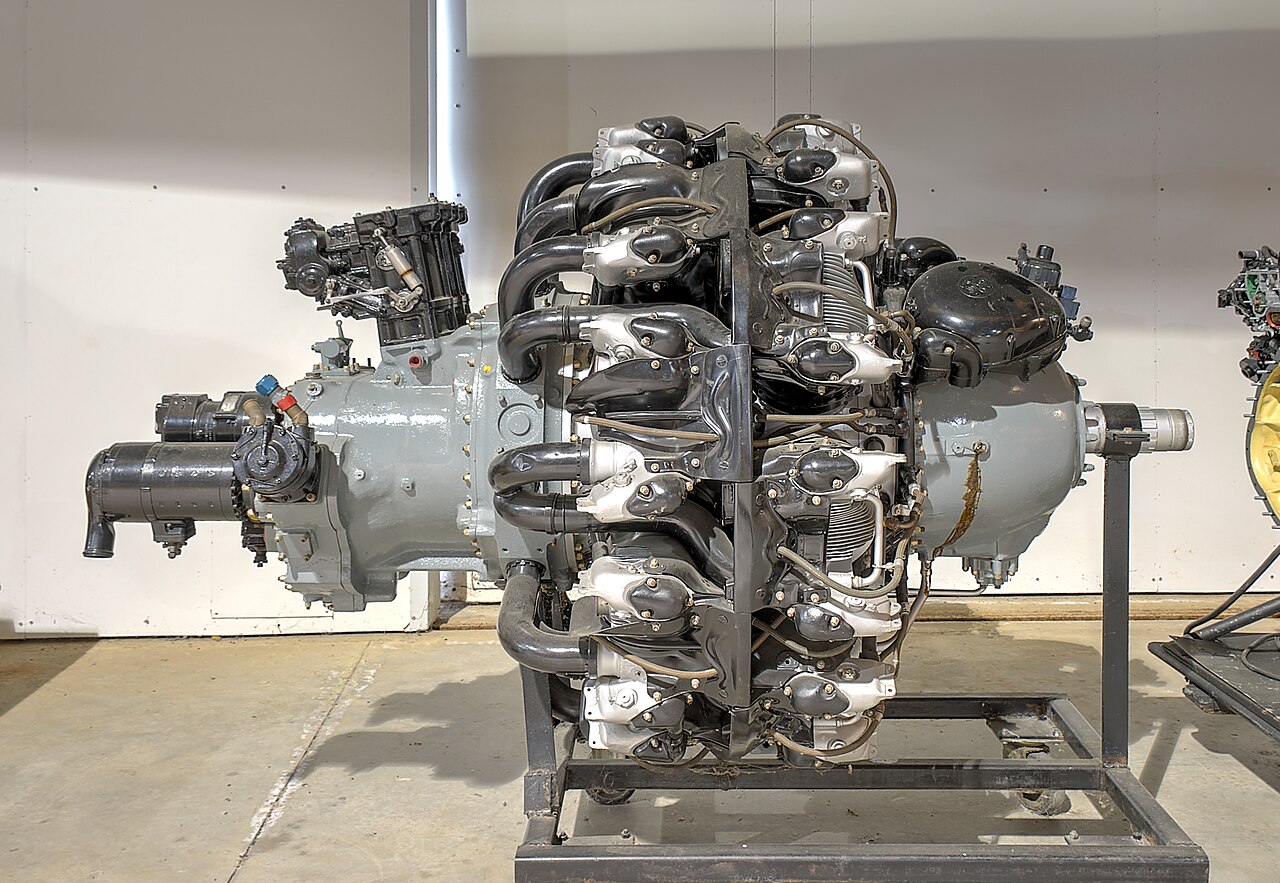
Engine: 1x Pratt & Whitney R-2800-79 “Double Wasp” supercharged, air-cooled, radial piston engine
Engine Power: 2,100 hp
Cruising Speed: 227 mph
Max Speed: 446 mph
Range: 1,015 miles
Ceiling: 41,500 ft.
Rate of Climb: 3,780 fpm initial
Armament Capabilities:
6x 0.50 caliber machine guns – 3x in each wing
4x 5-inch HVARS (High Velocity Aircraft Rocket) or 2x 1,000 lbs bombs
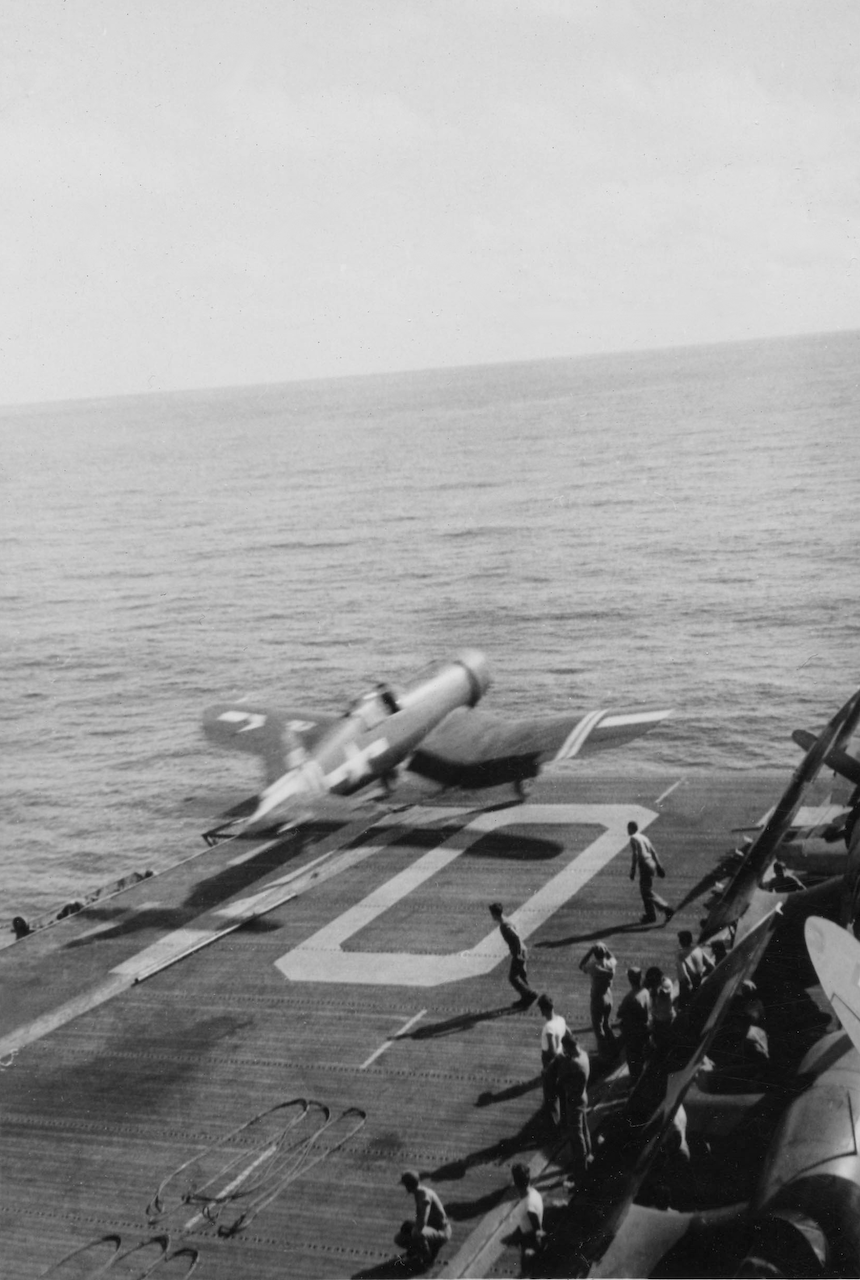
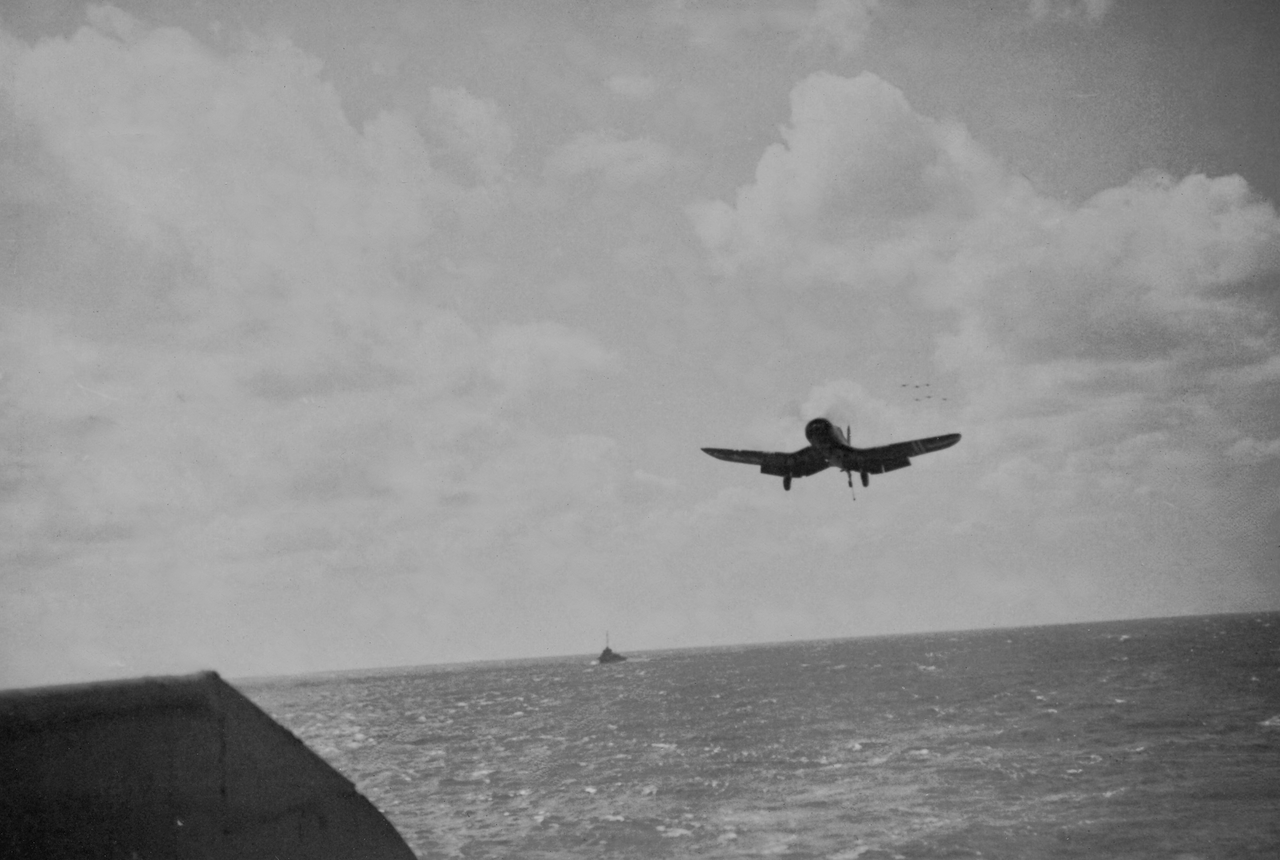
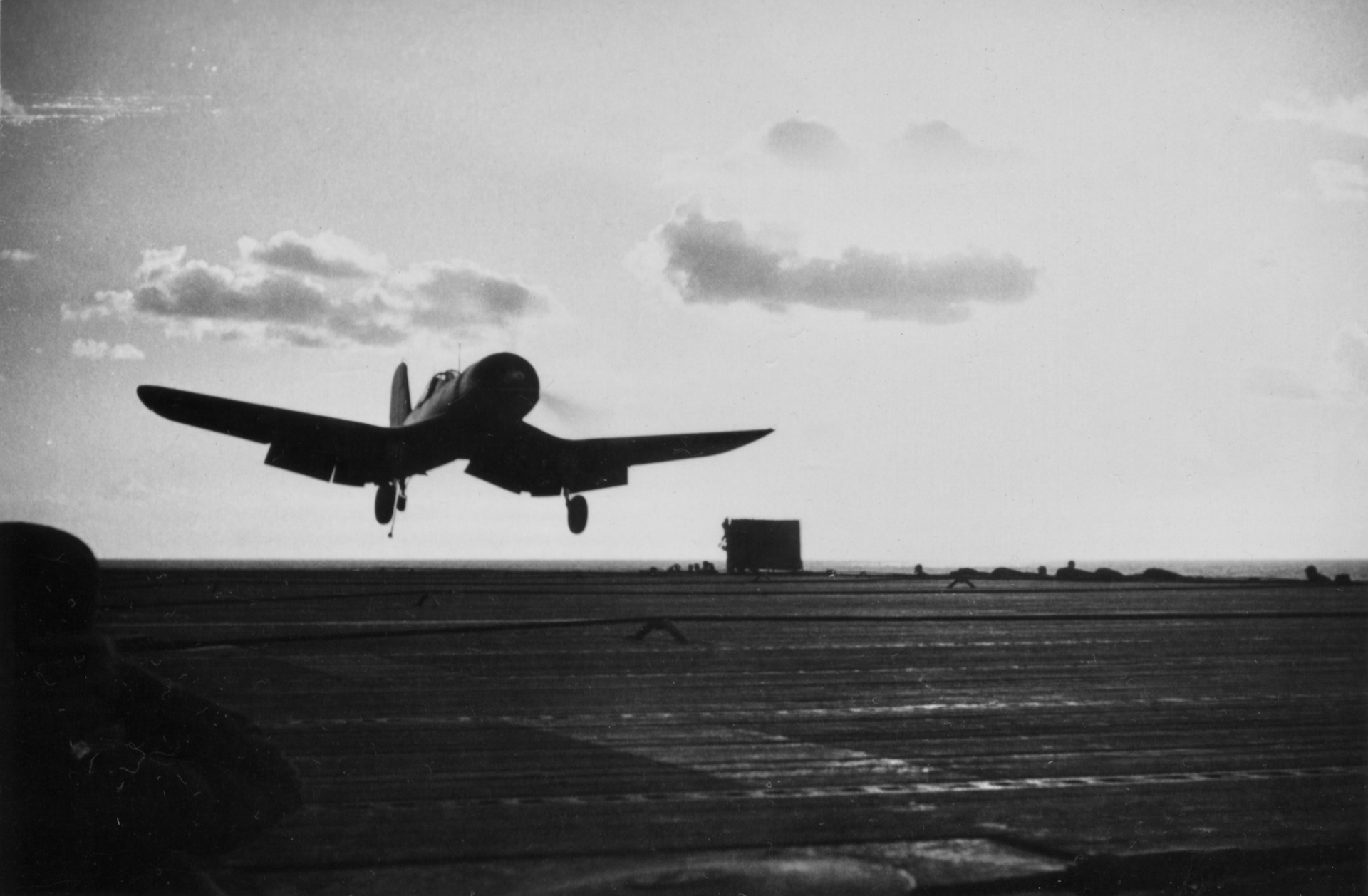
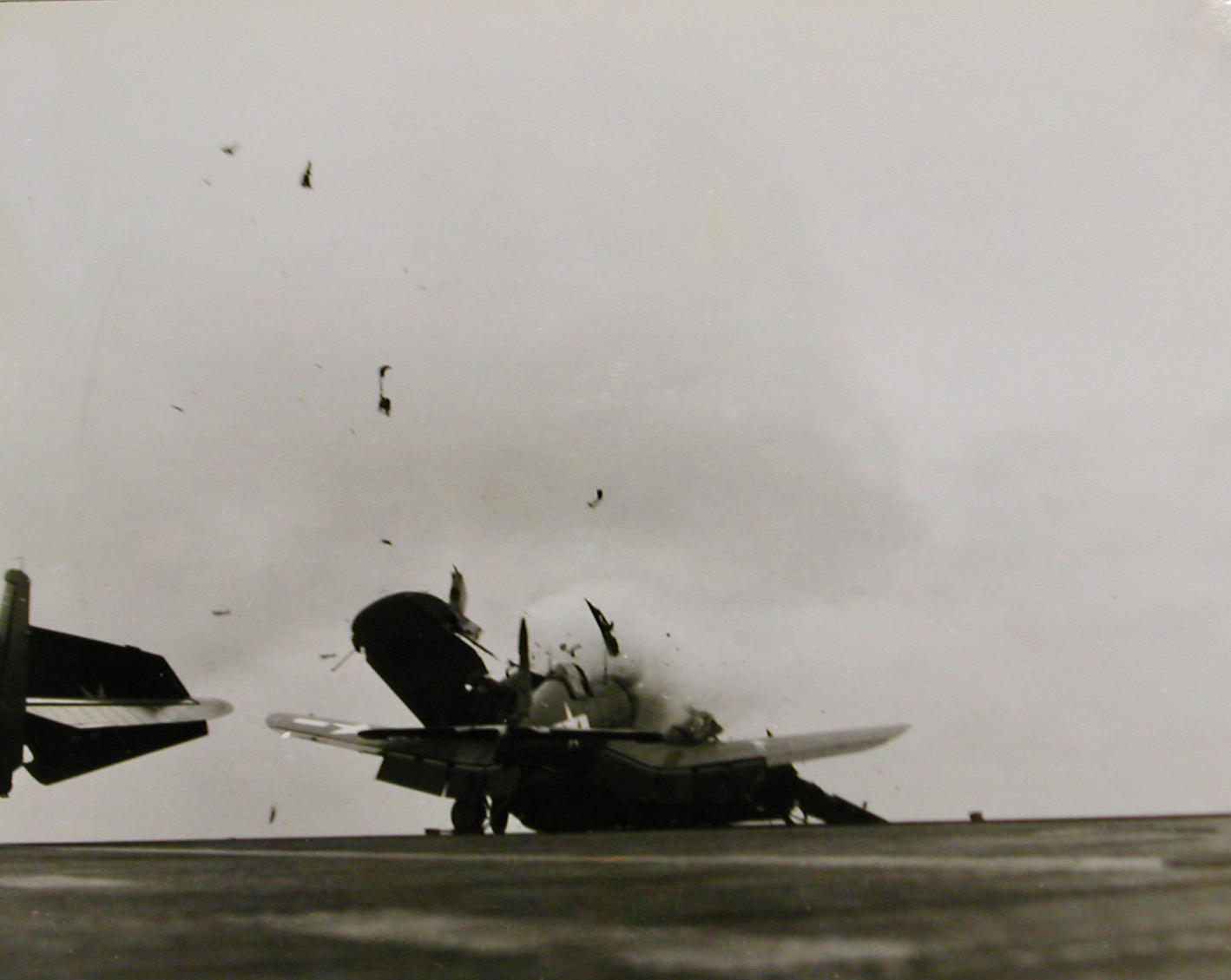
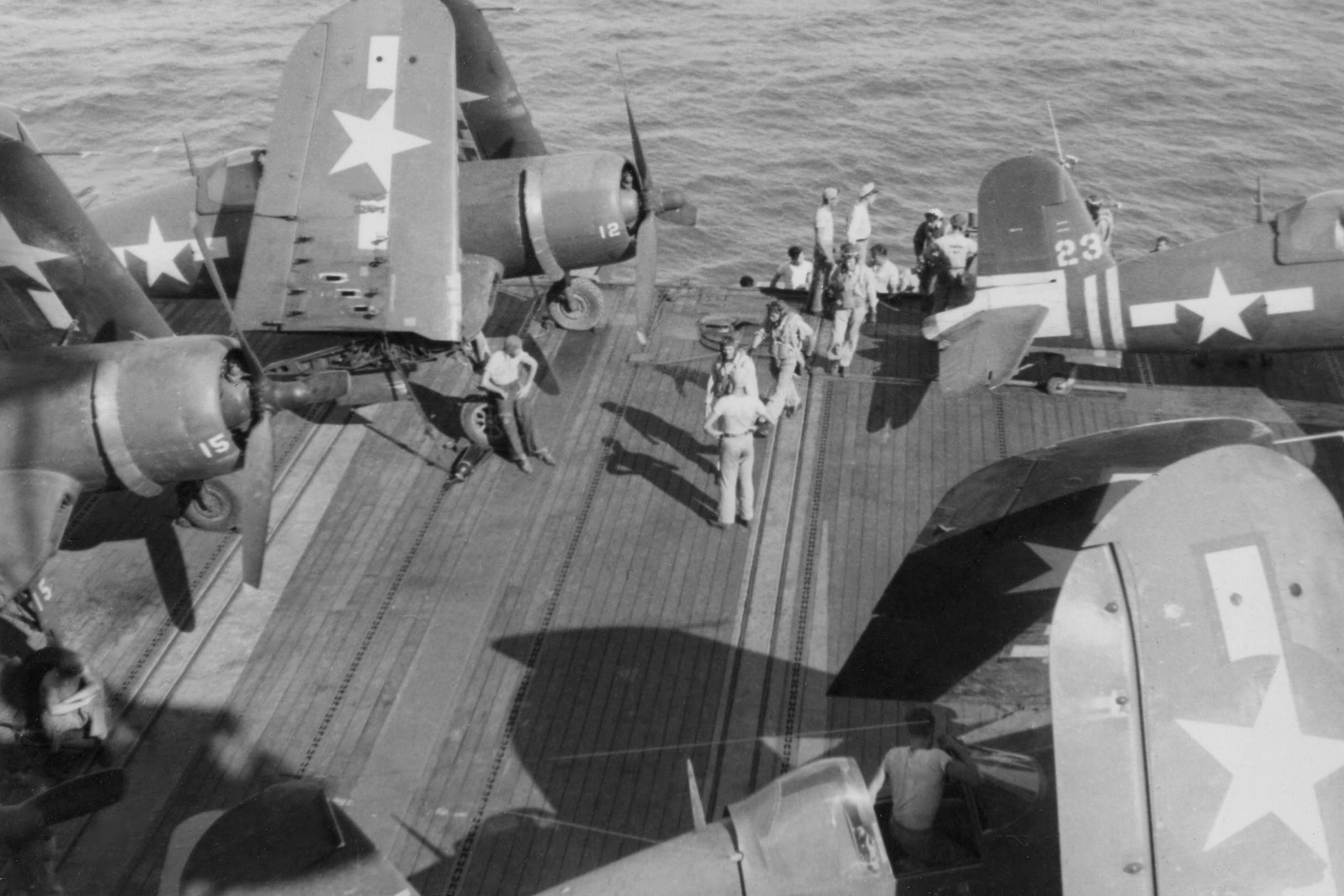
Although the average number of carrier landings required for pilot qualification was eight, a Corsair pilot had to make a minimum of 20-25 before he could attain a realistic proficiency level. Takeoffs from the carrier while at sea were the source of another major problem to the Corsair pilots. At best, the top speed of the CVE would provide only 19-1/2 knots of headwind on a calm day. Under optimum takeoff conditions, the Corsair required a minimum headwind of from 20 to 26 knots; a 30-knot headwind was ideal. Unless optimum wind and speed conditions existed, a Corsair, heavily laden with bombs, rockets, armament, and fuel could not attain flying speed and would drop off the end of the flight deck into the sea ahead of the carrier. For this reason, Corsair operating on the CVEs were almost always catapulted. To quote one pilot “The H4 gave you a 4G slam and was the greatest feeling a pilot ever had, especially on a black night. You knew you were going all the way the minute you felt it.”
Click here for a detailed photo image gallery of the aircraft type.
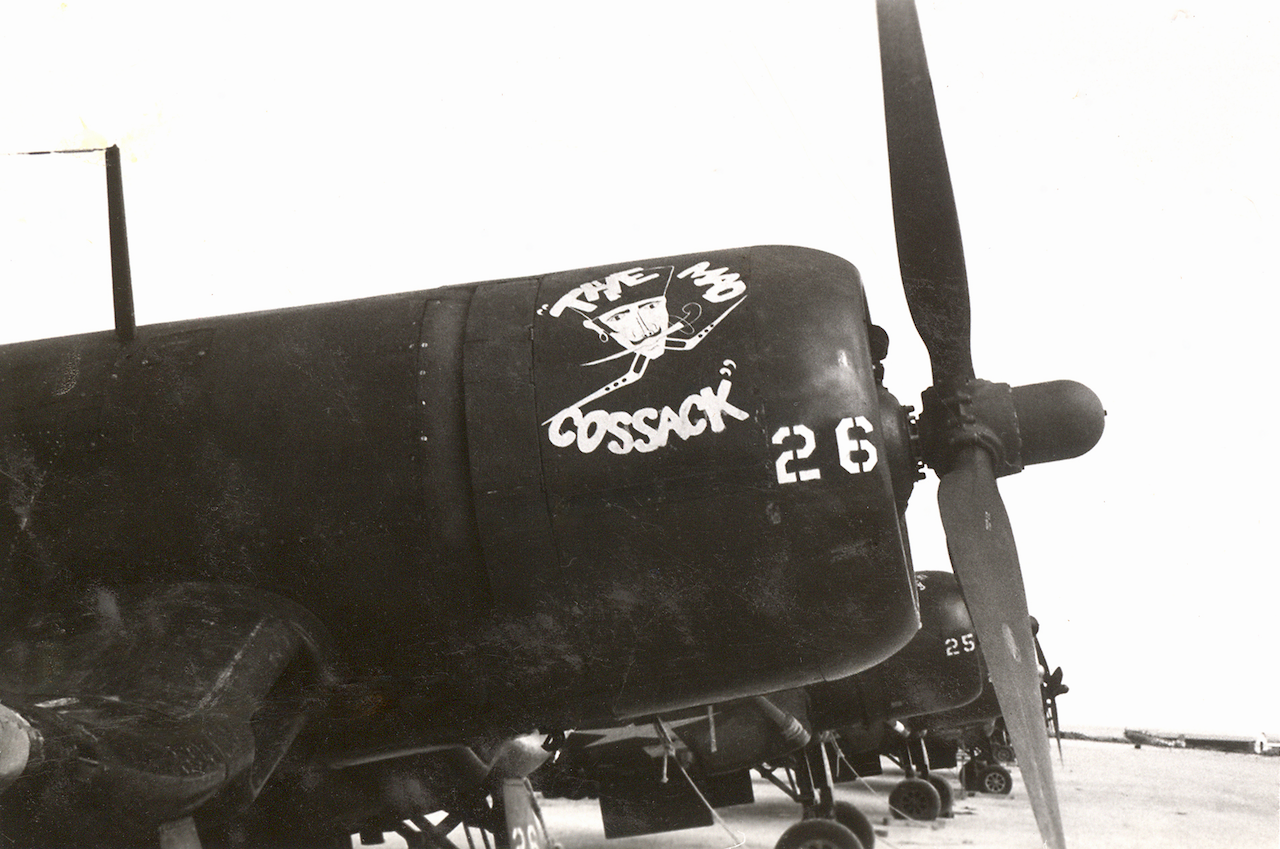
Here is a Gallery of the nose art of planes in VMF-512.