 VMF-512 was one of two USMC squadrons assigned to the USS Gilbert Islands, CVE-107. However, before sailing off to the Pacific Theater, the squadron had another assignment and at one point was on its way to Europe! The summary I’ve written here leans on several sources: Robert Sherrod’s epic History of Marine Corps Aviation in World War II, Corsairs and Flattops (Marine Carrier Air Warfare, 1944-1945) by John Condon, United States Marine Corps Air Stations of World War II by M. L. Shettle, Jr., Action Reports of the USS Gilbert Islands (US National Archives via Marilynn Wright), notes of Lt. Robert Cox (via Carol Cox Liebmann), and private communications from several VMF-512 veterans.
VMF-512 was initially formed in February 1944 as part of Marine Aircraft Group 51 (MAG-51). The first Commanding Officer was Major Edward Finn, but on March 17, 1944 Major Blaine Baesler took command, a position he held until the end of the war. MAG-51 was formed January 1, 1944 and shortly thereafter the four fighter squadrons VMF-511, 512, 513 and 514 were commissioned. After a few months MAG-51 was augmented by VMO-351, another fighter squadron recently converted from observation duties (it retained the VMO designation for a while – the MO stands for Marine Observation). These five squadrons were part of a larger scheme to attack the German V-1 sites in Europe under Operation Crossbow. The USMC contribution was called ‘Project Danny’.
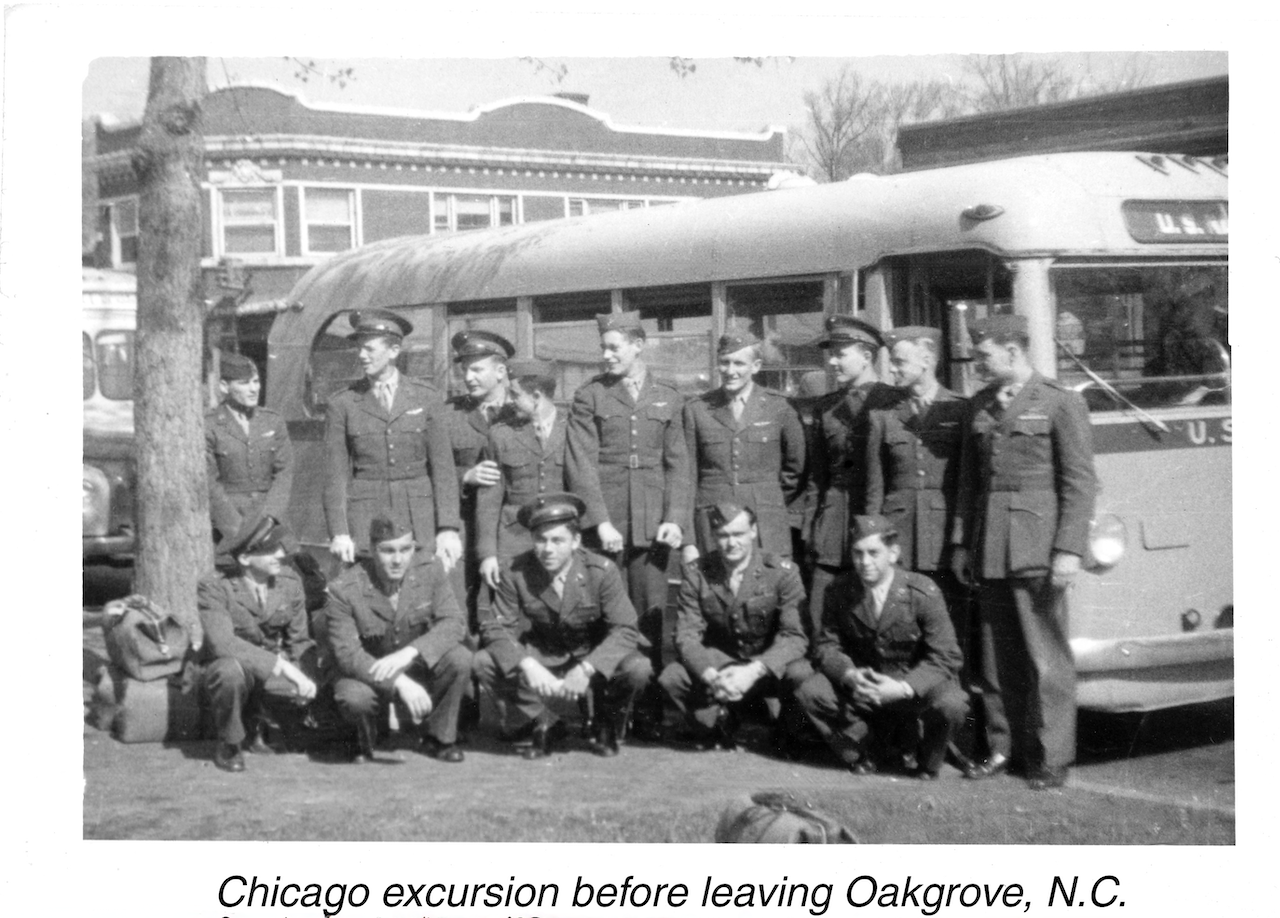
VMF-512 was equipped with Corsairs and first based at the Marine Corps Auxiliary Air Facility (MCAAF) in Oak Grove, NC, a newer outlying field of the larger air station at Cherry Point, NC. The base was also known as New Bern, but the pilots referred to it as Pollocksville so that’s what it will be called here. The fourty or so pilots were a mix of newly commissioned 2nd Lieutenants and veterans who had seen action in various campaigns in the Pacific. For example, Captain Tom Liggett was a dive-bomber veteran of the campaign on Guadalcanal. 1st Lieutenant Harry Williams was also in the initial cadre. His log book entries show his first flight with VMF-512 was February 22, 1944. Harry flew the F4U-1 and FG-1A, two designations for the same plane. The former was built by Vought and the latter by Goodyear.
VMF-512 was one of two USMC squadrons assigned to the USS Gilbert Islands, CVE-107. However, before sailing off to the Pacific Theater, the squadron had another assignment and at one point was on its way to Europe! The summary I’ve written here leans on several sources: Robert Sherrod’s epic History of Marine Corps Aviation in World War II, Corsairs and Flattops (Marine Carrier Air Warfare, 1944-1945) by John Condon, United States Marine Corps Air Stations of World War II by M. L. Shettle, Jr., Action Reports of the USS Gilbert Islands (US National Archives via Marilynn Wright), notes of Lt. Robert Cox (via Carol Cox Liebmann), and private communications from several VMF-512 veterans.
VMF-512 was initially formed in February 1944 as part of Marine Aircraft Group 51 (MAG-51). The first Commanding Officer was Major Edward Finn, but on March 17, 1944 Major Blaine Baesler took command, a position he held until the end of the war. MAG-51 was formed January 1, 1944 and shortly thereafter the four fighter squadrons VMF-511, 512, 513 and 514 were commissioned. After a few months MAG-51 was augmented by VMO-351, another fighter squadron recently converted from observation duties (it retained the VMO designation for a while – the MO stands for Marine Observation). These five squadrons were part of a larger scheme to attack the German V-1 sites in Europe under Operation Crossbow. The USMC contribution was called ‘Project Danny’.
VMF-512 was equipped with Corsairs and first based at the Marine Corps Auxiliary Air Facility (MCAAF) in Oak Grove, NC, a newer outlying field of the larger air station at Cherry Point, NC. The base was also known as New Bern, but the pilots referred to it as Pollocksville so that’s what it will be called here. The fourty or so pilots were a mix of newly commissioned 2nd Lieutenants and veterans who had seen action in various campaigns in the Pacific. For example, Captain Tom Liggett was a dive-bomber veteran of the campaign on Guadalcanal. 1st Lieutenant Harry Williams was also in the initial cadre. His log book entries show his first flight with VMF-512 was February 22, 1944. Harry flew the F4U-1 and FG-1A, two designations for the same plane. The former was built by Vought and the latter by Goodyear.
In Europe the Germans had developed the V-1 ‘buzz bomb’. The V-2 rockets were not far behind. British aerial reconnaissance found the Peenemunde facility (the site of the Nazi Army Research Center) in 1943. In early 1944, V-1 launch sites were being constructed along the continental coast of the English Channel, and a V-1 offensive against England, a ‘second blitz’, was expected soon. The High Command, especially the British contingent, did not want to see more attacks on London and placed a high priority on the destruction of the V-1 launch sites. Thus Operation Crossbow was kicked off in late 1943. The launch sites became targets for Allied bombing raids even though no V-1s were launched against England until the middle of June ’44, a few days after the Normandy invasion.
The V-1 sites were small targets and it was not clear if high altitude bombing was an effective method to destroy them. Losses to bombers and crews were about 1% and some thought this was too high a price for little confirmed destruction. Effective attacks against the launch pads and concrete block houses required a hit in just the right place with a sufficient punch to knock them out. Smaller planes such as the RAF Mosquito, or the B-25 and B-26 of the USAAF, were judged by some to be more suitable, but they too could be used elsewhere. The Marines of MAG-51 were assigned to this mission under the code name ‘Project Danny’. According to Sherrod, VMF-514 training began for Project Danny on April 1, 1944. I assume 512 started about then too. It is not clear to me if MAG-51 was expressly formed for this mission or if it took it on shortly after its formation.
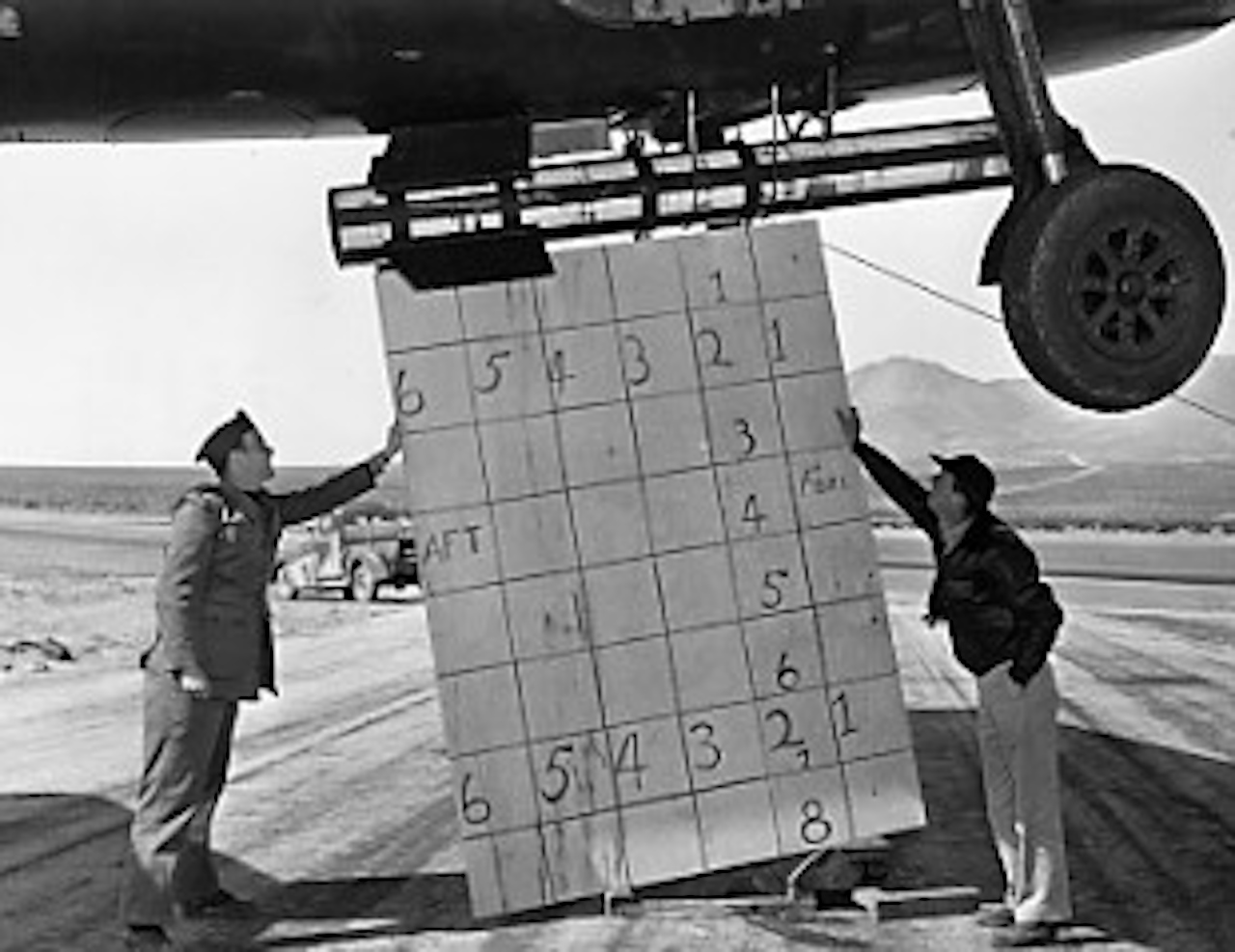
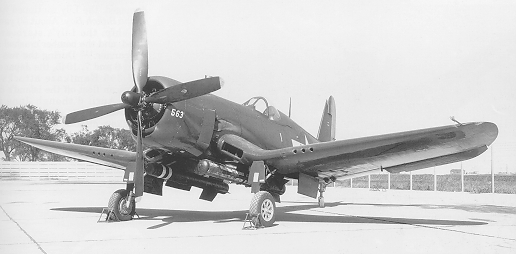
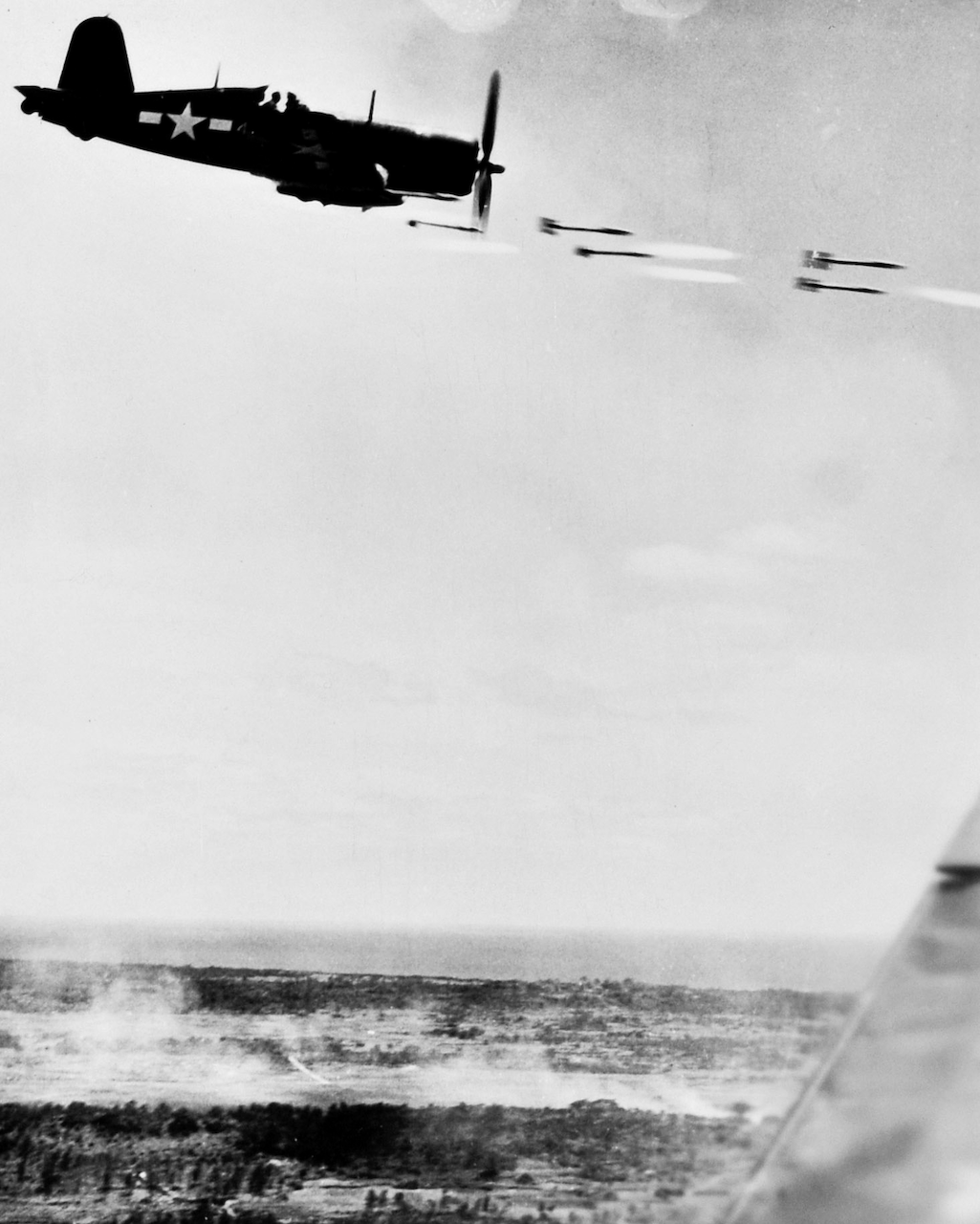
Throughout Project Danny VMF-512 was based at Pollocksville with short excursions to North Island (San Diego, CA), presumably for carrier qualification, and Inyokern (now China Lake Naval Weapons Center, CA) for rocket training. The Marines’ weapon of choice for attacking the V-1 sites was the new ‘Tiny Tim’ aircraft rocket. It was 11 feet long, 11.75″ in diameter with a 500 lb warhead. This was an entirely new development and rockets were not ready for the Marines until the summer of 1944. Harry Williams tells me they went to Inyokern for the highly secret training and tried F6Fs too. At first the rockets were swung down on a wish-bone shaped yoke which proved unsatisfactory. The ultimate solution was to simply drop the rocket and ignite the motor via an electrical cable. This lanyard was adopted allowing the Tiny Tim to clear the propeller arc before firing and still retain reasonable accuracy. Original color films of this training can be found on YouTube at “WW2 Marine Carrier Aviation” or https://www.youtube.com/@VMTB143Mike.
In Europe the Germans had developed the V-1 ‘buzz bomb’. The V-2 rockets were not far behind. British aerial reconnaissance found the Peenemunde facility (the site of the Nazi Army Research Center) in 1943. In early 1944, V-1 launch sites were being constructed along the continental coast of the English Channel, and a V-1 offensive against England, a ‘second blitz’, was expected soon. The High Command, especially the British contingent, did not want to see more attacks on London and placed a high priority on the destruction of the V-1 launch sites. Thus Operation Crossbow was kicked off in late 1943. The launch sites became targets for Allied bombing raids even though no V-1s were launched against England until the middle of June ’44, a few days after the Normandy invasion.
The V-1 sites were small targets and it was not clear if high altitude bombing was an effective method to destroy them. Losses to bombers and crews were about 1% and some thought this was too high a price for little confirmed destruction. Effective attacks against the launch pads and concrete block houses required a hit in just the right place with a sufficient punch to knock them out. Smaller planes such as the RAF Mosquito, or the B-25 and B-26 of the USAAF, were judged by some to be more suitable, but they too could be used elsewhere. The Marines of MAG-51 were assigned to this mission under the code name ‘Project Danny’. According to Sherrod, VMF-514 training began for Project Danny on April 1, 1944. I assume 512 started about then too. It is not clear to me if MAG-51 was expressly formed for this mission or if it took it on shortly after its formation.
Throughout Project Danny VMF-512 was based at Pollocksville with short excursions to North Island (San Diego, CA), presumably for carrier qualification, and Inyokern (now China Lake Naval Weapons Center, CA) for rocket training. The Marines’ weapon of choice for attacking the V-1 sites was the new ‘Tiny Tim’ aircraft rocket. It was 11 feet long, 11.75″ in diameter with a 500 lb warhead. This was an entirely new development and rockets were not ready for the Marines until the summer of 1944. Harry Williams tells me they went to Inyokern for the highly secret training and tried F6Fs too. At first the rockets were swung down on a wish-bone shaped yoke which proved unsatisfactory. The ultimate solution was to simply drop the rocket and ignite the motor via an electrical cable. This lanyard was adopted allowing the Tiny Tim to clear the propeller arc before firing and still retain reasonable accuracy. Original color films of this training can be found on YouTube at “WW2 Marine Carrier Aviation” or https://www.youtube.com/@VMTB143Mike.
In their book “Carrier Air War in Original WWII Color”, authors Robert Lawson and Barrett Tillman quote Admiral Thomas Moorer (later chairman of the Joint Chiefs of Staff under Nixon) who was staff in Naval Air Forces Atlantic during the war. “Our plan was to put six Marine squadrons on jeep carriers, and launch the F4Us from the North Sea to make a series of massive attacks on the Nazi targets. After all the planning was done, the training was in progress, and the logistics were in order, I was sent to Washington…to brief the highest civilian and military authorities including General George C. Marshall. General Marshall listened, but on hearing that US Marine aviators would make the planned attacks…said something to the effect, ‘That’s the end of this briefing. As long as I’m in charge of our armed forces, there will never be a Marine in Europe.’ And there never was during World War II.” Author Sherrod says support material started to go to Norfolk July 11, 1944 in preparation for sailing to Europe. I believe Project Danny was cancelled about July 30. Tom Liggett remembers the squadron’s gear was packed aboard ship in Norfolk and the men were headed there to embark for England. Abruptly, they were turned around and sent to Mojave, CA.
According to Jeff Justice the pilots expected casualties to be 80% or more. The Corsair was a great plane, but the Tiny Tim was a heavy load and performance was compromised. To launch it effectively the pilot had to fly low and straight, a nice target for the German AA gunners who guarded the launch sites. And I wonder what effort the Germans would have made to attack US carriers in the North Sea? If one were to be sunk it would probably be a great propaganda coup. The men of VMF-512 felt some measure of relief when the Project Danny assignment was scrubbed.
In their book “Carrier Air War in Original WWII Color”, authors Robert Lawson and Barrett Tillman quote Admiral Thomas Moorer (later chairman of the Joint Chiefs of Staff under Nixon) who was staff in Naval Air Forces Atlantic during the war. “Our plan was to put six Marine squadrons on jeep carriers, and launch the F4Us from the North Sea to make a series of massive attacks on the Nazi targets. After all the planning was done, the training was in progress, and the logistics were in order, I was sent to Washington…to brief the highest civilian and military authorities including General George C. Marshall. General Marshall listened, but on hearing that US Marine aviators would make the planned attacks…said something to the effect, ‘That’s the end of this briefing. As long as I’m in charge of our armed forces, there will never be a Marine in Europe.’ And there never was during World War II.” Author Sherrod says support material started to go to Norfolk July 11, 1944 in preparation for sailing to Europe. I believe Project Danny was cancelled about July 30. Tom Liggett remembers the squadron’s gear was packed aboard ship in Norfolk and the men were headed there to embark for England. Abruptly, they were turned around and sent to Mojave, CA.
According to Jeff Justice the pilots expected casualties to be 80% or more. The Corsair was a great plane, but the Tiny Tim was a heavy load and performance was compromised. To launch it effectively the pilot had to fly low and straight, a nice target for the German AA gunners who guarded the launch sites. And I wonder what effort the Germans would have made to attack US carriers in the North Sea? If one were to be sunk it would probably be a great propaganda coup. The men of VMF-512 felt some measure of relief when the Project Danny assignment was scrubbed.
Meanwhile in the Pacific, in late July 1944, General A.A. Vandegrift, the Commandant of the Marine Corps, met with Admiral Chester Nimitz over a subject of special interest to the Marine Corps, namely, the conviction that Marine air forces should support Marines on the ground. The Marines wanted close air support units on carriers. Admiral Nimitz agreed and some of the new Commencement Bay class of escort carriers (CVEs) were allocated to the task. Each all-Marine CVE was to have a twelve plane TBM Avenger squadron and an eighteen plane F4U Corsair fighter squadron. The MAG-51 Marines were reassigned to this mission.
In September 1944, VMF-512 and MAG-51 group headquarters moved to Mojave, CA which became the Marines center for F4U Corsair carrier training. In October 1944, it was designated as a carrier squadron and the squadron designation was modified to VMF(CVS) to denote they were specially trained for carrier duty and close air support (similarly, VMTB-143 became VMTB(CVS)-143). The designation was changed back to just VMF-512 on May 26, 1945. By the end of the war there were four all-Marine escort carriers: USS Block Island CVE-106, USS Gilbert Islands CVE-107, USS Cape Gloucester CVE-109 and USS Vella Gulf CVE-111. All four of their fighter squadrons came from MAG-51.
Training at Mojave continued throughout the fall and winter of 1944. The weather was excellent and the men became proficient in using the 5″ ‘Holy Moses’ aircraft rockets and flying low-level attack profiles. Between the 5th and 9th of December 1944, all pilots made carrier qualification landings on the USS Ranger near San Diego, CA. The top page photo is of the complement of VMF-512 at MCAS Santa Barbara, CA during this training.
Meanwhile in the Pacific, in late July 1944, General A.A. Vandegrift, the Commandant of the Marine Corps, met with Admiral Chester Nimitz over a subject of special interest to the Marine Corps, namely, the conviction that Marine air forces should support Marines on the ground. The Marines wanted close air support units on carriers. Admiral Nimitz agreed and some of the new Commencement Bay class of escort carriers (CVEs) were allocated to the task. Each all-Marine CVE was to have a twelve plane TBM Avenger squadron and an eighteen plane F4U Corsair fighter squadron. The MAG-51 Marines were reassigned to this mission.
In September 1944, VMF-512 and MAG-51 group headquarters moved to Mojave, CA which became the Marines center for F4U Corsair carrier training. In October 1944, it was designated as a carrier squadron and the squadron designation was modified to VMF(CVS) to denote they were specially trained for carrier duty and close air support (similarly, VMTB-143 became VMTB(CVS)-143). The designation was changed back to just VMF-512 on May 26, 1945. By the end of the war there were four all-Marine escort carriers: USS Block Island CVE-106, USS Gilbert Islands CVE-107, USS Cape Gloucester CVE-109 and USS Vella Gulf CVE-111. All four of their fighter squadrons came from MAG-51.
Training at Mojave continued throughout the fall and winter of 1944. The weather was excellent and the men became proficient in using the 5″ ‘Holy Moses’ aircraft rockets and flying low-level attack profiles. Between the 5th and 9th of December 1944, all pilots made carrier qualification landings on the USS Ranger near San Diego, CA. The top page photo is of the complement of VMF-512 at MCAS Santa Barbara, CA during this training.
The escort carrier squadrons were organized into new units called Marine Carrier Air Groups (MCVG or MCAG). Eventually, VMF-512 and VMTB-143 were selected for deployment on the USS Gilbert Islands and VMF-512 was sent to Santa Barbara, CA in December 1944. They moved into the buildings occupied by VMTB-143 thereby placing together the squadrons which had been assigned to the tactical unit MCVG-2 which would operate on one carrier. The one on the USS Gilbert Islands was MCVG-2 with Colonel William Campbell commanding. The four carrier Air Groups reported into Marine Air Support Group (MASG) 48.
At some point VMF-512 picked up two F6Fs equipped for attack and photo reconnaissance. The type of planes are found in a ship’s summary written by its navigator, Lt. Ray Vandervoort, USNR. He states VMF-512 had thirteen FG-1D, five F4U-1D and two F6F-5P Hellcats (for photo reconnaissance). The total is twenty planes, not the standard CVE complement of eighteen. I’m not sure of the exact date the Hellcats were assigned to VMF-512, but it was probably after September 1944 since the F6F pilots are not listed on the roster then. Also the veterans remember it was close to the carrier’s April 1945 departure.
The escort carrier squadrons were organized into new units called Marine Carrier Air Groups (MCVG or MCAG). Eventually, VMF-512 and VMTB-143 were selected for deployment on the USS Gilbert Islands and VMF-512 was sent to Santa Barbara, CA in December 1944. They moved into the buildings occupied by VMTB-143 thereby placing together the squadrons which had been assigned to the tactical unit MCVG-2 which would operate on one carrier. The one on the USS Gilbert Islands was MCVG-2 with Colonel William Campbell commanding. The four carrier Air Groups reported into Marine Air Support Group (MASG) 48.
At some point VMF-512 picked up two F6Fs equipped for attack and photo reconnaissance. The type of planes are found in a ship’s summary written by its navigator, Lt. Ray Vandervoort, USNR. He states VMF-512 had thirteen FG-1D, five F4U-1D and two F6F-5P Hellcats (for photo reconnaissance). The total is twenty planes, not the standard CVE complement of eighteen. I’m not sure of the exact date the Hellcats were assigned to VMF-512, but it was probably after September 1944 since the F6F pilots are not listed on the roster then. Also the veterans remember it was close to the carrier’s April 1945 departure.
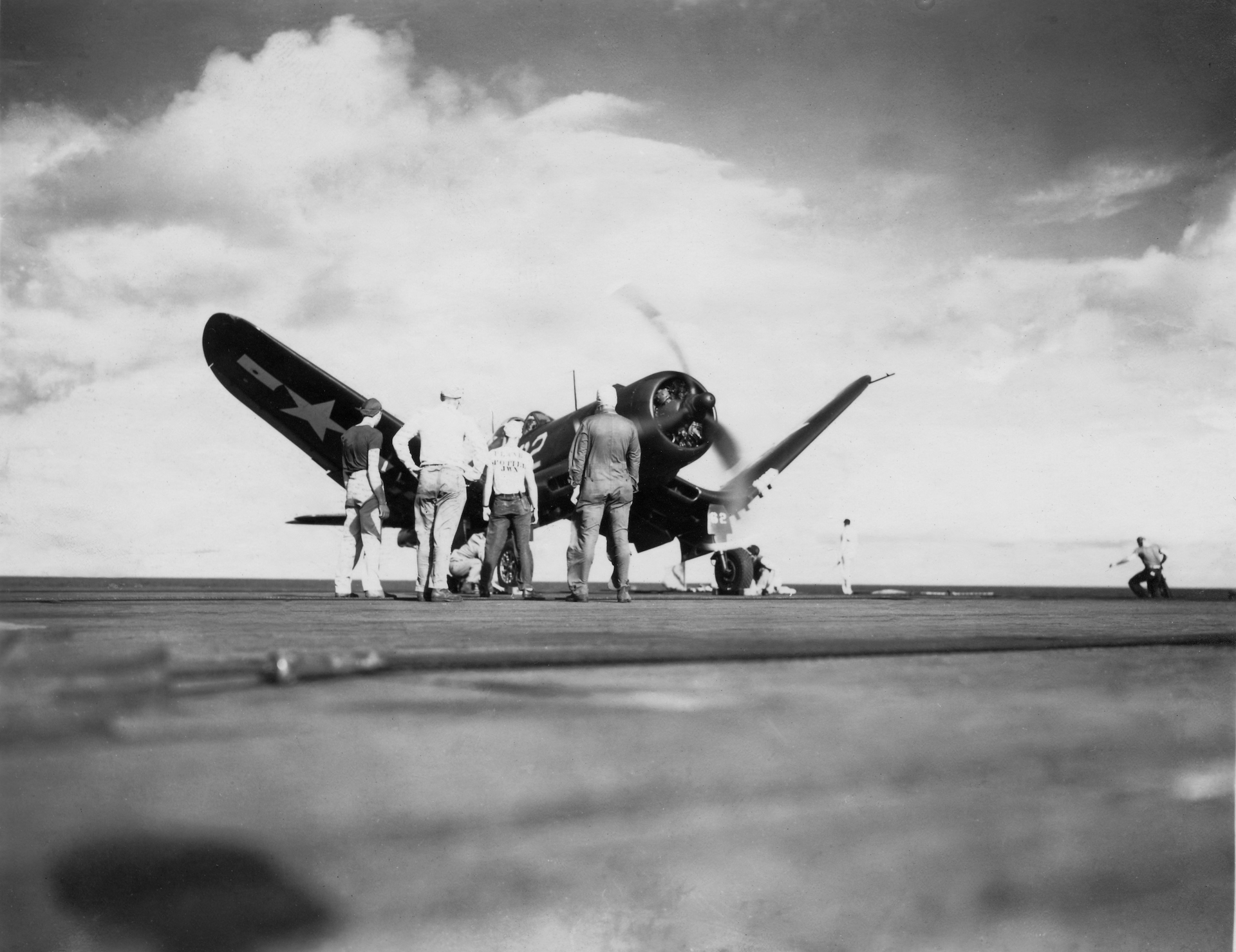
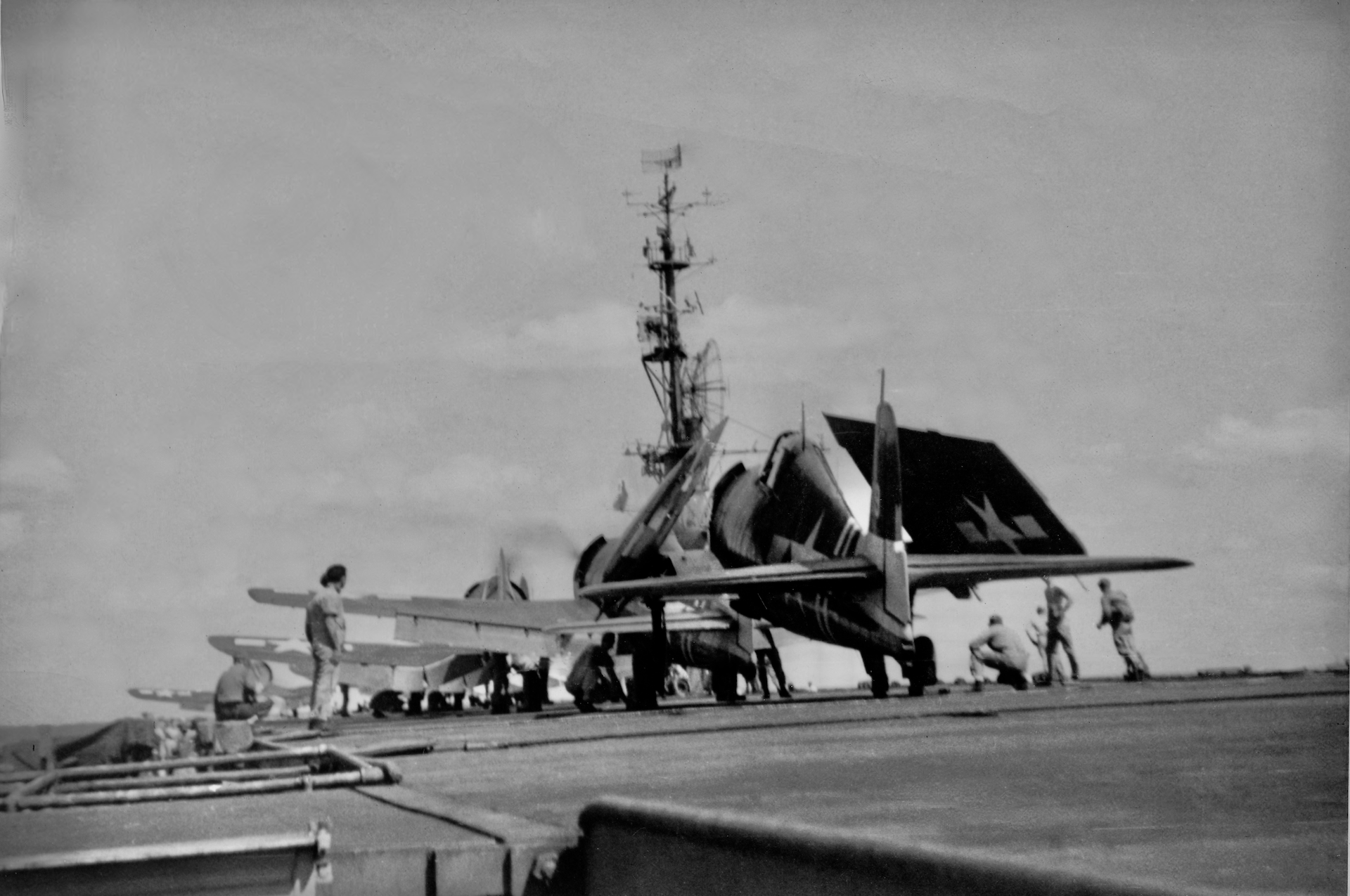
The skill of the pilots must have been quite good because flying the Corsair from a small carrier was a demanding job. The flight decks of the CVEs were shorter and narrower than those of the fleet carriers. As writer Shettle put it, “Landing a Corsair on an escort carrier was not for the novice”. The CVEs were slower, too, generating less wind over the deck. To overcome this CVEs were equipped with two catapults and most if not all launches were catapult-assisted. The Navy had tried the Corsair for their big fleet carriers and selected instead the F6F as its standard carrier-based fighter.
Please check out the Planes page to find out more details regarding those used by this squadron.
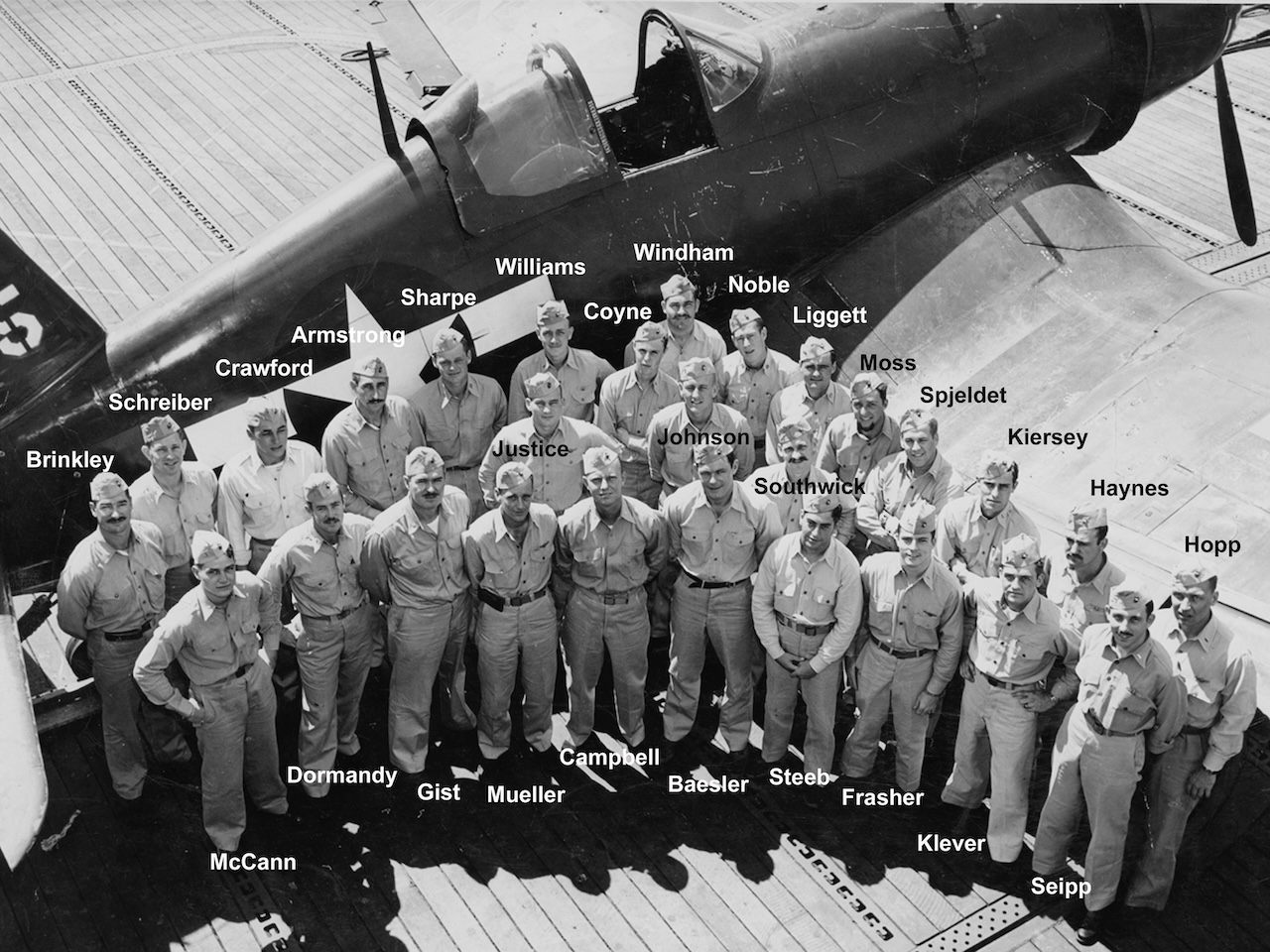
Thanks to veteran Ron Spjeldet I can show this photo of the officers with names. From the context I conclude this was taken at Leyte in mid- to late June 1945. 1st Lieutenant James Crawford (KIA July 1) is present, but 2nd Lieutenant Logan White (KIA June 8) and 2nd Lieutenant Edgar Miller (KIA May 21) are not, nor are the June 25 arrivals 2nd Lieutenants Hembree, Koenig, and MacKenzie. Ranks were taken from the June 1945 Muster Role. Corsair pilot 1st Lieutenant Norman R. Reichwald was on the regular roster but not in this photo. Photos of him can be seen by clicking his name further below.
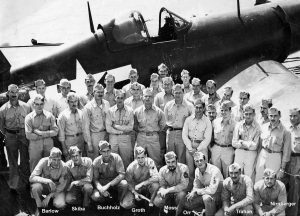
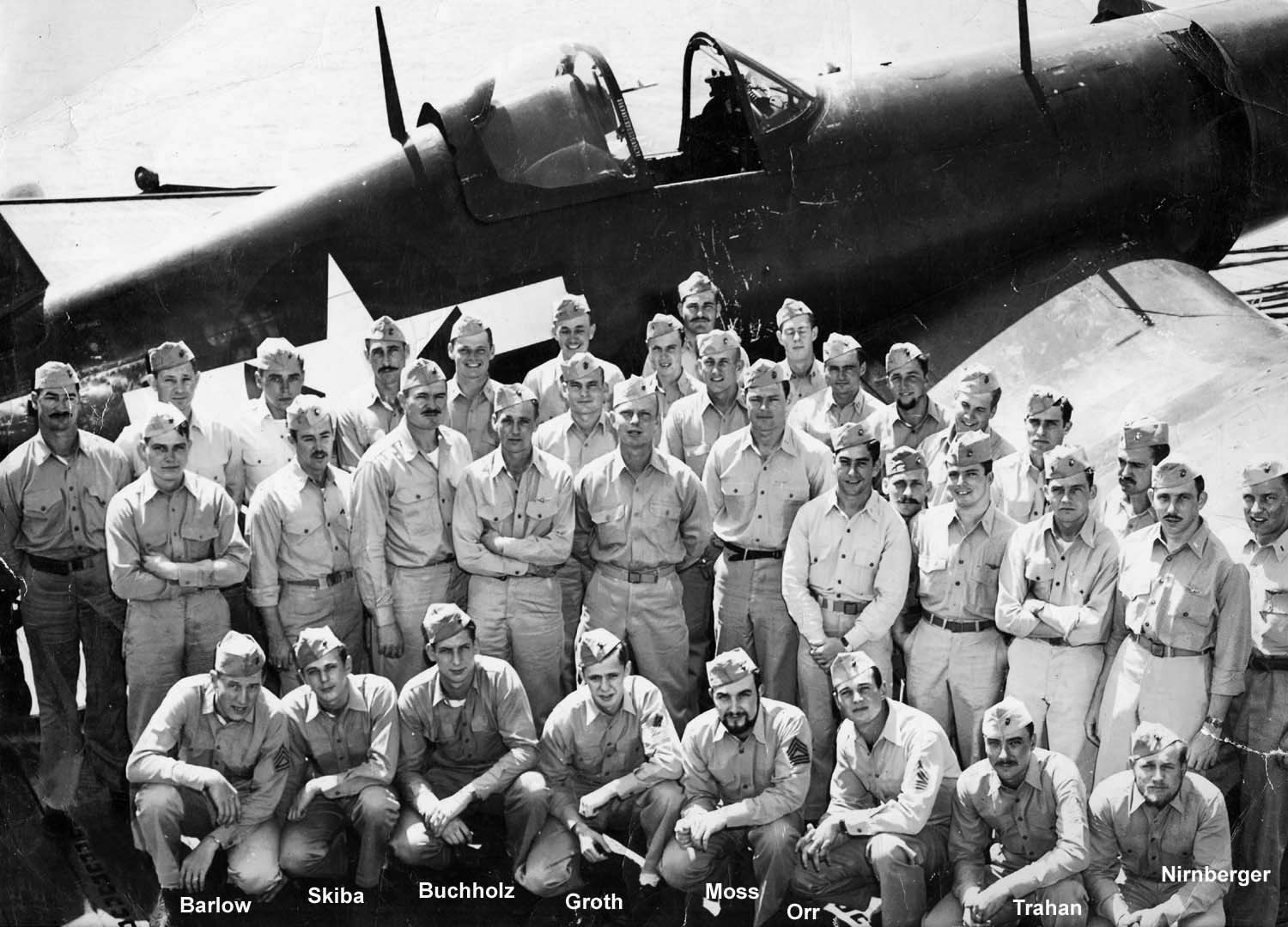
Here is a photo taken the same day of the same men with the addition of the Technical and Master Technical Sergeants being named.
On June 25, five pilot officers joined VMF-512. According to author Sherrod, these were some of the very few Marine pilots who served temporarily in Navy fighter squadrons aboard other carriers, in this case CAG-99 on the USS Shangri-La (CV-38). Of these five men, 1st Lieutenants Hitson and Januszewski were previously with VMF-512 in 1944 and thus were returning to their original unit, while 2nd Lieutenants Hembree, Koenig and MacKenzie were newly posted. These five are not shown in the above photo. Thus, at the end of June, the pilot count was twenty seven Corsair pilots (not including Colonel Campbell) and three Hellcat pilots. The traditional complement was 50% more than the number of planes, leading to the conclusion there were 18 Corsairs and 2 Hellcats, just as stated in Lieutenant Vandervoort’s report.
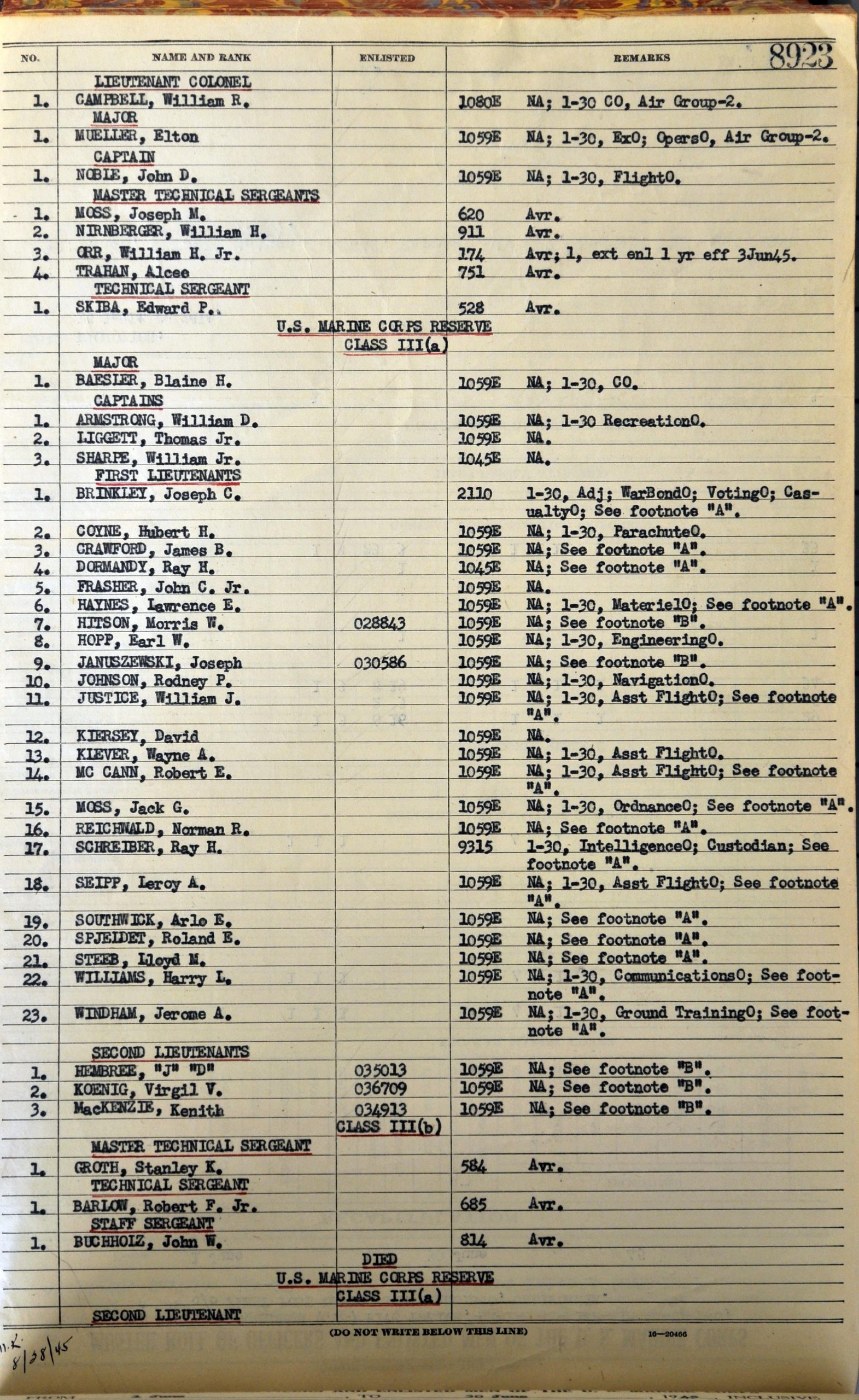
Here is the Muster Role from June 30, 1945 listing the men associated with VMF-512, their rank, position and special notes about them. 
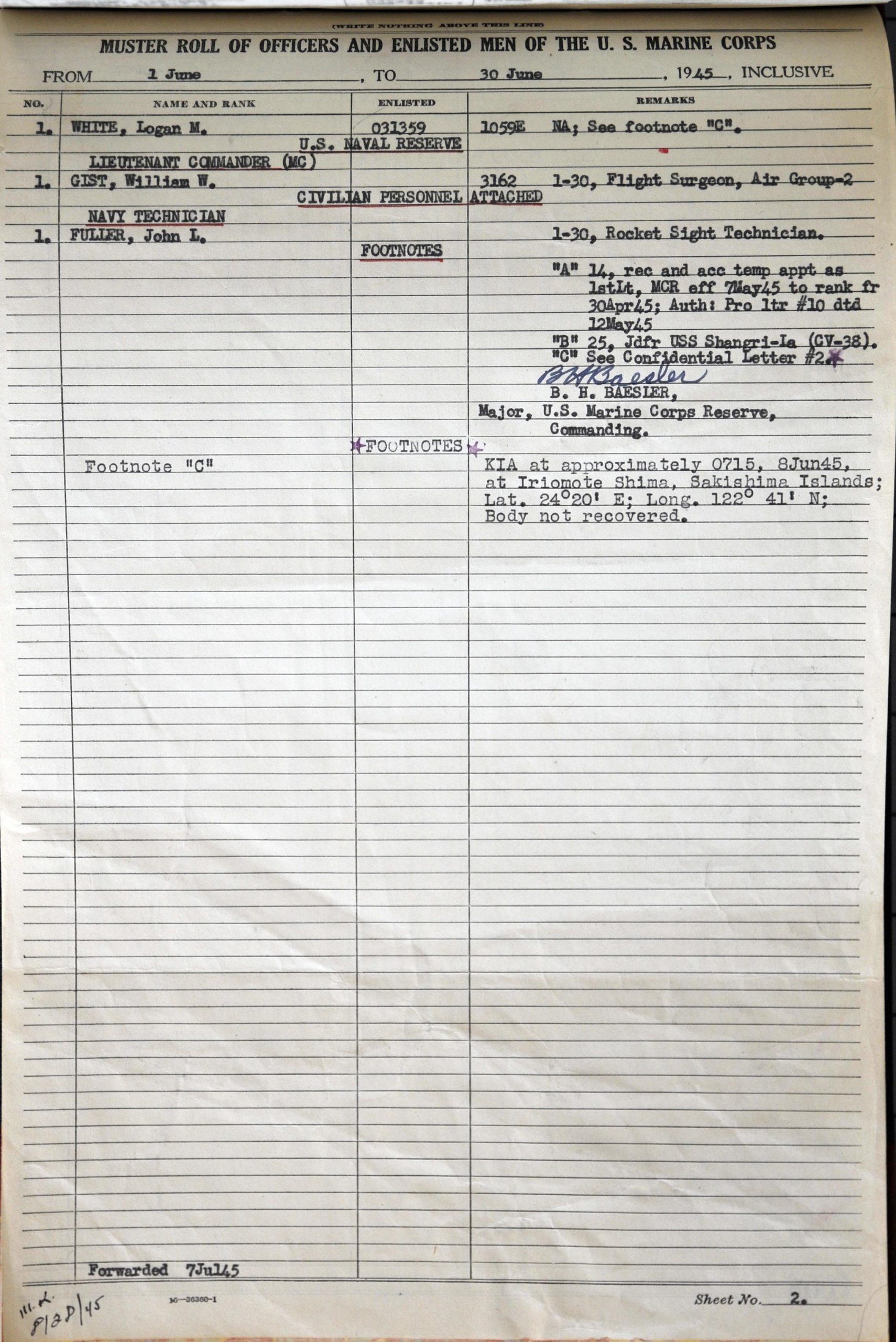
On June 25, five pilot officers joined VMF-512. According to author Sherrod, these were some of the very few Marine pilots who served temporarily in Navy fighter squadrons aboard other carriers, in this case CAG-99 on the USS Shangri-La (CV-38). Of these five men, 1st Lieutenants Hitson and Januszewski were previously with VMF-512 in 1944 and thus were returning to their original unit, while 2nd Lieutenants Hembree, Koenig and MacKenzie were newly posted. These five are not shown in the above photo. Thus, at the end of June, the pilot count was twenty seven Corsair pilots (not including Colonel Campbell) and three Hellcat pilots. The traditional complement was 50% more than the number of planes, leading to the conclusion there were 18 Corsairs and 2 Hellcats, just as stated in Lieutenant Vandervoort’s report.
Here is the Muster Role from June 30, 1945 listing the men associated with VMF-512, their rank, position and special notes about them.
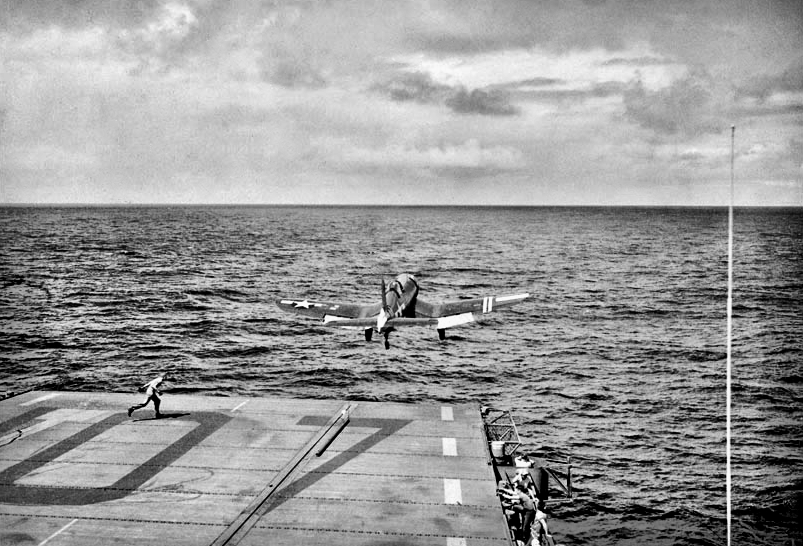
The remaining days of the war, from late July 1945 on, were spent flying Combat Air Patrols over the fleet. Missions typically lasted 3-4 hours each and there were no encounters with the enemy. The war ended on August 15, 1945 with Japan’s unconditional surrender. After the war the carrier stayed in the Pacific for a few months. Both carrier squadrons supported the “Show of Strength” over Formosa in October. Later that month the planes put in at Marpi Point, Saipan, as the carrier anchored in Saipan Harbor. Soon the journey home started and on December 6, 1945 the carrier docked in San Diego, CA. Men with enough points mustered out and began their trips home. The squadron was formally disbanded in the Spring of 1946.
Also refer to the Operations page to see more about the squadron’s specific activities and key moments.
The remaining days of the war, from late July 1945 on, were spent flying Combat Air Patrols over the fleet. Missions typically lasted 3-4 hours each and there were no encounters with the enemy. The war ended on August 15, 1945 with Japan’s unconditional surrender. After the war the carrier stayed in the Pacific for a few months. Both carrier squadrons supported the “Show of Strength” over Formosa in October. Later that month the planes put in at Marpi Point, Saipan, as the carrier anchored in Saipan Harbor. Soon the journey home started and on December 6, 1945 the carrier docked in San Diego, CA. Men with enough points mustered out and began their trips home. The squadron was formally disbanded in the Spring of 1946.
Also refer to the Operations page to see more about the squadron’s specific activities and key moments.
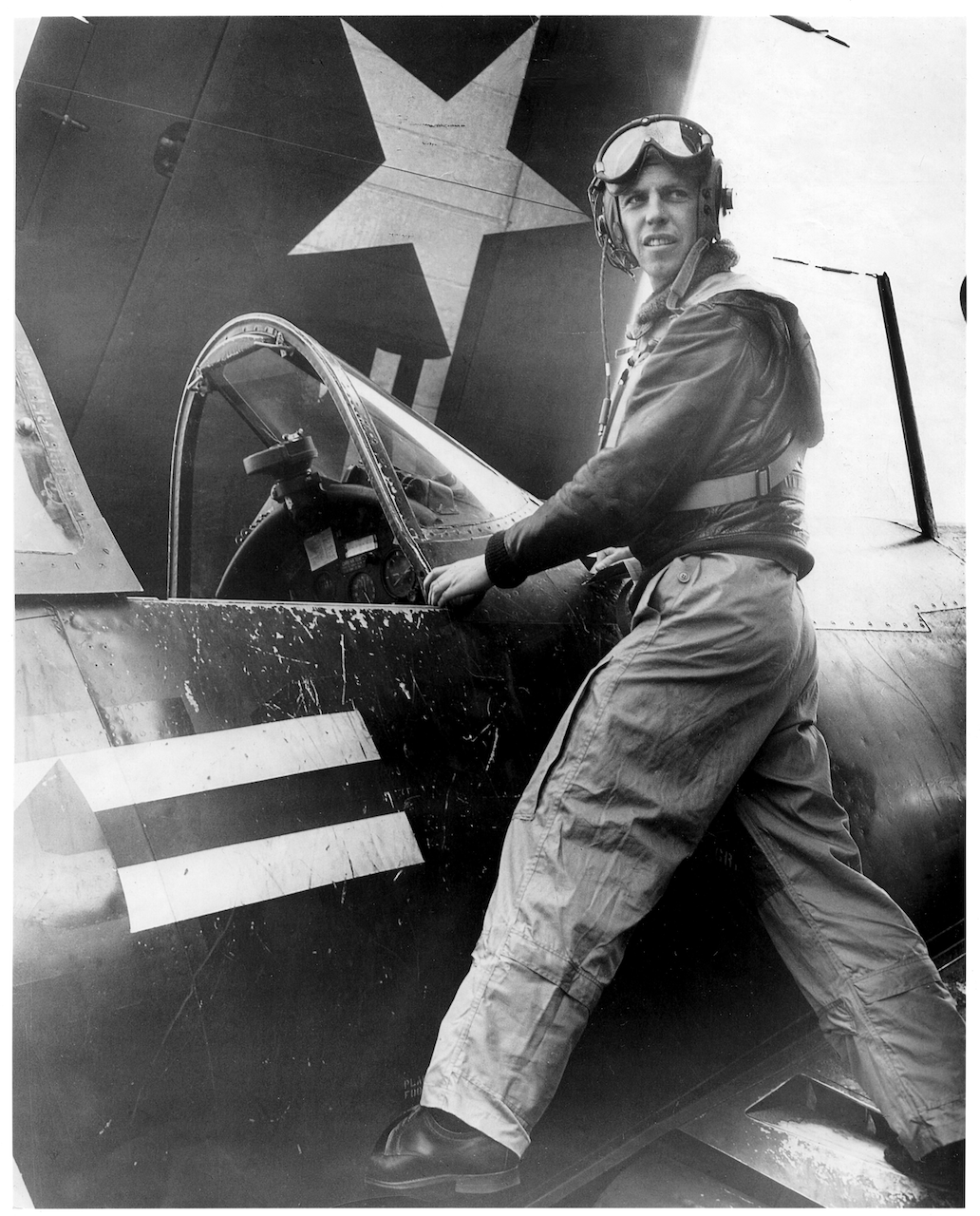
Hubert ‘Flip’ Coyne sent a few photos along including a great
one of him on the wing. It’s one of my favorite. After the war Flip and fellow 512 pilot Wayne Klever started Washington Skyways in Ephrata, Washington. After a few years he went to Alaska flying for the Coast and Geodetic Survey creating maps of the uncharted territory. After that he started a real estate company north of Seattle which he owned for 40 years. Flip Coyne passed away January 8, 2007. Please click on his picture to see the photos.
Hubert ‘Flip’ Coyne sent a few photos along including a great
one of him on the wing. It’s one of my favorite. After the war Flip and fellow 512 pilot Wayne Klever started Washington Skyways in Ephrata, Washington. After a few years he went to Alaska flying for the Coast and Geodetic Survey creating maps of the uncharted territory. After that he started a real estate company north of Seattle which he owned for 40 years. Flip Coyne passed away January 8, 2007. Please click on his picture to see the photos.
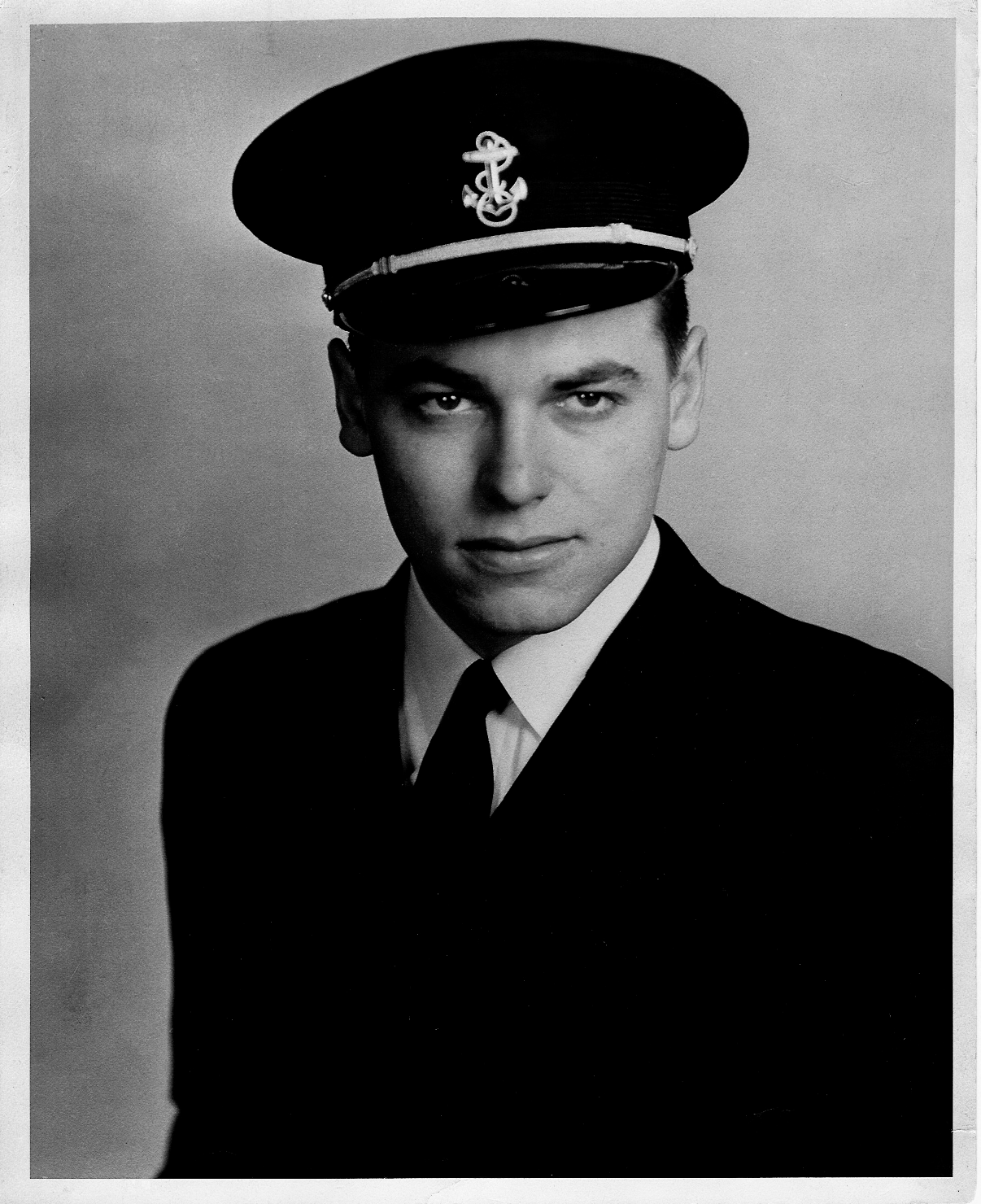
James Crawford was killed in action July 1, 1945. His sister Donna and niece Michelle collaborated to send a CD of images from the family albums which we are pleased to show.
James Crawford was killed in action July 1, 1945. His sister Donna and niece Michelle collaborated to send a CD of images from the family albums which we are pleased to show.
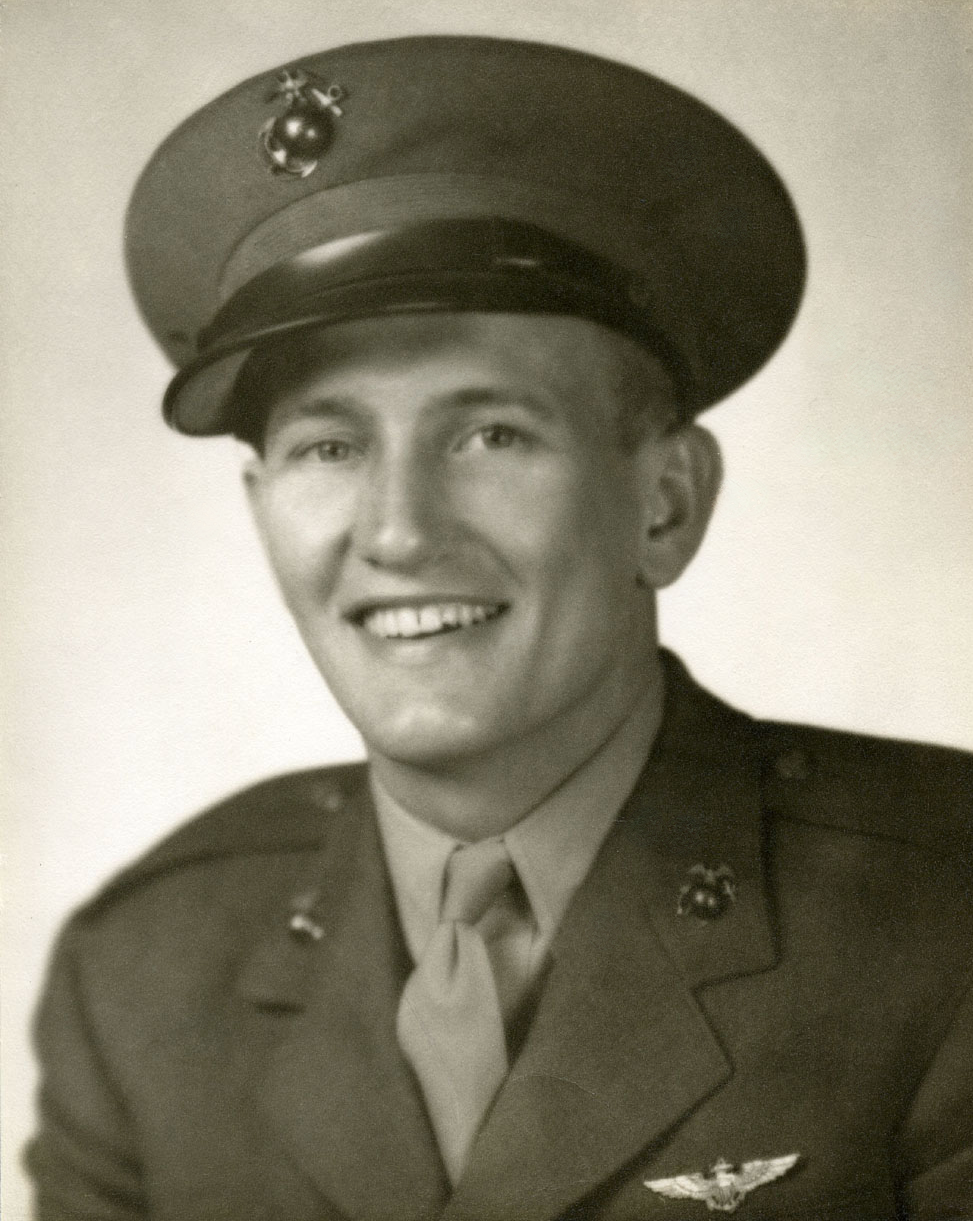
Rod Johnson had a large picture collection from his WW2 days. His wife Harriet kindly let me scan them, by far the largest set of photos I’ve seen from VMF-512… over 150 images are on his photo album page or linked to it. Many of these photos were duplicated and given to some of the others so if you see one of these in another photo page (including VMTB-143) it probably came from Rod’s camera. The vets remember he was quite the camera man. After the war Rod went into the carpentry business working for himself for about 15 years. For the next 24 years he worked for other contractors and then finally went to work in the retail building supply business, retiring in 1989. In 1990 Rodney Johnson suffered a massive stroke and passed away in 1996.
Rod Johnson had a large picture collection from his WW2 days. His wife Harriet kindly let me scan them, by far the largest set of photos I’ve seen from VMF-512… over 150 images are on his photo album page or linked to it. Many of these photos were duplicated and given to some of the others so if you see one of these in another photo page (including VMTB-143) it probably came from Rod’s camera. The vets remember he was quite the camera man. After the war Rod went into the carpentry business working for himself for about 15 years. For the next 24 years he worked for other contractors and then finally went to work in the retail building supply business, retiring in 1989. In 1990 Rodney Johnson suffered a massive stroke and passed away in 1996.
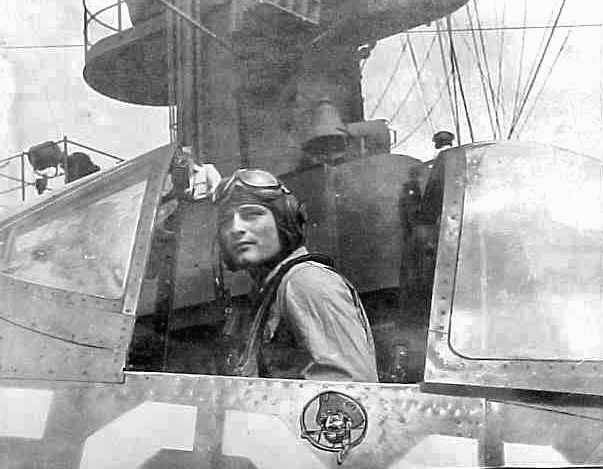
Jeff Justice provided a large group portrait and some other photos. After the war Jeff stayed in the active reserves until 1955. He was in the poultry business until 1980 then went into ranching with his son. He owned a private plane and still loved to fly.
Jeff Justice provided a large group portrait and some other photos. After the war Jeff stayed in the active reserves until 1955. He was in the poultry business until 1980 then went into ranching with his son. He owned a private plane and still loved to fly.
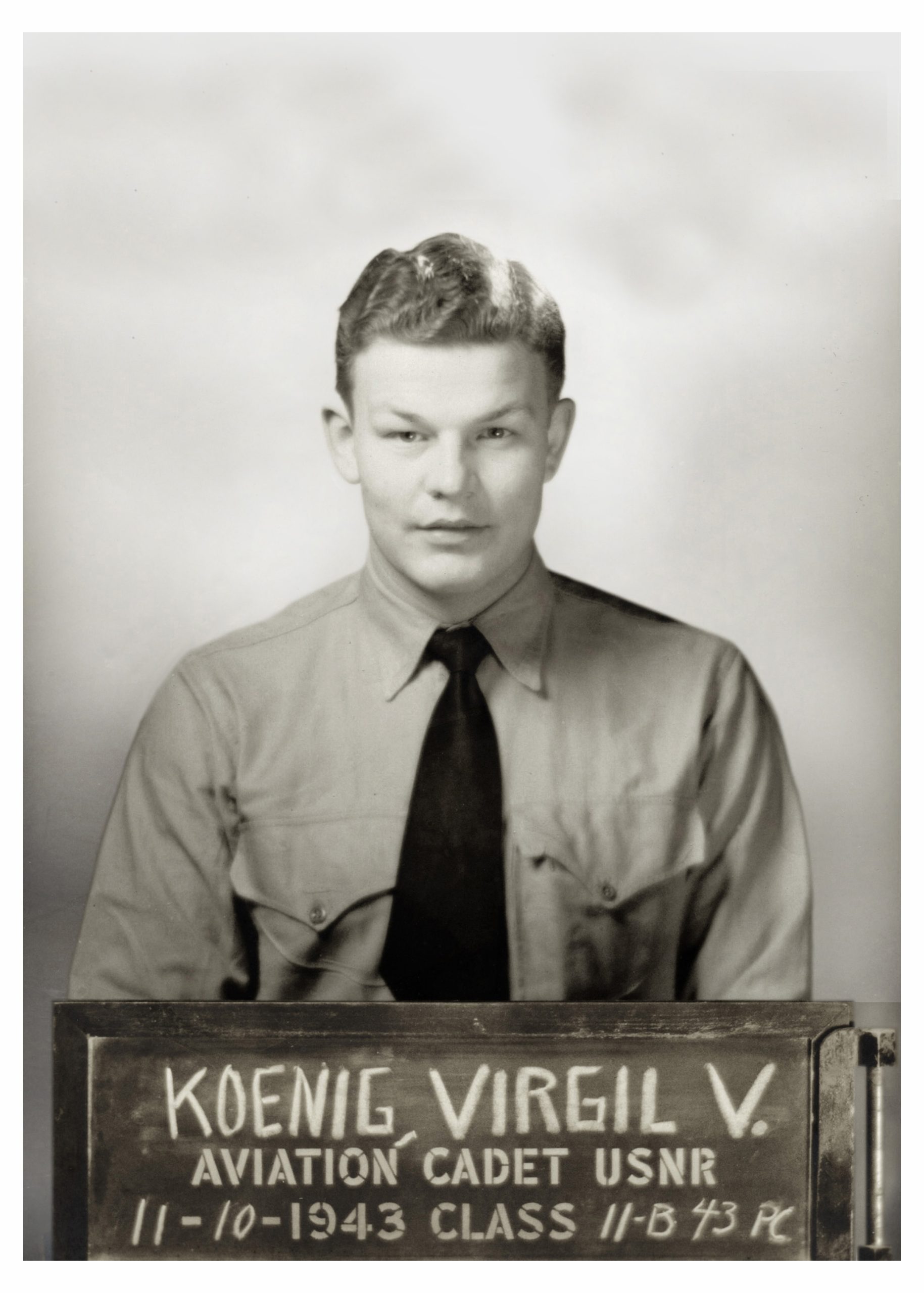
Virgil Koenig was in a replacement pool on Guam when he was selected to go aboard the USS Shangri-La. Their losses were high and the need for immediate replacements led to the unusual situation of Marine pilots flying in Navy squadrons. Likewise the losses and transfers in VMF-512 created a need for replacements. Colonel Campbell knew about the Marines in the Navy squadron and asked for them. As a result, all five USMC pilots were sent to the Gilbert Islands in late June. After the war Lieutenant Koening started a crop dusting business in Casa Grande, Arizona. Except for 18 months in Korea in the famed VMF-513 ‘Flying Nightmares’ night fighter squadron, Virgil worked in Casa Grande until 2004. His business ventures also included being Piper Aircraft salesman, and, with a crew of about 15 instructors, he trained over 2,000 USAF pilots during the Viet Nam war. Virgil Koenig passed away September 4, 2006.
Virgil Koenig was in a replacement pool on Guam when he was selected to go aboard the USS Shangri-La. Their losses were high and the need for immediate replacements led to the unusual situation of Marine pilots flying in Navy squadrons. Likewise the losses and transfers in VMF-512 created a need for replacements. Colonel Campbell knew about the Marines in the Navy squadron and asked for them. As a result, all five USMC pilots were sent to the Gilbert Islands in late June. After the war Lieutenant Koening started a crop dusting business in Casa Grande, Arizona. Except for 18 months in Korea in the famed VMF-513 ‘Flying Nightmares’ night fighter squadron, Virgil worked in Casa Grande until 2004. His business ventures also included being Piper Aircraft salesman, and, with a crew of about 15 instructors, he trained over 2,000 USAF pilots during the Viet Nam war. Virgil Koenig passed away September 4, 2006.
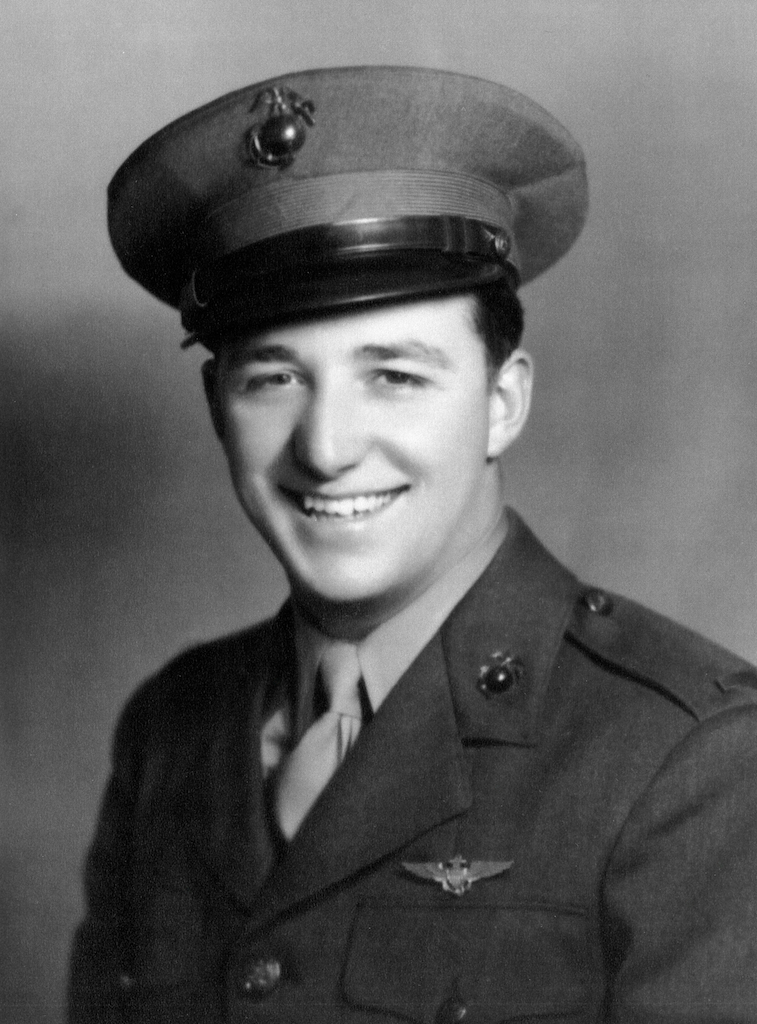
Jack Moss was originally from McCook, Nebraska. After the war Jack stayed in the Marine Reserves and made Captain before the Korean War broke out. Called up to active duty, he flew close air support missions in Corsairs and Skyraiders from base K-6, eventually making Major as Commanding Officer of VMFA-332. After WW2 Jack earned a degree in architecture from Kansas State University then went to work for the Dupont Company in Delaware as an engineering architect. After many years there he retired and became the city architect for Garden Ridge, TX near San Antonio where he now lives. Jack sent a collection of his photos, his King Neptune certificate for crossing the equator and both of his WW2 flight jackets – the winter (leather) one and the lightweight cotton summer jacket. I was touched by his generosity.
Jack Moss was originally from McCook, Nebraska. After the war Jack stayed in the Marine Reserves and made Captain before the Korean War broke out. Called up to active duty, he flew close air support missions in Corsairs and Skyraiders from base K-6, eventually making Major as Commanding Officer of VMFA-332. After WW2 Jack earned a degree in architecture from Kansas State University then went to work for the Dupont Company in Delaware as an engineering architect. After many years there he retired and became the city architect for Garden Ridge, TX near San Antonio where he now lives. Jack sent a collection of his photos, his King Neptune certificate for crossing the equator and both of his WW2 flight jackets – the winter (leather) one and the lightweight cotton summer jacket. I was touched by his generosity.
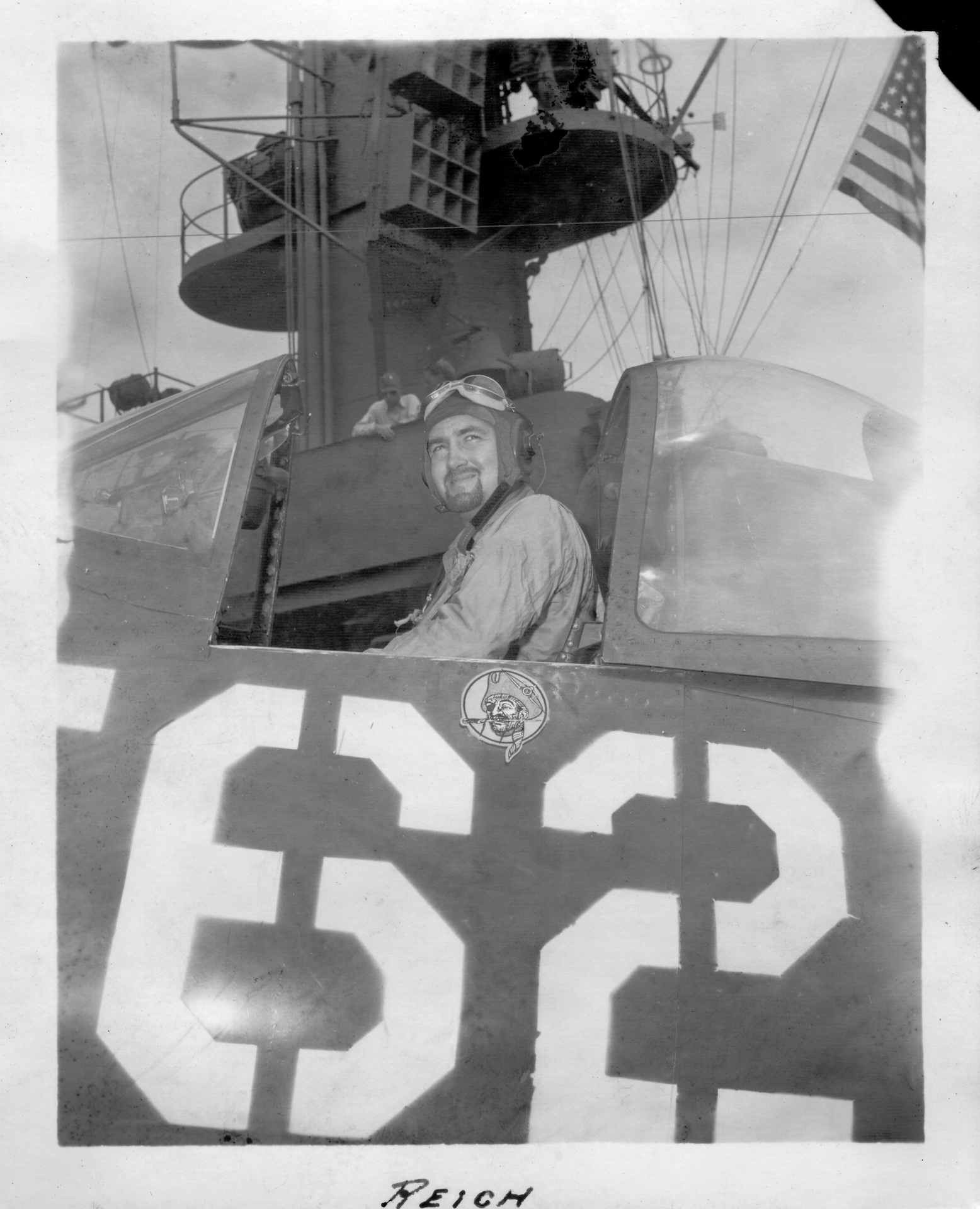
Norm Reichwald’s wife, Rosemary, provided a large collection of photos. Norm took a lot photos and annotated them at the time. Photos like this are valuable since they’re so well documented. Norm stayed in the Marine Corps for 26 years serving in Korea and Vietnam. Norman Reichwald passed away in 1998.
Norm Reichwald’s wife, Rosemary, provided a large collection of photos. Norm took a lot photos and annotated them at the time. Photos like this are valuable since they’re so well documented. Norm stayed in the Marine Corps for 26 years serving in Korea and Vietnam. Norman Reichwald passed away in 1998.
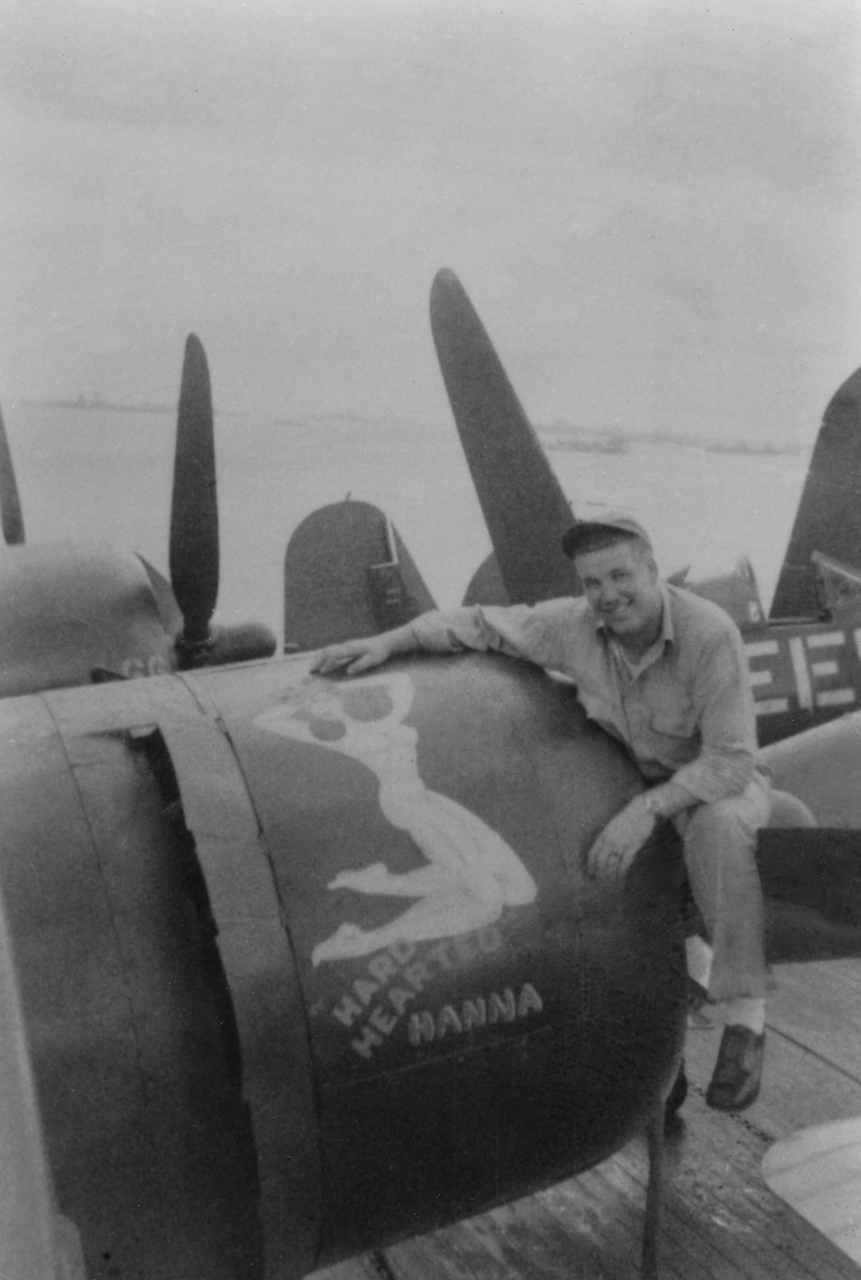
Ron Spjeldet sent photos from his album and we are pleased to show them here. He sent a negative of the large squadron photo which accounts for the excellent quality of the image. Ron stayed in the Marines for 10 years of active service and another 29 in the reserves, retiring as a Lieutenant Colonel.
Ron Spjeldet sent photos from his album and we are pleased to show them here. He sent a negative of the large squadron photo which accounts for the excellent quality of the image. Ron stayed in the Marines for 10 years of active service and another 29 in the reserves, retiring as a Lieutenant Colonel.
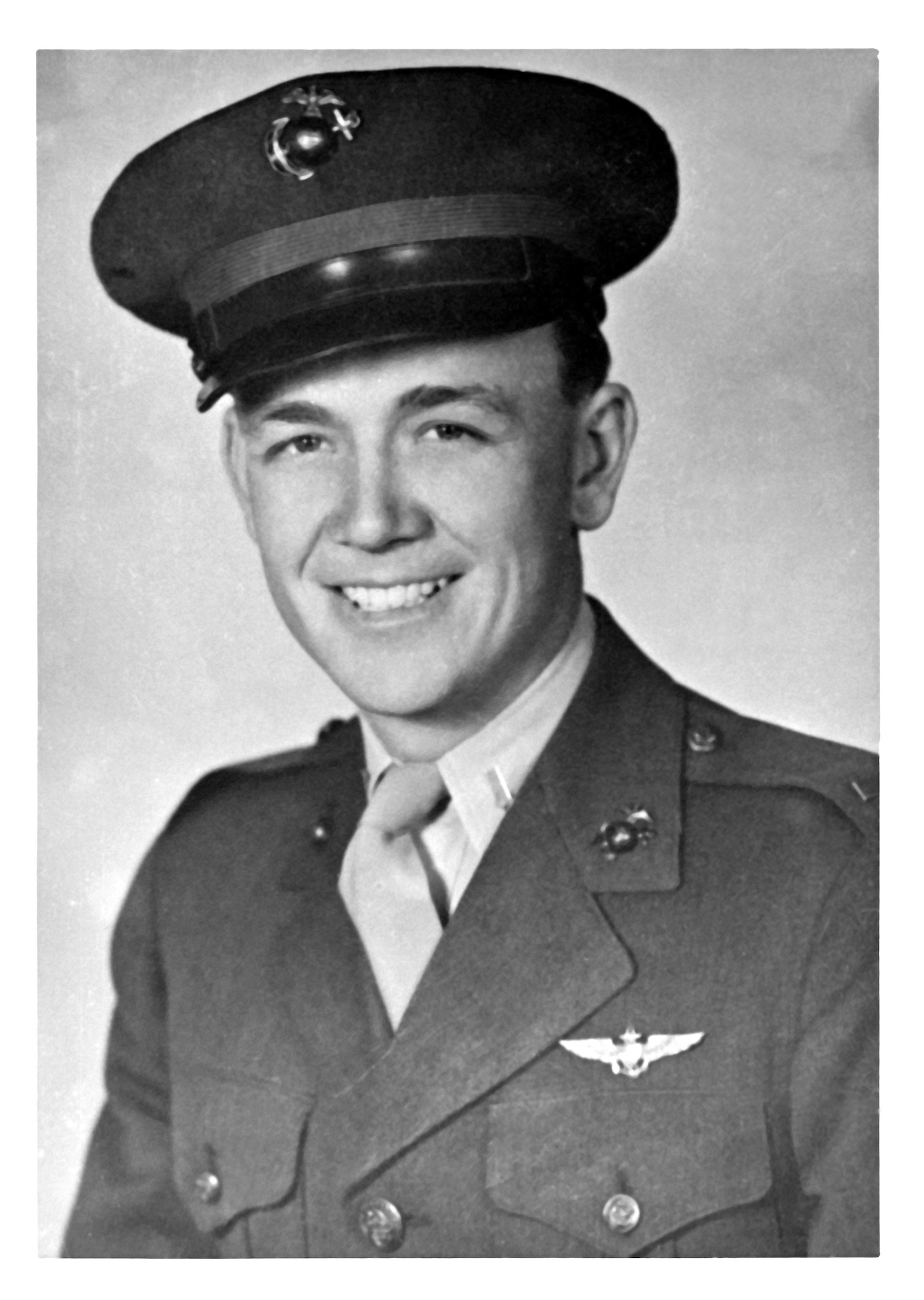
Harry Williams made a unique contribution by sending his map of the Pacific which tracks the complete 1945 journey of the USS Gilbert Islands. Details from the map form an essential part of the Operations page which documents the 1945 cruise. Harry sent notes from his log book and other recollections.
Harry Williams made a unique contribution by sending his map of the Pacific which tracks the complete 1945 journey of the USS Gilbert Islands. Details from the map form an essential part of the Operations page which documents the 1945 cruise. Harry sent notes from his log book and other recollections.