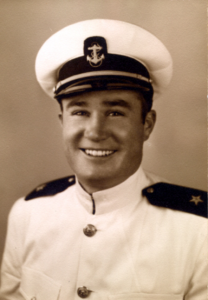
 Captain Gordon Leigh Allen was the Assistant Air Officer of MCAG-2. I don’t have much information about him other than a few medals he earned during his time in the service.
One such citation reads:
The President of the United States of America takes pleasure in presenting the Distinguished Flying Cross to First Lieutenant Gordon L. Allen (MCSN: 0-10926), United States Marine Corps, for heroism and extraordinary achievement while participating in aerial flight while participating in aerial attacks against Japanese forces in the Solomon Islands area during the period from 14 November to 29 December 1942. As pilot of a Marine Scout Bomber on 14 November 1942, Lieutenant Allen sank an enemy troop transport with a direct hit. On 27 December 1942 he scored a direct hit on an enemy cargo ship in Wickham Anchorage and on 29 December he again made a direct hit on a cargo vessel in the same location. In all these actions, Lieutenant Allen was opposed by heavy anti-aircraft fire and at times by enemy fighter planes. With complete disregard for his own safety, he pressed home his attacks with skill and determination. His conduct throughout was in keeping with the highest traditions of the United States Naval Service.
A second citation reads:
The President of the United States of America takes pleasure in presenting a Gold Star in lieu of a Second Award of the Distinguished Flying Cross to First Lieutenant Gordon L. Allen (MCSN: 0-10926), United States Marine Corps, for extraordinary achievement while participating in aerial flight in action against Japanese forces while serving with a Marine Aircraft Group in the Solomon Islands area on 15 January 1943. As section leader of a dive-bomber flight, he participated in an attack on nine fighter escorted enemy destroyers. Despite heavy anti-aircraft fire and radical maneuvers of the destroyers, he pressed home his attack with such determination that he obtained a direct hit on an enemy vessel by releasing his bomb at such a low altitude that the destroyer was unable to turn before the bomb found its mark. His courageous and skillful conduct was in keeping with the highest traditions of the United States Naval Service.
A third citation reads:
The President of the United States of America takes pleasure in presenting a Second Gold Star in lieu of a Third Award of the Distinguished Flying Cross to Captain Gordon L. Allen (MCSN: 0-10926), The President of the United States of America takes pleasure in presenting a Gold Star in lieu of a Second Award of the Distinguished Flying Cross to First Lieutenant Gordon L. Allen (MCSN: 0-10926), United States Marine Corps, for extraordinary achievement while participating in aerial flight in action against Japanese forces while serving with a Marine Aircraft Group in the Solomon Islands area on 15 January 1943. As section leader of a dive-bomber flight, he participated in an attack on nine fighter escorted enemy destroyers. Despite heavy anti-aircraft fire and radical maneuvers of the destroyers, he pressed home his attack with such determination that he obtained a direct hit on an enemy vessel by releasing his bomb at such a low altitude that the destroyer was unable to turn before the bomb found its mark. His courageous and skillful conduct was in keeping with the highest traditions of the United States Naval Service.
And from his service in the Korean War:
The President of the United States of America takes pleasure in presenting a Third Gold Star in lieu of a Fourth Award of the Distinguished Flying Cross to Major Gordon L. Allen (MCSN: 0-10926), United States Marine Corps, for extraordinary achievement while participating in aerial flight against the enemy as a member of a carrier-based Marine Attack Squadron in Korea. On 14 July 1953, Major Allen, in answer to an urgent request for all available air support, led a division of Marine attack aircraft against a major enemy troop concentration near Kumsong, North Korea. Despite extremely rough seas, a fifty mile per hour gale sweeping the carrier’s deck and a heavy overcast, conditions that would normally preclude combat flight operations from an aircraft carrier, Major Allen safely led his division into the air, through the instrument weather and directly to the target area. Over the objective the adverse weather prevented dive bombing attacks and he was compelled to conduct his bombing runs by the use of radar. Displaying exceptional professional ability, he scored direct bomb hits that inflicted heavy casualties on the enemy. After directing his flight in a highly successful bombing assault, he safely led the division back to the carrier. Major Allen’s outstanding accuracy and exemplary leadership were responsible for the success of a mission that disrupted and repulsed one of the largest enemy offensives in over two years, thereby substantially reducing pressure on front line elements of the United Nations ground forces. His courageous conduct, exceptional initiative and steadfast devotion to duty throughout reflected great credit upon himself and were in keeping with the highest traditions of the United States Naval Service.
G.L. Allen attained the rank of Lt Colonel during his service in the Marines. He passed away at age 65, and his grave is located in Riverside, California.
Captain Gordon Leigh Allen was the Assistant Air Officer of MCAG-2. I don’t have much information about him other than a few medals he earned during his time in the service.
One such citation reads:
The President of the United States of America takes pleasure in presenting the Distinguished Flying Cross to First Lieutenant Gordon L. Allen (MCSN: 0-10926), United States Marine Corps, for heroism and extraordinary achievement while participating in aerial flight while participating in aerial attacks against Japanese forces in the Solomon Islands area during the period from 14 November to 29 December 1942. As pilot of a Marine Scout Bomber on 14 November 1942, Lieutenant Allen sank an enemy troop transport with a direct hit. On 27 December 1942 he scored a direct hit on an enemy cargo ship in Wickham Anchorage and on 29 December he again made a direct hit on a cargo vessel in the same location. In all these actions, Lieutenant Allen was opposed by heavy anti-aircraft fire and at times by enemy fighter planes. With complete disregard for his own safety, he pressed home his attacks with skill and determination. His conduct throughout was in keeping with the highest traditions of the United States Naval Service.
A second citation reads:
The President of the United States of America takes pleasure in presenting a Gold Star in lieu of a Second Award of the Distinguished Flying Cross to First Lieutenant Gordon L. Allen (MCSN: 0-10926), United States Marine Corps, for extraordinary achievement while participating in aerial flight in action against Japanese forces while serving with a Marine Aircraft Group in the Solomon Islands area on 15 January 1943. As section leader of a dive-bomber flight, he participated in an attack on nine fighter escorted enemy destroyers. Despite heavy anti-aircraft fire and radical maneuvers of the destroyers, he pressed home his attack with such determination that he obtained a direct hit on an enemy vessel by releasing his bomb at such a low altitude that the destroyer was unable to turn before the bomb found its mark. His courageous and skillful conduct was in keeping with the highest traditions of the United States Naval Service.
A third citation reads:
The President of the United States of America takes pleasure in presenting a Second Gold Star in lieu of a Third Award of the Distinguished Flying Cross to Captain Gordon L. Allen (MCSN: 0-10926), The President of the United States of America takes pleasure in presenting a Gold Star in lieu of a Second Award of the Distinguished Flying Cross to First Lieutenant Gordon L. Allen (MCSN: 0-10926), United States Marine Corps, for extraordinary achievement while participating in aerial flight in action against Japanese forces while serving with a Marine Aircraft Group in the Solomon Islands area on 15 January 1943. As section leader of a dive-bomber flight, he participated in an attack on nine fighter escorted enemy destroyers. Despite heavy anti-aircraft fire and radical maneuvers of the destroyers, he pressed home his attack with such determination that he obtained a direct hit on an enemy vessel by releasing his bomb at such a low altitude that the destroyer was unable to turn before the bomb found its mark. His courageous and skillful conduct was in keeping with the highest traditions of the United States Naval Service.
And from his service in the Korean War:
The President of the United States of America takes pleasure in presenting a Third Gold Star in lieu of a Fourth Award of the Distinguished Flying Cross to Major Gordon L. Allen (MCSN: 0-10926), United States Marine Corps, for extraordinary achievement while participating in aerial flight against the enemy as a member of a carrier-based Marine Attack Squadron in Korea. On 14 July 1953, Major Allen, in answer to an urgent request for all available air support, led a division of Marine attack aircraft against a major enemy troop concentration near Kumsong, North Korea. Despite extremely rough seas, a fifty mile per hour gale sweeping the carrier’s deck and a heavy overcast, conditions that would normally preclude combat flight operations from an aircraft carrier, Major Allen safely led his division into the air, through the instrument weather and directly to the target area. Over the objective the adverse weather prevented dive bombing attacks and he was compelled to conduct his bombing runs by the use of radar. Displaying exceptional professional ability, he scored direct bomb hits that inflicted heavy casualties on the enemy. After directing his flight in a highly successful bombing assault, he safely led the division back to the carrier. Major Allen’s outstanding accuracy and exemplary leadership were responsible for the success of a mission that disrupted and repulsed one of the largest enemy offensives in over two years, thereby substantially reducing pressure on front line elements of the United Nations ground forces. His courageous conduct, exceptional initiative and steadfast devotion to duty throughout reflected great credit upon himself and were in keeping with the highest traditions of the United States Naval Service.
G.L. Allen attained the rank of Lt Colonel during his service in the Marines. He passed away at age 65, and his grave is located in Riverside, California.
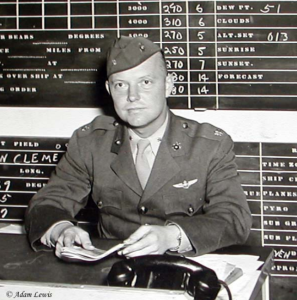
William ‘Soupy’ Campbell commanded the USMC Air Group on the USS Gilbert Islands. As the ranking Marine on the carrier he was responsible for the performance , maintenance and well-being of the two squadrons. I’ve heard nothing but good things about Col. Campbell from the other Marines. The enlisted men told me he saved them from having to perform menial tasks on the carrier such as scraping paint. And they recall the time he went to bat to be sure those on patrol would get fed after they returned from missions even if the dining room was officially closed.
Col. Campbell was designated a Naval Aviator and commissioned as a Marine Second Lieutenant in 1936. He completed his first war tour flying fighters from Espiritu Santo and Guadalcanal. Colonel Campbell was a seasoned fighter pilot having served with VMF-251 on Guadalcanal from October 1942 until January 1943. He actually served as the Commanding Officer for brief period in December 1942. During his career, his other commands included MCAG-2, MAG-14 and MAG-33.
Before retiring, his final tour of duty was as Commanding Officer of the Marine Corps Air Station, Kaneohe Bay, Oahu, Hawaii. Colonel Campbell was awarded the Distinguished Flying Cross with two gold stars, the Air Medal with one silver star and four gold stars, the Navy Commendation Medal and the Purple Heart.
He retired from active duty in Hawaii in 1963 as a two star General. He lived in Kamuela on the Island of Hawaii from 1971 until his death in December of 2000. Courtesy of his son Ron Campbell we can show some pictures of Colonel Campbell.
William ‘Soupy’ Campbell commanded the USMC Air Group on the USS Gilbert Islands. As the ranking Marine on the carrier he was responsible for the performance , maintenance and well-being of the two squadrons. I’ve heard nothing but good things about Col. Campbell from the other Marines. The enlisted men told me he saved them from having to perform menial tasks on the carrier such as scraping paint. And they recall the time he went to bat to be sure those on patrol would get fed after they returned from missions even if the dining room was officially closed.
Col. Campbell was designated a Naval Aviator and commissioned as a Marine Second Lieutenant in 1936. He completed his first war tour flying fighters from Espiritu Santo and Guadalcanal. Colonel Campbell was a seasoned fighter pilot having served with VMF-251 on Guadalcanal from October 1942 until January 1943. He actually served as the Commanding Officer for brief period in December 1942. During his career, his other commands included MCAG-2, MAG-14 and MAG-33.
Before retiring, his final tour of duty was as Commanding Officer of the Marine Corps Air Station, Kaneohe Bay, Oahu, Hawaii. Colonel Campbell was awarded the Distinguished Flying Cross with two gold stars, the Air Medal with one silver star and four gold stars, the Navy Commendation Medal and the Purple Heart.
He retired from active duty in Hawaii in 1963 as a two star General. He lived in Kamuela on the Island of Hawaii from 1971 until his death in December of 2000. Courtesy of his son Ron Campbell we can show some pictures of Colonel Campbell.
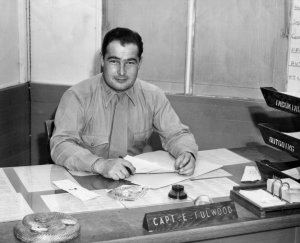
Eldon ‘Fred’ Fulwood was a Captain on Colonel Campbell’s staff in charge of the Marine Carrier Air Service Detachment (CASD-2) on the USS Gilbert Islands. His unit had overall responsibility for the maintenance and repair of the aircraft.
Captain Fulwood enlisted in the Corps in 1939 and was promoted to Lieutenant in 1941 after 31 months of enlisted service. He attained the rank of Captain in 1944, altogether a rather swift rise through the ranks. Before coming aboard the USS Gilbert Islands, his prior wartime service was on Guadalcanal where he earned four combat stars while assigned to Marine Air Group 14.
After the war he stayed in the Corps in various capacities, retiring as a Major in 1966. Eldon Fulwood passed away in 1986. His son Scott Fulwood sent many nice photos spanning his father’s career.
Eldon ‘Fred’ Fulwood was a Captain on Colonel Campbell’s staff in charge of the Marine Carrier Air Service Detachment (CASD-2) on the USS Gilbert Islands. His unit had overall responsibility for the maintenance and repair of the aircraft.
Captain Fulwood enlisted in the Corps in 1939 and was promoted to Lieutenant in 1941 after 31 months of enlisted service. He attained the rank of Captain in 1944, altogether a rather swift rise through the ranks. Before coming aboard the USS Gilbert Islands, his prior wartime service was on Guadalcanal where he earned four combat stars while assigned to Marine Air Group 14.
After the war he stayed in the Corps in various capacities, retiring as a Major in 1966. Eldon Fulwood passed away in 1986. His son Scott Fulwood sent many nice photos spanning his father’s career.
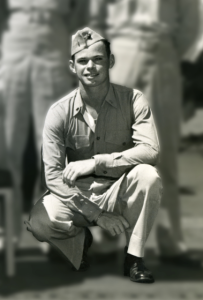
1st Lieutenant A. H. Jones Jr. was the Assistant Flight Deck Officer. As such he was involved in overseeing the aircraft movements and operations on the flight deck. You would see him signal when to launch, and when he points then touches the deck forward, the aircraft launches. I do not have specific information about him except for a few pictures.
1st Lieutenant A. H. Jones Jr. was the Assistant Flight Deck Officer. As such he was involved in overseeing the aircraft movements and operations on the flight deck. You would see him signal when to launch, and when he points then touches the deck forward, the aircraft launches. I do not have specific information about him except for a few pictures.
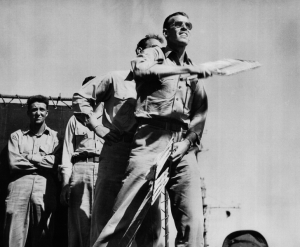
Captain Marshall R . Tutton was the Assistant Landing Signal Officer (LSO) on the USS Gilbert Islands. He and Captain John L. Fidler directed the launching and landing of the planes. LSO’s were required to be pilots and Captain Marshall had previously been assigned to VMF-221 flying F4F-4 Wildcats at Guadalcanal, Solomon Islands. He was awarded the Distinguished Flying Cross for extraordinary achievement while participating in aerial flight, in actions against enemy Japanese forces in the Pacific Theater of Operations during World War II.
Captain Marshall R . Tutton was the Assistant Landing Signal Officer (LSO) on the USS Gilbert Islands. He and Captain John L. Fidler directed the launching and landing of the planes. LSO’s were required to be pilots and Captain Marshall had previously been assigned to VMF-221 flying F4F-4 Wildcats at Guadalcanal, Solomon Islands. He was awarded the Distinguished Flying Cross for extraordinary achievement while participating in aerial flight, in actions against enemy Japanese forces in the Pacific Theater of Operations during World War II.
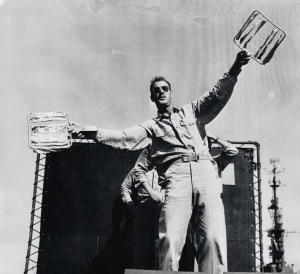
Captain John Fidler was the Landing Signal Off icer on the carrier. He and Captain Marshall Tutton, the assistant LSO, directed the launching and the landing of the planes. LSOs were required be pilots. He earned his wings in 1942, and in 1943 was posted to VMF – 214 the “Swashbucklers”, where he flew the F4U Corsair. After VMF-214 was disbanded (it was later reformed by Maj. Pappy Boyington) John returned to the states. He volunteered for, and completed, LSO training, and then was assigned to the USS Gilbert Islands.
After the war he represented the Fulton Company in the California/Nevada/Washington/Oregon region. John contributed photos of Captain Tutton and himself which you can click on each picture for a larger version.
Captain John Fidler was the Landing Signal Off icer on the carrier. He and Captain Marshall Tutton, the assistant LSO, directed the launching and the landing of the planes. LSOs were required be pilots. He earned his wings in 1942, and in 1943 was posted to VMF – 214 the “Swashbucklers”, where he flew the F4U Corsair. After VMF-214 was disbanded (it was later reformed by Maj. Pappy Boyington) John returned to the states. He volunteered for, and completed, LSO training, and then was assigned to the USS Gilbert Islands.
After the war he represented the Fulton Company in the California/Nevada/Washington/Oregon region. John contributed photos of Captain Tutton and himself which you can click on each picture for a larger version.