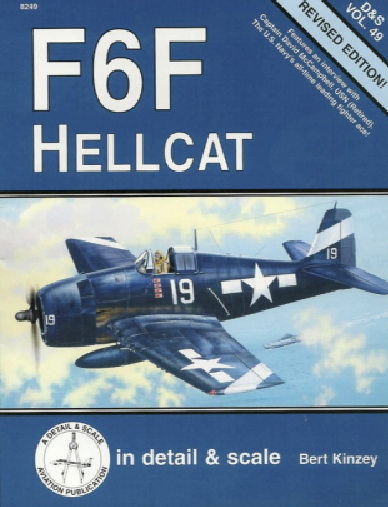
Hellcat
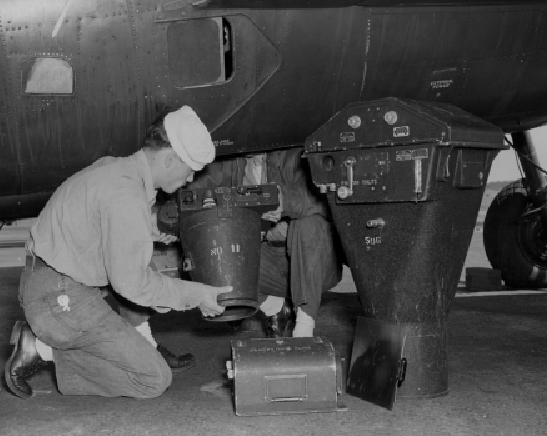
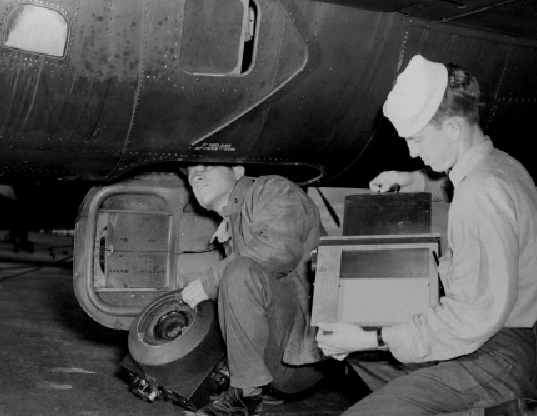
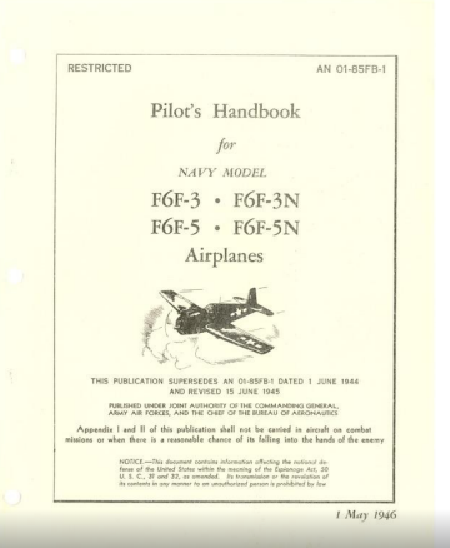
The first production F6F-3, powered by an R-2800-10, flew on 3 October 1942, with the type reaching operational readiness with squadron VF-9 aboard USS Essex in February of 1943. Iterations of this design continued throughout the years with some five variants designed and produced. VMF-512 was outfitted with two F6F-5P, which is the F6F-5 outfitted with cameras for photo reconnaissance work.
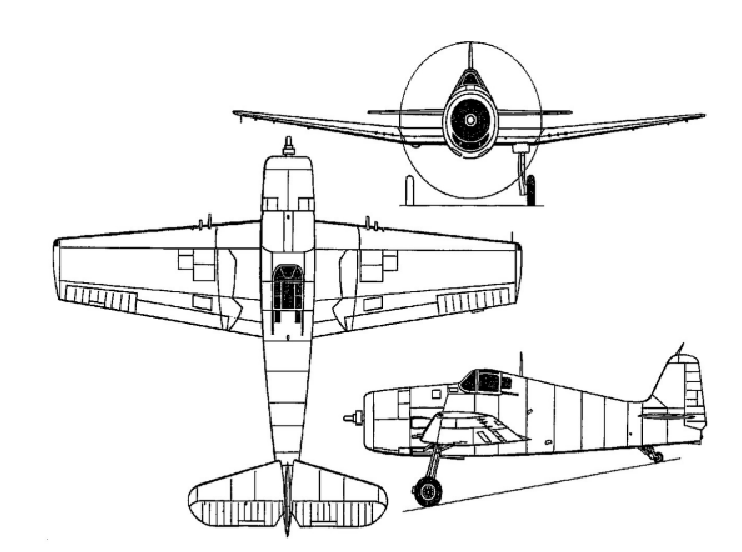
The F6F-5 featured several improvements over previous versions, including a more powerful R2800-10W engine employing a water-injection system and housed in a slightly more streamlined engine cowling, spring-loaded control tabs on the ailerons, and an improved, clear-view windscreen, with a flat armored-glass front panel replacing the F6F-3’s curved plexiglass panel and internal armor glass screen. In addition, the rear fuselage and tail units were strengthened, and apart from some early production aircraft, most of the F6F-5s built were painted in an overall gloss sea-blue finish. After the first few F6F-5s were built, the small windows behind the main canopy were deleted.
The F6F-5 was the most common F6F variant, with 7,870 being built. Of these, only a total 200 were of the F6F-5P Hellcat photo reconnaissance variant.
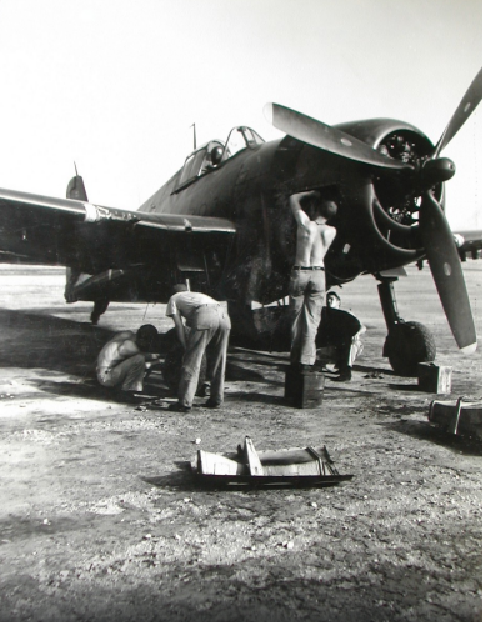
This plane also had impressive performance specifications:
Length: 33 ft. 7 in.
Wingspan: 42 ft. 10 in.
Empty Weight: 9,238 lbs
Loaded Weight: 12,598 lb to 15,415 lb
Engine: 1x Pratt & Whitney R-2800-10W 18-cylinder twin-row radial engine with water-injection boost
Engine Power: 2,200 hp
Cruising Speed: 168 mph
Max Speed: 380–388 mph
Range:~1,090 to 1,530 miles depending on external fuel drop tanks
Ceiling: 37,300 ft
Rate of Climb: ~3,410 ft/min at sea level
Armament:
- The F6F-5P variant was often stripped of standard machine gun loads or reduced to a lighter configuration to save weight and maximize range/speed for reconnaissance runs.
- – Underwing Rockets: Provisions for up to six 5-inch (127 mm) HVAR or two 11.75-inch Tiny Tim unguided rockets.
- – Underbelly/Centerline Station: Capability to carry a single centerline drop tank or a bomb load up to 2,000 lbs (including options like 500-lb or 1,000-lb general-purpose bombs)
The F6F-5 featured several improvements over previous versions, including a more powerful R2800-10W engine employing a water-injection system and housed in a slightly more streamlined engine cowling, spring-loaded control tabs on the ailerons, and an improved, clear-view windscreen, with a flat armored-glass front panel replacing the F6F-3’s curved plexiglass panel and internal armor glass screen. In addition, the rear fuselage and tail units were strengthened, and apart from some early production aircraft, most of the F6F-5s built were painted in an overall gloss sea-blue finish. After the first few F6F-5s were built, the small windows behind the main canopy were deleted.
The F6F-5 was the most common F6F variant, with 7,870 being built. Of these, only a total 200 were of the F6F-5P Hellcat photo reconnaissance variant.
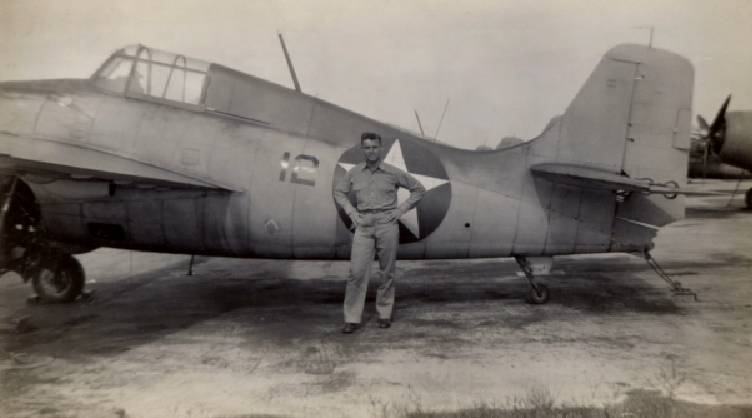
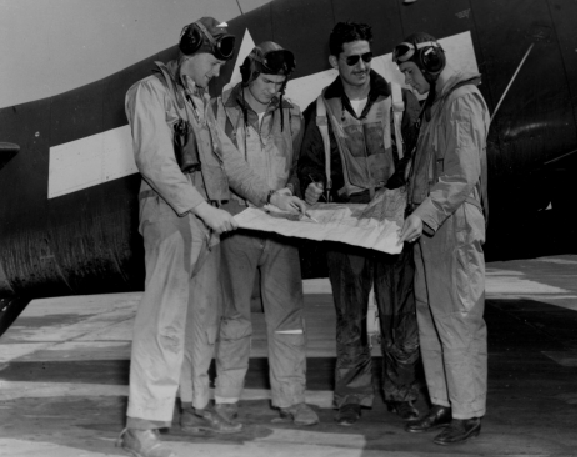
The two F6F-5P Hellcats were assigned to VMF-512 for photoreconnaissance. They were integral to the squadron, and I assume their markings evolved in the same way as the Corsairs did. The Corsair pilots remember the F6Fs joined VMF-512 quite late, perhaps only a month or two before embarking on the carrier. The few photos I have all depict the F6Fs in dark paint, undoubtedly the standard dark sea blue.
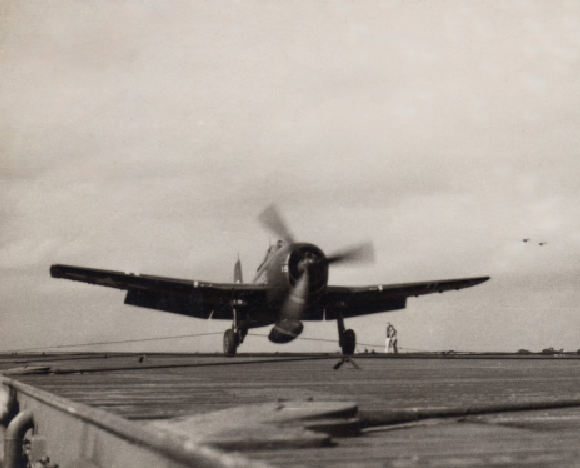
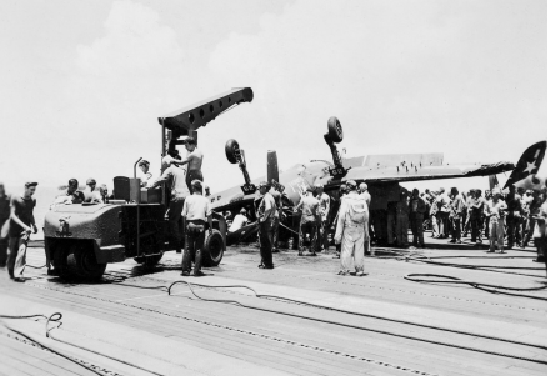
Even though the Hellcat was thought to be easier to land on the small carriers, relative to the Corsair, they weren’t without mishap. This Hellcat, piloted by Captain Sharpe, had its arresting wire tail hook detach from the plane upon landing. The plane subsequently hit the barriers and flipped on its back. More details of this event can be seen in the Operations page. Color film of the aftermath of this event can be seen on YouTube at “WW2 Marine Carrier Aviation” or “@VMTB143Mike”.
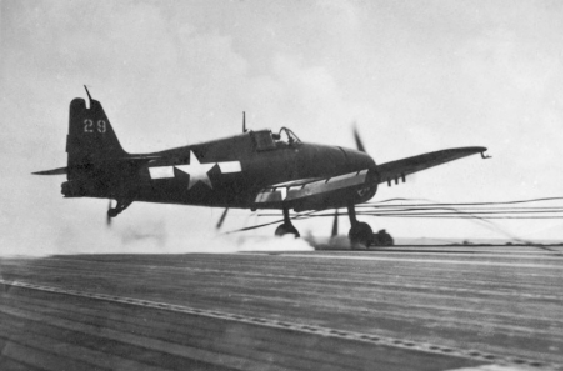
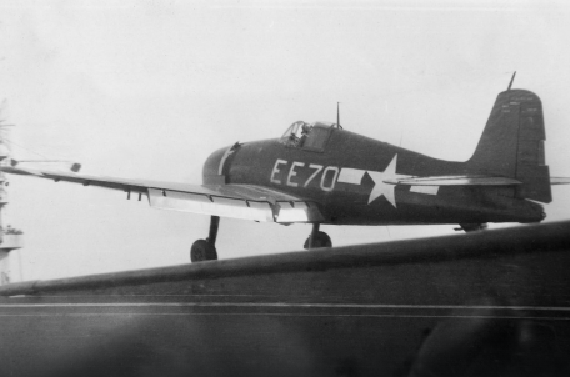
Here’s the only photo I have of an EE marking on an F6F. Since they joined VMF-512 late, after the Corsairs were numbered, it’s my guess the Hellcats were the last two in the numbering sequence making them EE69 and 70 (or EE70 and 71). This photo was taken after the squadron was taken aboard the carrier on March 11, but before May 23, 1945.
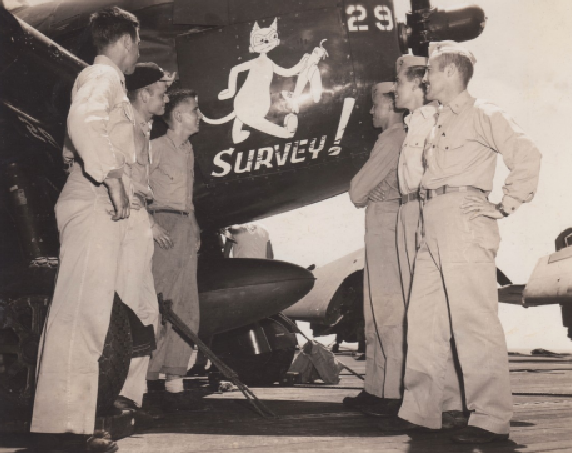
Here is a gallery of the images of the Hellcat from this squadron: