VMTB-143

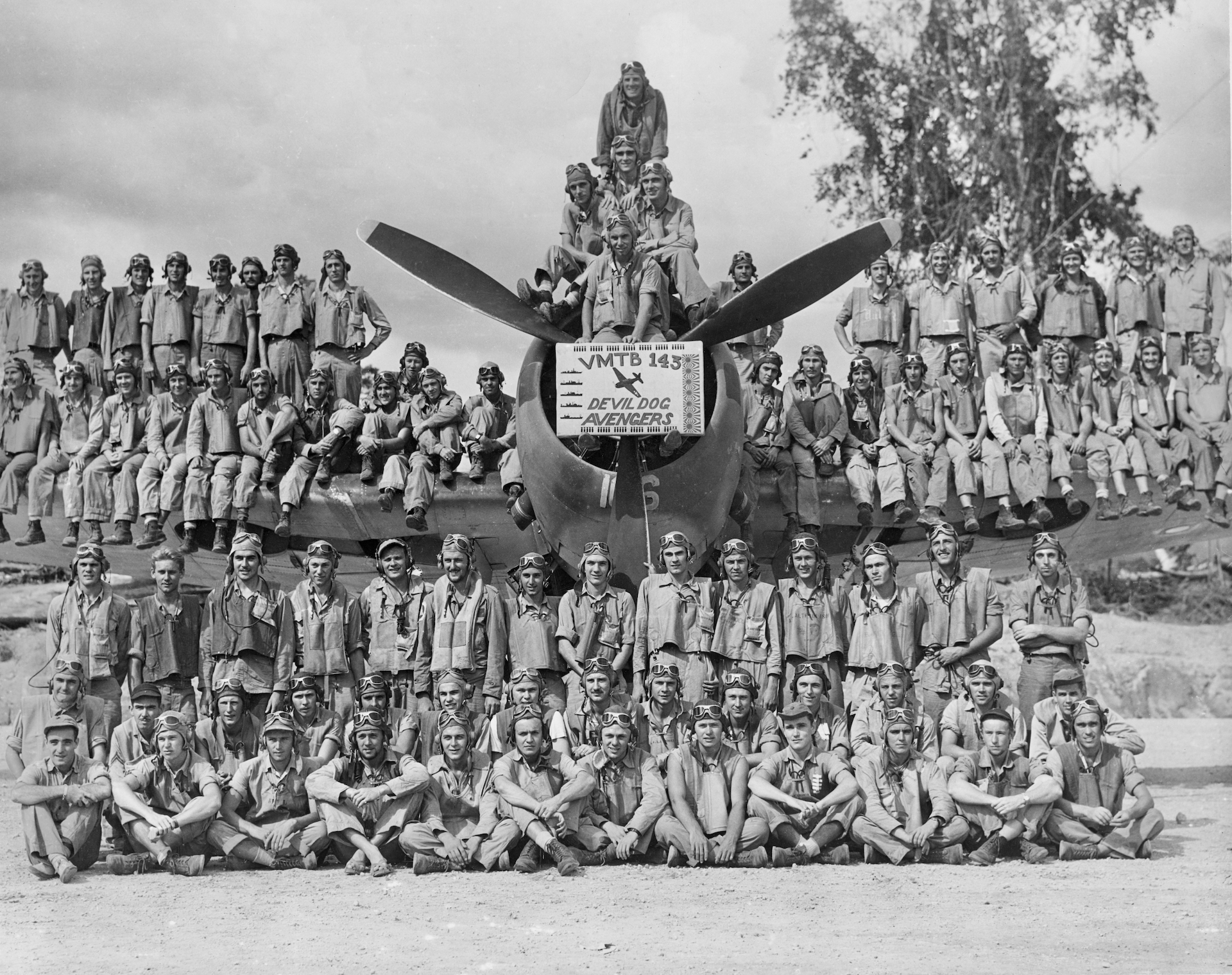
The squadron was initially activated as Marine Scout Bombing Squadron 143 (VMSB-143) on September 7, 1942 at Camp Kearny, San Diego, California, as a part of Marine Air Group 11. They were named the “Devil Dog Avengers”.  About one month later, Marine Air Group 11 was sent overseas, and the squadron was transferred to Marine Air Group 12, serving as a part of this group during its tour of duty overseas. Later in 1942, the squadron stopped flying SBD Dauntlesses and started training as a TBM Avenger squadron.  It was the first US Marine squadron to fly TBM Avengers.  During this initial tour of duty, the squadron was land based and was stationed at Guadalcanal Island, then Munda, New Georgia Island and Piva on Bougainville Island.  They performed in five combat tours from February 16, 1943 through March 2, 1944 where the squadron is officially credited with sinking 11-1/2 Japanese ships, damaging four other ships, shooting down 7-1/2 Japanese aircraft (and probably destroying five more in the air), and it is unofficially estimated that the squadron destroyed seventy five, and damaged twice that many, Japanese planes on the ground in bombing missions on air fields.  It also played an important role in driving the Japanese from New Georgia, Vella La Vella and Bougainville Islands, and had participated in the neutralization of Rabaul. This is a photo of the squadron in late 1943.

The squadron was initially activated as Marine Scout Bombing Squadron 143 (VMSB-143) on September 7, 1942 at Camp Kearny, San Diego, California, as a part of Marine Air Group 11. They were named the “Devil Dog Avengers”.  About one month later, Marine Air Group 11 was sent overseas, and the squadron was transferred to Marine Air Group 12, serving as a part of this group during its tour of duty overseas. Later in 1942, the squadron stopped flying SBD Dauntlesses and started training as a TBM Avenger squadron.  It was the first US Marine squadron to fly TBM Avengers.  During this initial tour of duty, the squadron was land based and was stationed at Guadalcanal Island, then Munda, New Georgia Island and Piva on Bougainville Island.  They performed in five combat tours from February 16, 1943 through March 2, 1944 where the squadron is officially credited with sinking 11-1/2 Japanese ships, damaging four other ships, shooting down 7-1/2 Japanese aircraft (and probably destroying five more in the air), and it is unofficially estimated that the squadron destroyed seventy five, and damaged twice that many, Japanese planes on the ground in bombing missions on air fields.  It also played an important role in driving the Japanese from New Georgia, Vella La Vella and Bougainville Islands, and had participated in the neutralization of Rabaul. This is a photo of the squadron in late 1943.


It became apparent to the Marine brass that once the battle zone shifted to the mid-Pacific, and then near to Japan, that there would be no land-based Marine air squadrons within reach of the ground Marines until an airbase could be captured.  Unless something happened all close air support (CAS) would have to come from the Navy.  The Marine Corps brass believed strongly that Marine
air should support Marine ground units.  They argued successfully to have their own carriers with specially trained CAS units.  The USS Gilbert Islands was one of only four carriers with all-Marine flight crews in WW2 (the ship’s complement was still Navy).  If the war had gone on for a few more years, as widely anticipated, there were more such carriers in the planning.   In June of 1944, they departed the South Pacific and crossed the Pacific to Santa Barbara, CA. On November 5, 1944, the squadron was redesignated VMTB(CVS)-143 and directed to train for this carrier duty aboard the USS Gilbert Islands (CVE-107).  They were then renamed as the “Rocket Raiders”.  The veteran officers and enlisted men came from a variety of units including VMTB-134, the original VMSB-143, VMTB-232 and VMS-3, while some were newly minted pilots, turret gunners and radio-gunners.  They were brought here to become carrier qualified, but the 3-man crews were also expected to be proficient in bombing, rocketing, depth charging, strafing, torpedoing and aerial defense. USMC color films of this training can be found on YouTube at “WW2 Marine Carrier Aviation” or https://www.youtube.com/@VMTB143Mike. This is a photo of all of the officers of VMTB(CVS)-143 taken at MCAS Santa Barbara before deploying on the ship.  Of the 28 men shown, 17 would be listed in the Muster Rolls of June 1945.  The balance were replaced at some point.  The building in the background is now the terminal for the Santa Barbara Airport – and it looks just like this today!  

The squadron departed MCAS Santa Barbara on April 12, 1945.  More details of the training and tour of duty can be found on the Operations page.
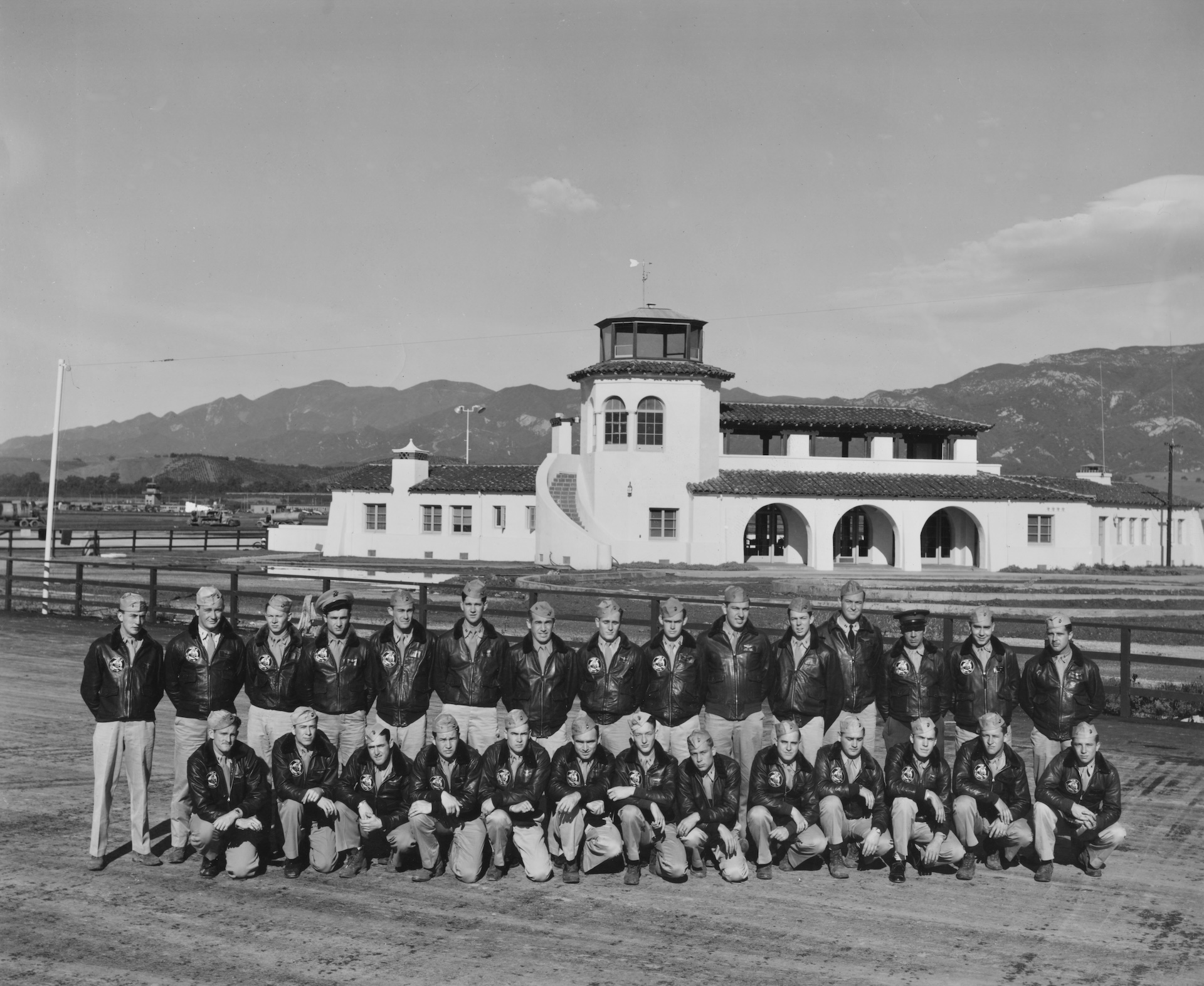
It became apparent to the Marine brass that once the battle zone shifted to the mid-Pacific, and then near to Japan, that there would be no land-based Marine air squadrons within reach of the ground Marines until an airbase could be captured.  Unless something happened all close air support (CAS) would have to come from the Navy.  The Marine Corps brass believed strongly that Marine air should support Marine ground units.  They argued successfully to have their own carriers with specially trained CAS units.  The USS Gilbert Islands was one of only four carriers with all-Marine flight crews in WW2 (the ship’s complement was still Navy).  If the war had gone on for a few more years, as widely anticipated, there were more such carriers in the planning.   In June of 1944, they departed the South Pacific and crossed the Pacific to Santa Barbara, CA. On November 5, 1944, the squadron was redesignated VMTB(CVS)-143 and directed to train for this carrier duty aboard the USS Gilbert Islands (CVE-107).  They were then renamed as the “Rocket Raiders”.  The veteran officers and enlisted men came from a variety of units including VMTB-134, the original VMSB-143, VMTB-232 and VMS-3, while some were newly minted pilots, turret gunners and radio-gunners.  They were brought here to become carrier qualified, but the 3-man crews were also expected to be proficient in bombing, rocketing, depth charging, strafing, torpedoing and aerial defense. USMC color films of this training can be found on YouTube at “WW2 Marine Carrier Aviation” or https://www.youtube.com/@VMTB143Mike. This is a photo of all of the officers of VMTB(CVS)-143 taken at MCAS Santa Barbara before deploying on the ship.  Of the 28 men shown, 17 would be listed in the Muster Rolls of June 1945.  The balance were replaced at some point.  The building in the background is now the terminal for the Santa Barbara Airport – and it looks just like this today!  

The squadron departed MCAS Santa Barbara on April 12, 1945.  More details of the training and tour of duty can be found on the Operations page.
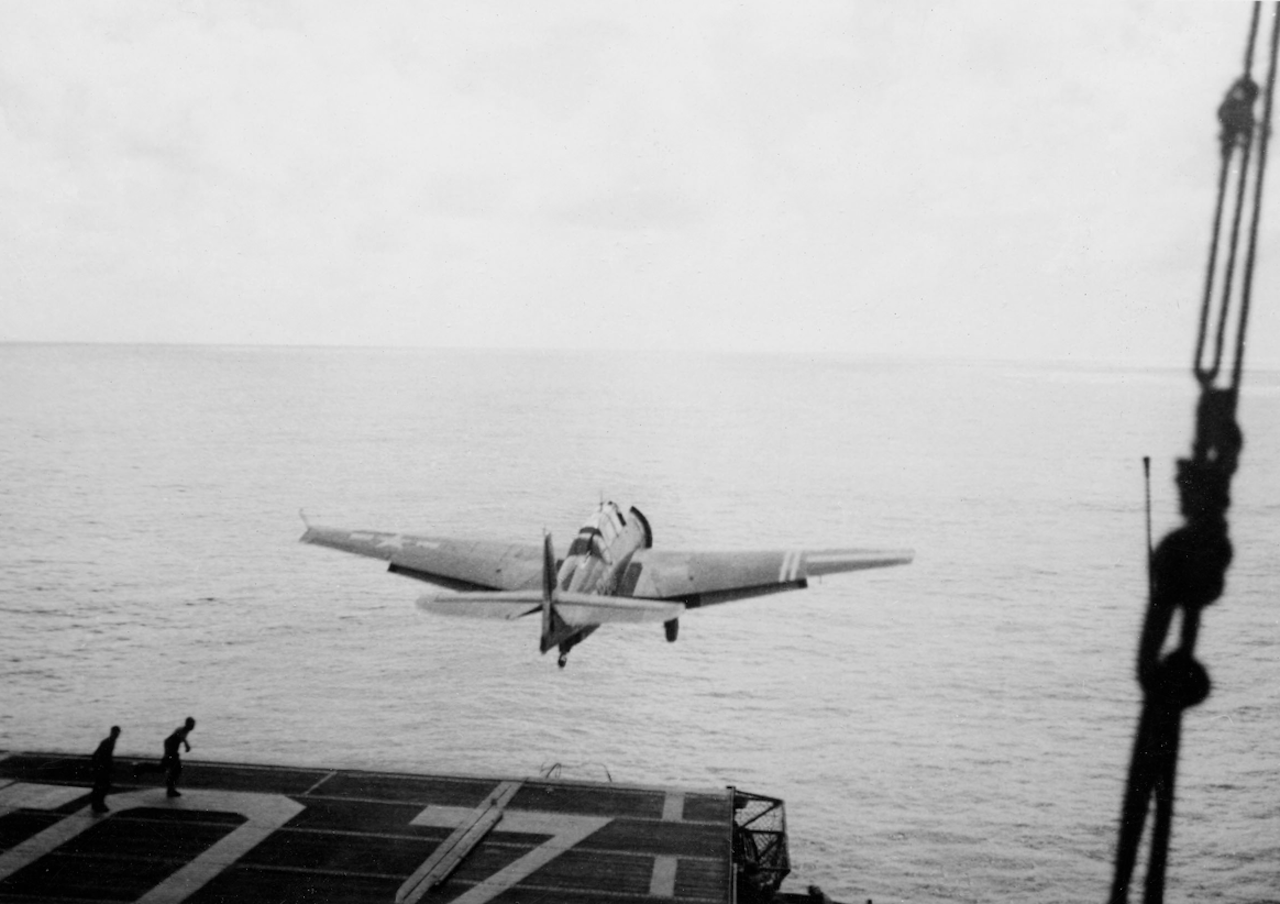
The TBM was a large aircraft carrying three crew members – a pilot, a radioman/gunner and a turret gunner.  More details about the plane can be found in the Planes page.  

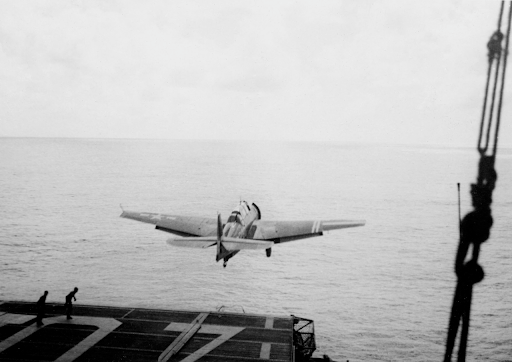
Carrier training in it was intense.  The CVEs were too short for a normal take off run.  Every launch was a catapult shot.  
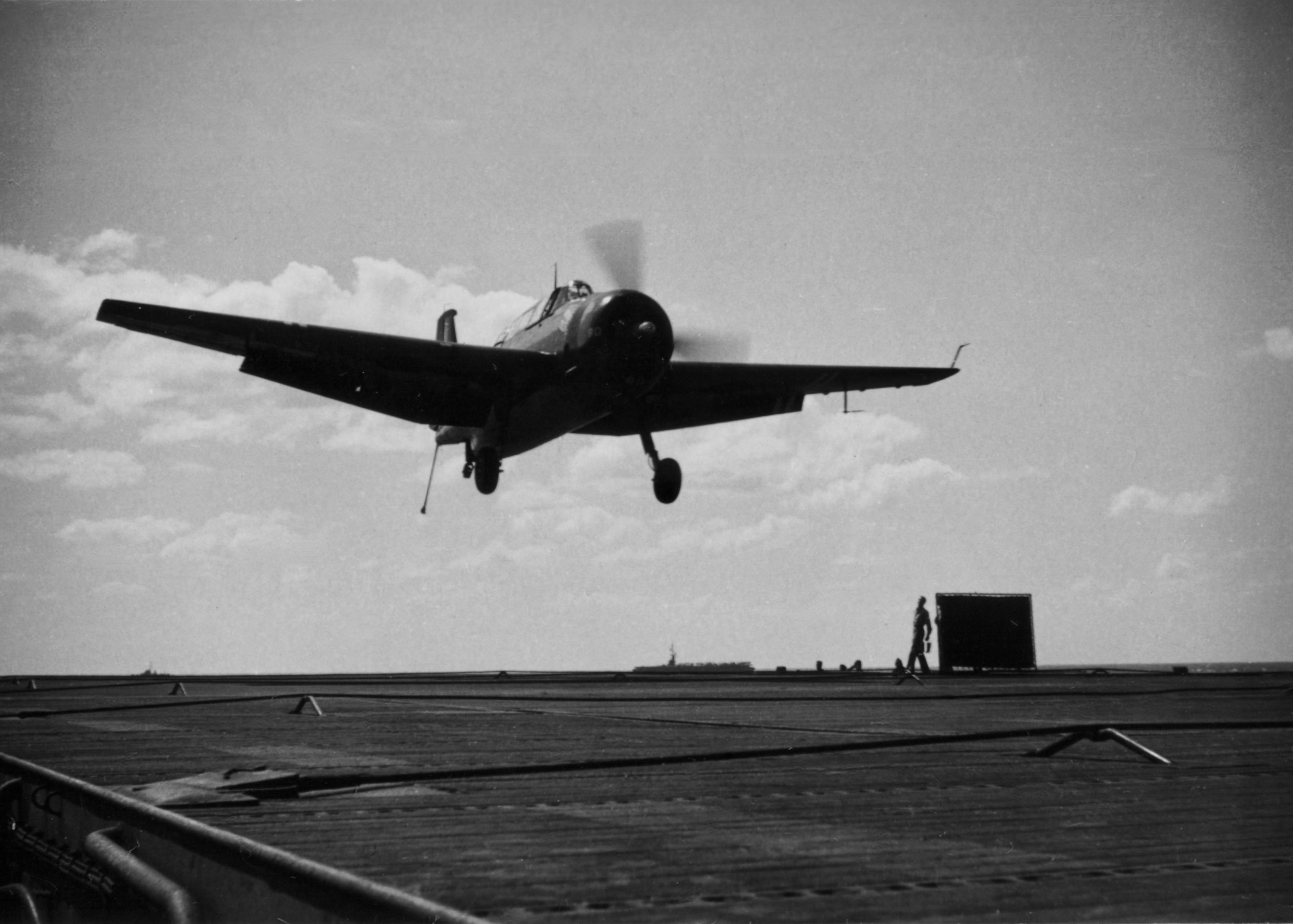

The TBM was a large aircraft carrying three crew members – a pilot, a radioman/gunner and a turret gunner.  More details about the plane can be found in the Planes page.  

Carrier training in it was intense.  The CVEs were too short for a normal take off run.  Every launch was a catapult shot.  
On landing there was no margin for error due to the narrow width of the deck and the large wingspan of the plane.
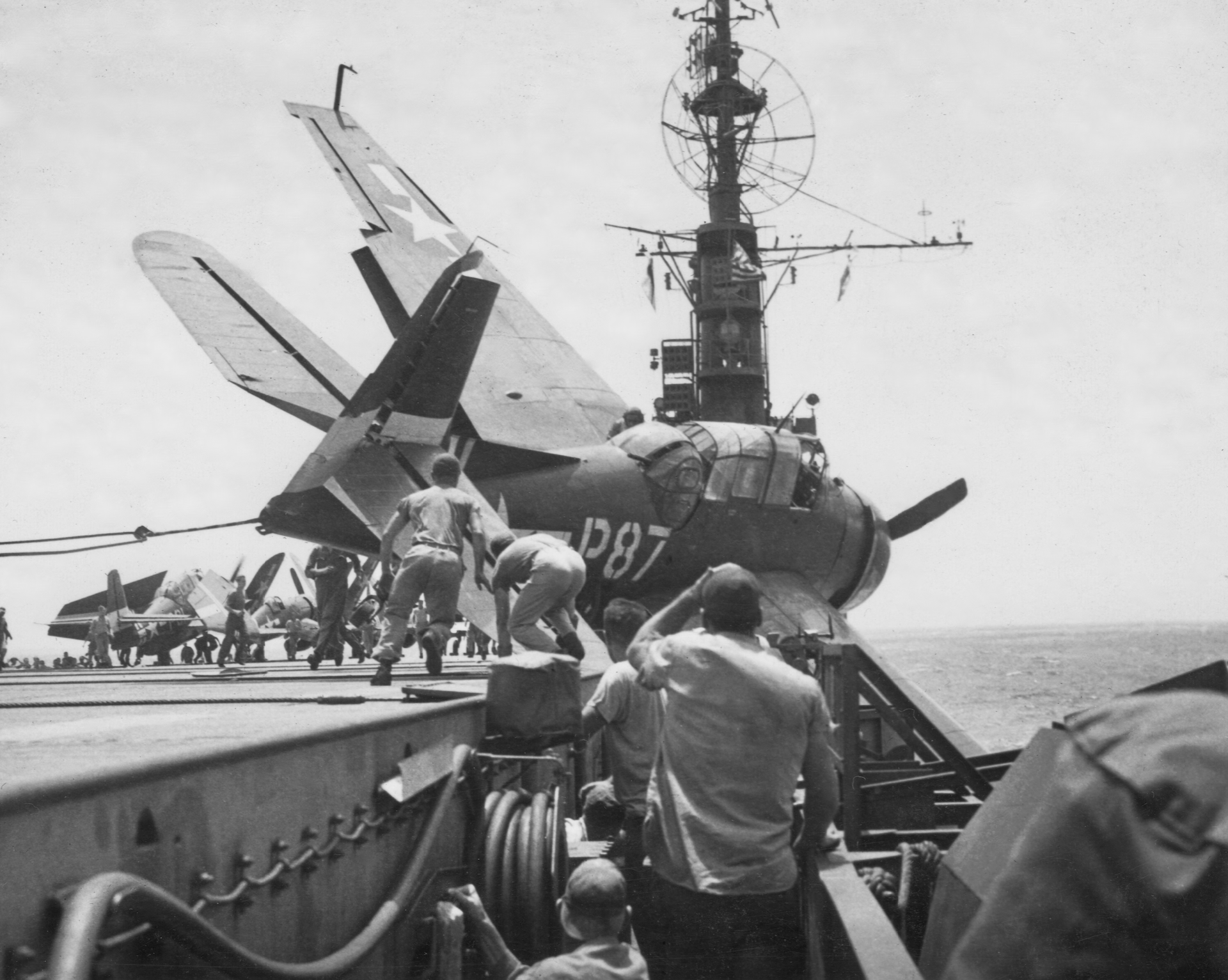
On landing there was no margin for error due to the narrow width of the deck and the large wingspan of the plane.

You either made it down and hooked a wire or you crashed into the barriers.  If that didn’t stop you, there may be parked planes awaiting you.   
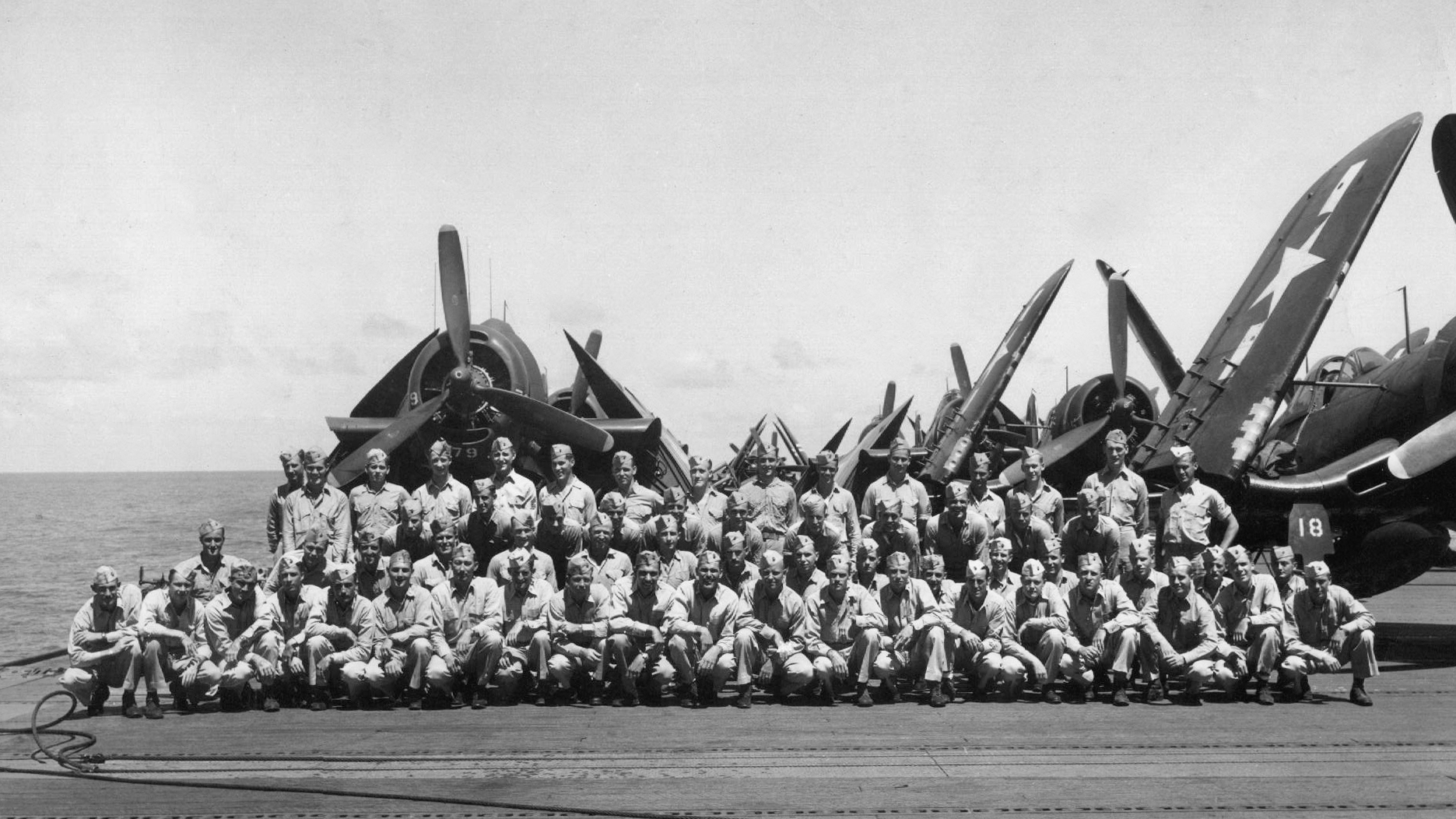

You either made it down and hooked a wire or you crashed into the barriers.  If that didn’t stop you, there may be parked planes awaiting you.   
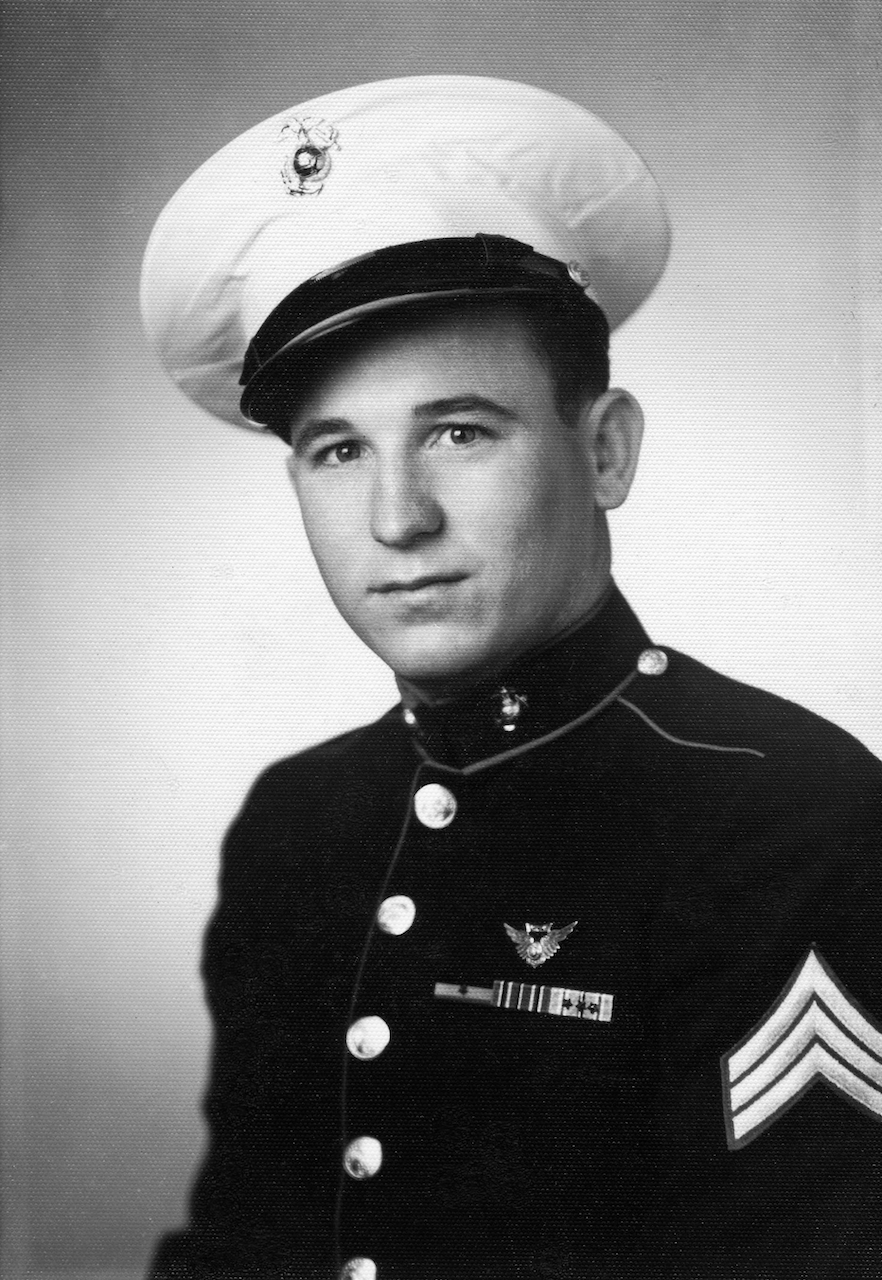
Here is a photo of all 62 men (Officers and Enlisted) comprising squadron VMTB-143 aboard the USS Gilbert Islands in early 1945. 

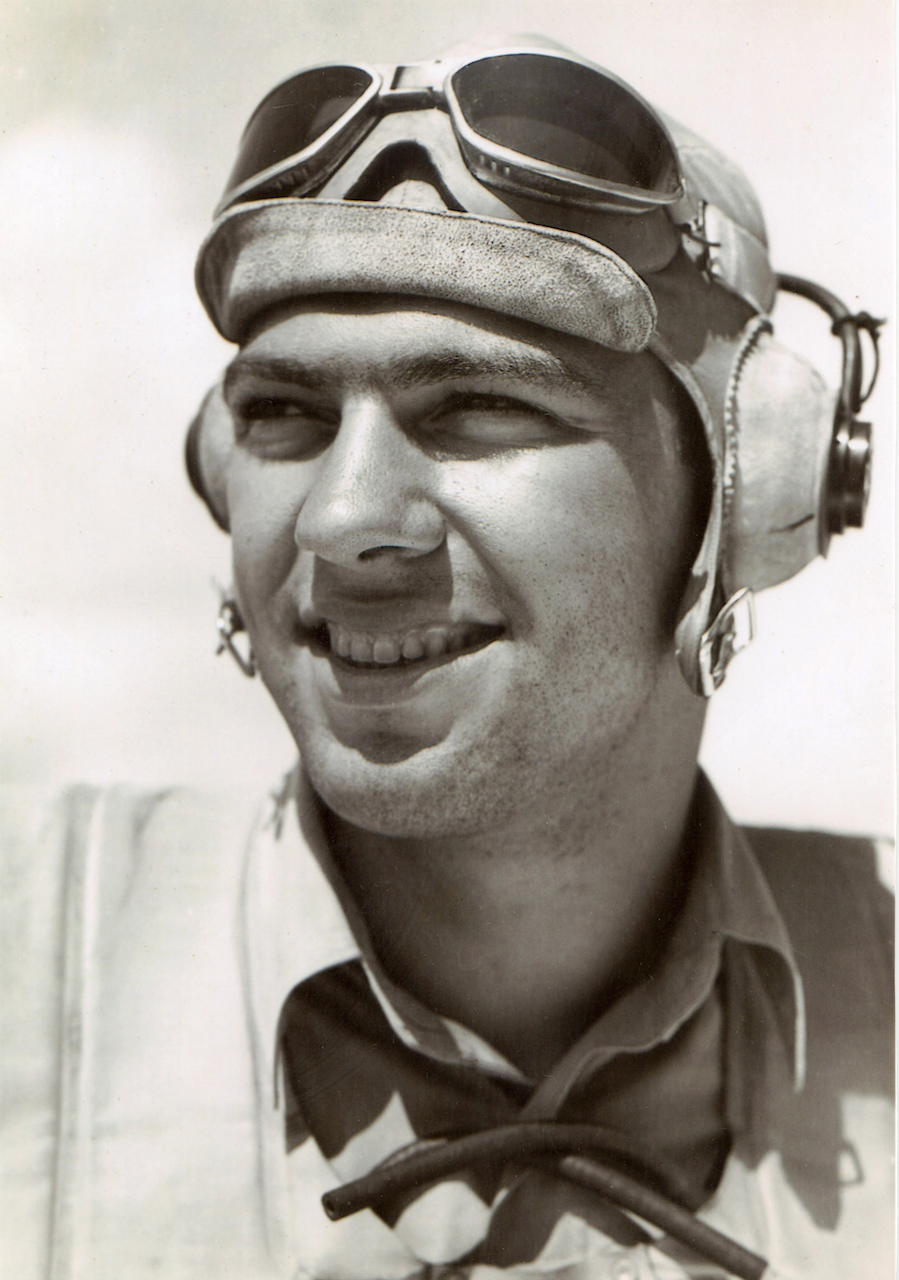
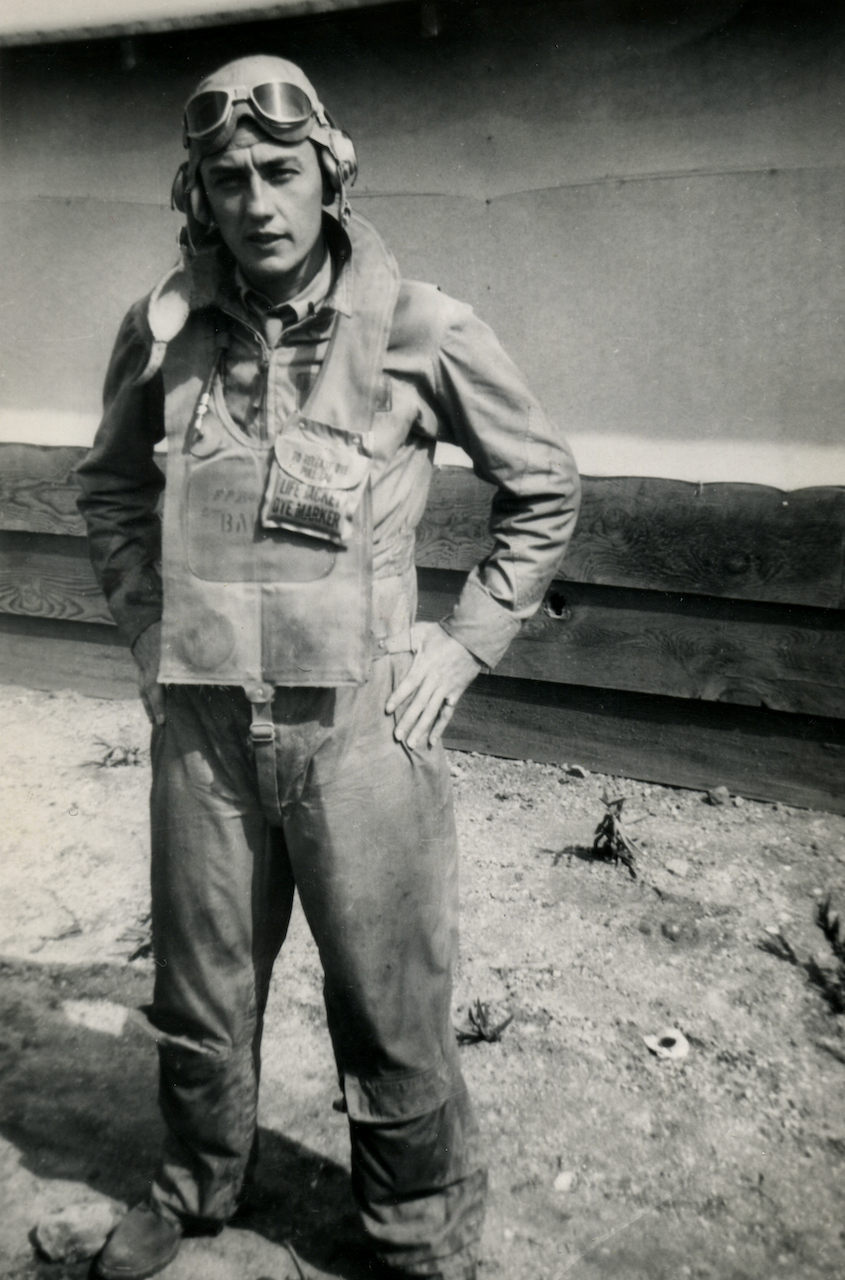
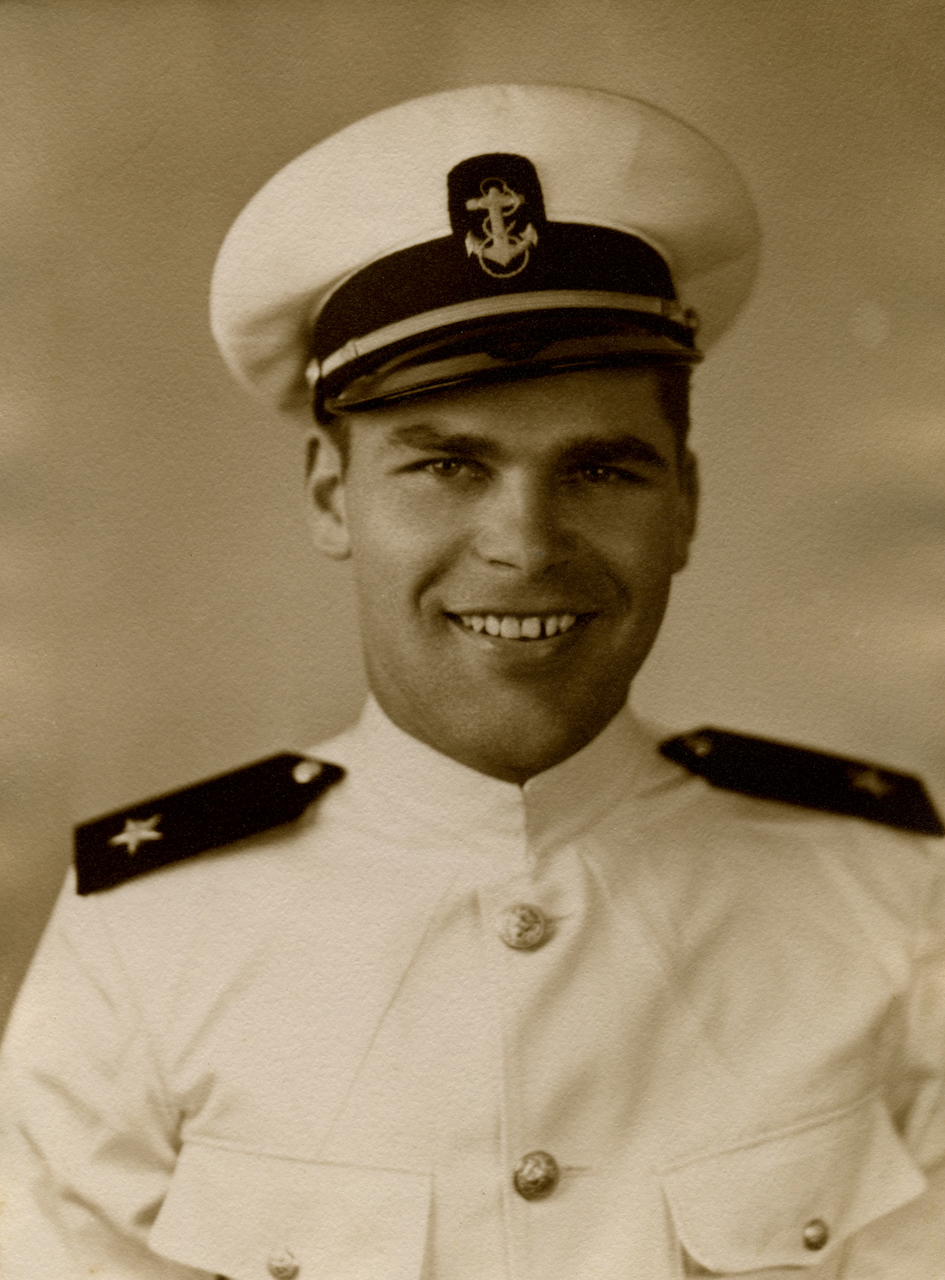
Click on this Gallery button below to take you to the entire squadron’s Gallery which is arranged in alphabetical order. Having interacted with some of the veterans, and/or their families, I have additional details about their lives below. Clicking on the Gallery button in their individual section will take you directly to their section in the squadron’s Gallery.

George ‘Press’ Adams is from a tiny town in Texas. Press was one a turret gunners who first served in the ‘Red Devils’ of VMTB-232 and saw earlier combat in the Solomons. After the war Press returned home and served his town in several official capacities including postmaster. He also owns a cattle ranch just outside of town. Press sent a few pictures from his 143 days and later on his daughter Georganna Sonnenberg sent some more, along with the note that Press avidly follows his town’s 6-man football team. Press, Georganna and I are pleased to show these.

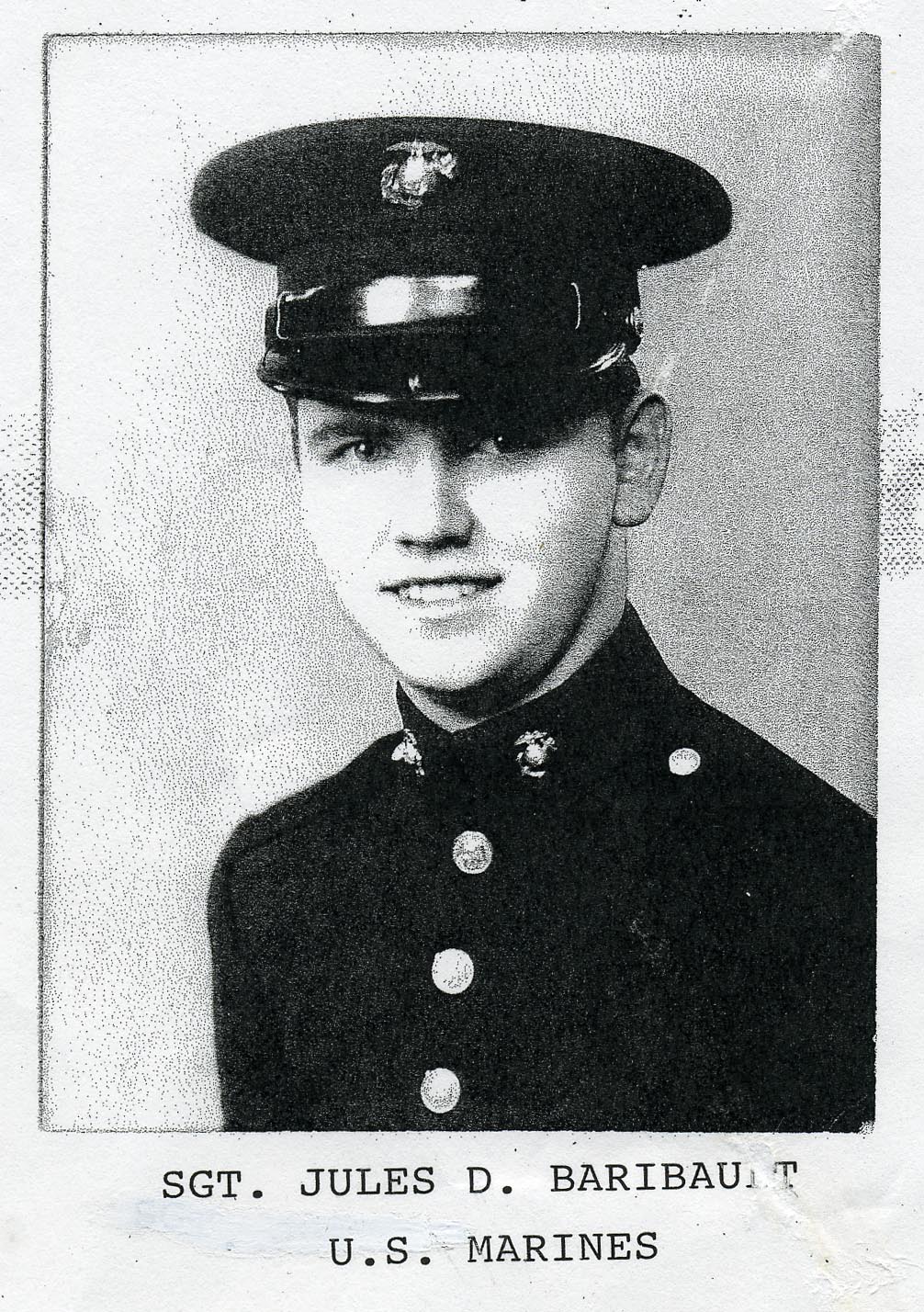
Julius ‘JD’ Baribault was in boot camp on December 7, 1941. He was assigned to aviation communication and served stateside years prior to going to flight duty in VMTB-143. He arrived aboard the USS Gilbert Islands in August, 1945 along with a small group of replacements and was put in Lieutenant Cromwell’s crew as Sergeant Boyd’s replacement. Thanks in part to Lieutenant Cromwell’s strong recommendations, JD was admitted to the University of Illinois where he earned degree in Mechanical Engineering. He worked in Louisiana for 37 years in the oil business. I found Sergeant Baribault in July, 2004 and enjoyed a number of conversations and mail exchanges. Sadly Sergeant Baribault died suddenly in October 2004. Rest in peace my friend.

Robert ‘Bob’ Cox was the intelligence officer in VMTB-143. Prior to joining the Marines in March, 1944, he had a law practice in Oklahoma City. His academic career was fast-tracked as he graduated from High School at age 15, spent 3 years at the University of Oklahoma before entering Law School at 19, and at only 21 he began practicing law in Oklahoma City (1931). After basic training he attended the USMC Aviation Group Officers School, USAAF Combat Intelligence schooling and Combat Information Center training. He also accompanied the squadron to North Island in 1945 as they trained at the Navy’s Anti-Submarine School. After the war Lieutenant Cox re-entered civilian life in December, 1945 to resume his law practice. His daughters Bettie Lu, Ann and Carol loaned me their father’s scrapbooks to copy. Most scrapbooks I’ve seen have a large percentage of photos and a few papers, but Lt. Cox’s are the opposite. His papers shed light on several aspects of the times and you’ll find relevant information scattered throughout these pages from his scrapbooks. Lieutenant Cox’s daughters and I are pleased to present these images in his section of the squadron’s Gallery. Robert L. Cox was born in Duncan Oklahoma in 1909 and passed away in 1995.

Elmer ‘Dan’ Daniels wife Louise kindly sent some photos for this site. Dan arrived aboard the carrier in the same group of replacements as Sergeant Baribault. Prior to this Sergeant Daniels had served in SBDs on Guadalcanal. Louise remembers him talking about the Japanese shelling, including the incident October 14, 1942, when many officers in VMTB-141 were killed. Dan stayed in the Marines for 20 years, retiring in the early 1960’s.

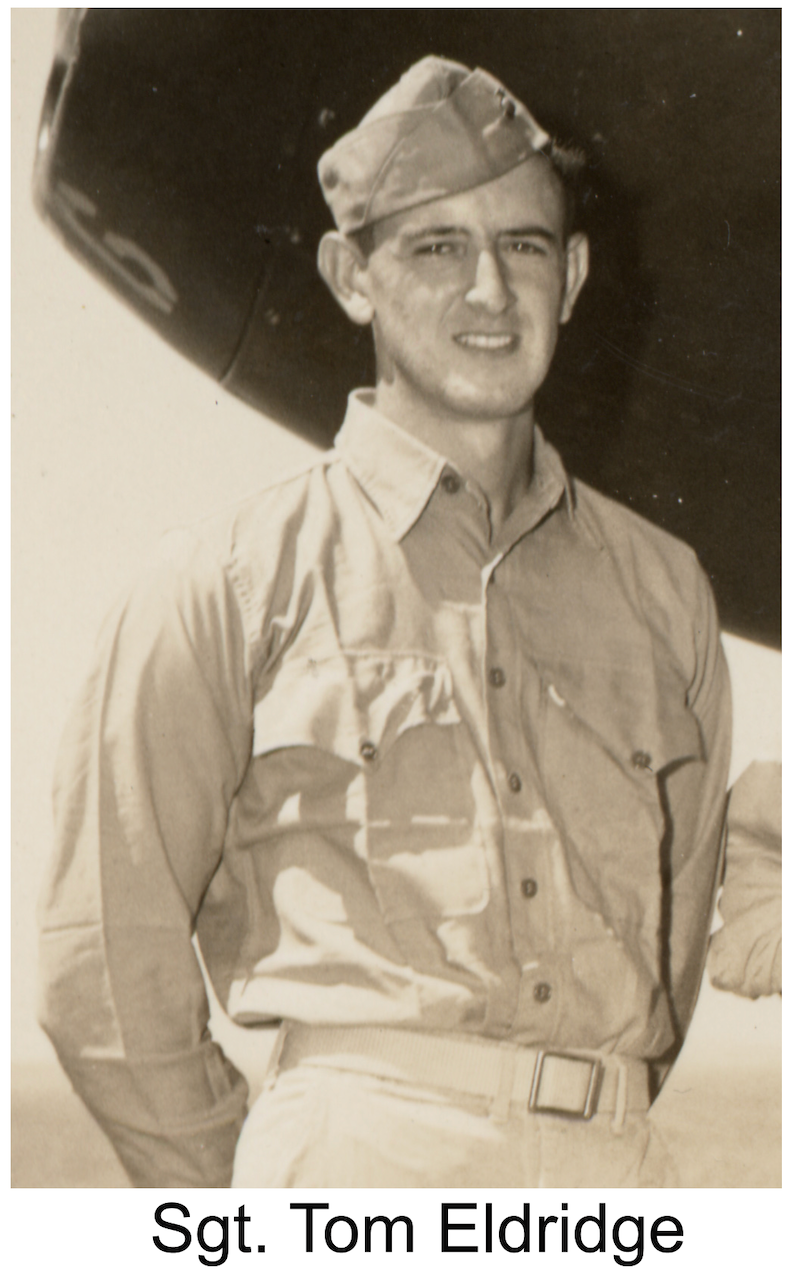
Thomas ‘Tom’ Eldridge was in the group of aircrew sergeants that came from VMTB-232. Tom sent a couple of pictures – one of his flight crew and one from 1944 while training for VMTB-143. The latter helped fill in the gap for pictures of the flight crew. After the war Tom went to work for North American Aviation, later Rockwell. He was a Manufacturing Project Administrator for the F-86, F-100 and B-70 programs.

Thomas ‘Tommy’ Faull was a pilot and was always described as a nice guy by his colleagues. He was famous for bringing the squadron mascot Molly the black bear to Santa Barbara in 1944. Thomas Faull was recalled for the Korean war and flew Corsairs. In 1953, his plane crashed on takeoff, and his spine was damaged, thus ending his flying career. His son Tom sent along some pictures which are in his gallery. The original document awarding his WW2 medals is included and shows the details for the award of the 3 battle stars given to the carrier and all its veterans. Thomas Faull died in 1981.

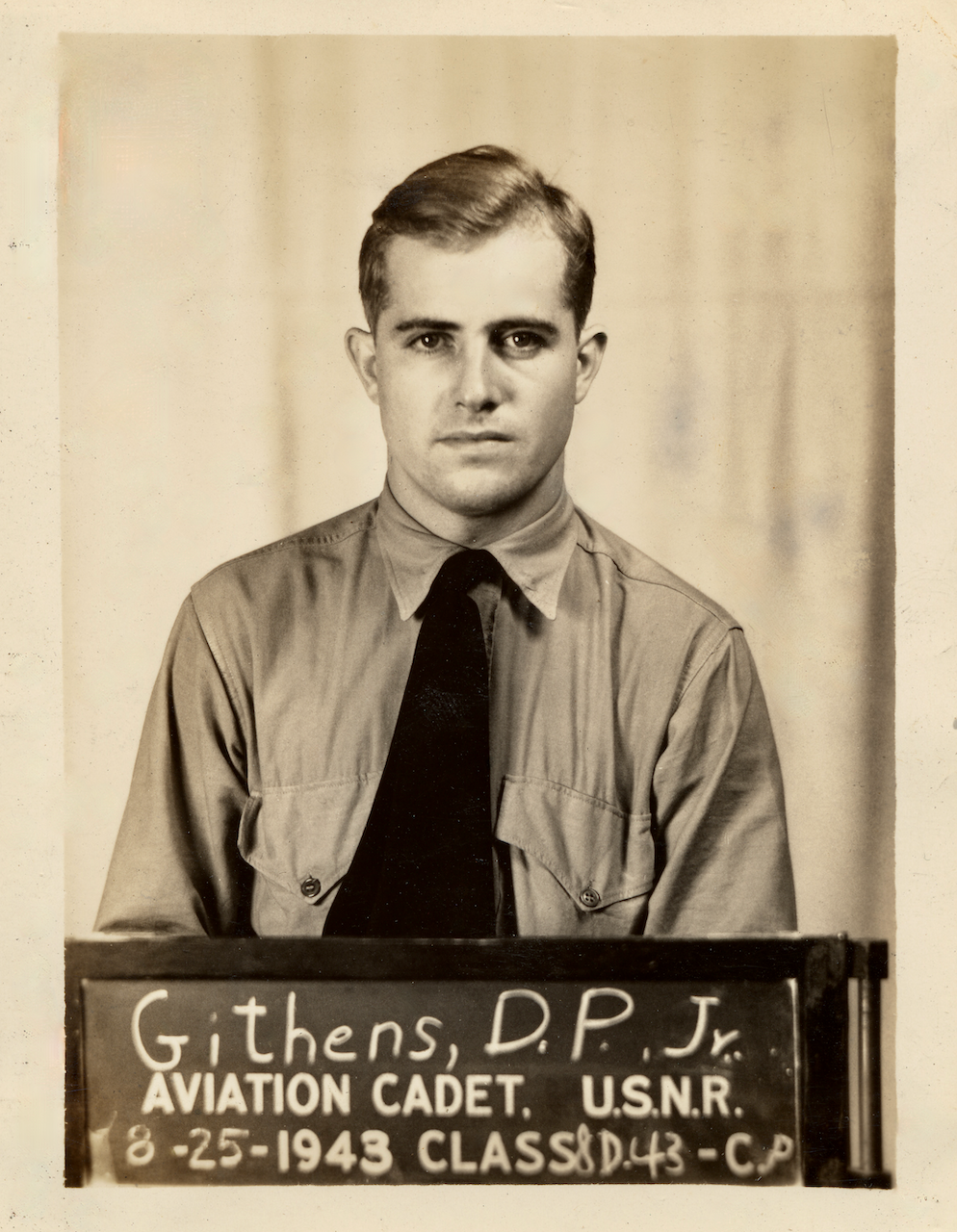
Daniel ‘Dan’ Githens’ wife Jeannie kindly let me borrow the family photo albums. Their son Paul Githens made a copy of Dan’s pilot logbook. After Dan earned his wings he was assigned to ferry planes from the Douglas plant in Santa Monica, California to various airbases around the US. He then was sent to Goleta, California in June, 1944 to be part of VMTB-143. It was a relief to be assigned to a permanent squadron! Later, Dan flew Corsairs off carriers in VMF-312 (The Checkerboards) in Korea. After Korea, Dan continued his education in the field of electronics, earning an MS degree. He served at the Point Mugu Test Center and the Navy’s Bureau of Ships until retirement after 22 years of service. Dan Githens died in 1987. Jeannie, Paul and I are pleased to present these photos.


William ‘Billy’ Hay graduated from Hampden-Sydney College, Virginia, in 1942. After getting his wings, Billy was assigned to VMS-3 at St. Thomas, Virgin Islands, where he flew the OS2U Kingfisher and SBD Dauntless on anti-submarine patrol in 1943-44. He was sent to Goleta, California in June of 1944 to become part of VMTB-143. He made the 1,000th landing on the USS Gilbert Islands in June, 1945. After the war, he earned a law degree, became a judge, and rose through the ranks of the Virginia court system to become one of the top judges.

A restored and flying TBM has been painted in Hay’s colors as P82(Doris May) from his time in VMTB-143. It is a part of the Capitol Wing of the Commemorative Air Force and rides can be obtained in the plane.

Charles ‘Charlie’ Hoke came to VMTB-143 from VMTB-232, the ‘Red Devils’. After the war he joined the Air Force and rose to the rank of full Colonel where he played a key role in the installation of strategic missiles and the functioning of Strategic Air Command headquarters in Omaha, Nebraska. He sent some interesting pieces including the VJ-Day announcement and a newsletter from the Gilbert Islands. Later on, he visited with me and left a few more photos for the web site.

Sam Isaac was in the TBM crew with Jim Brunson and Dan Githens. He opted for SBDs and didn’t go out on the USS Gilbert Islands tour, but he sent a nice photo of himself with the others from his VMTB-143 days. Sam enlisted in January of 1942 at the age of 16. He trained as a gunner and went to Midway in May of 1942 as part of Major Henderson’s squadron, VMSB-241, as a back-seater in the SBD-2.

Harry Knickelbein earned his wings and trained on SBDs. Before the assignment to VMTB-143, Harry flew ferry missions from Vultee and Douglas factories which moved the SBDs along the supply chain. After service in WW2, Harry was called up for Korea. He went to Cherry Point, NC and got checked out in the F6F Hellcat, but shortly went into the new expanding field of helicopters. After leaving the service he started Los Angeles Airway, a helicopter flying service. Later, he owned a marina in the foothills of the Sierra Mountains in California where he rented a fleet of boats to trout fishermen

John ‘Jack’ Lally’s friend Bill Hunteman scanned some of Jack’s pictures and sent them to me for the web site. Jack Lally sent a second group of pictures via his VMTB-143 buddy Fritz Liebich. Jack and Fritz were old pals that went to college together, flew together in 1944 in VMS-3 in the Virgin Islands, transferred to VMTB-143 together, and have maintained a friendship ever since. Jack was the photographic officer and this contribution includes air-to-air photos of TBM formations, many officers and enlisted men, and Shellback Day in the pilot’s Ready Room.

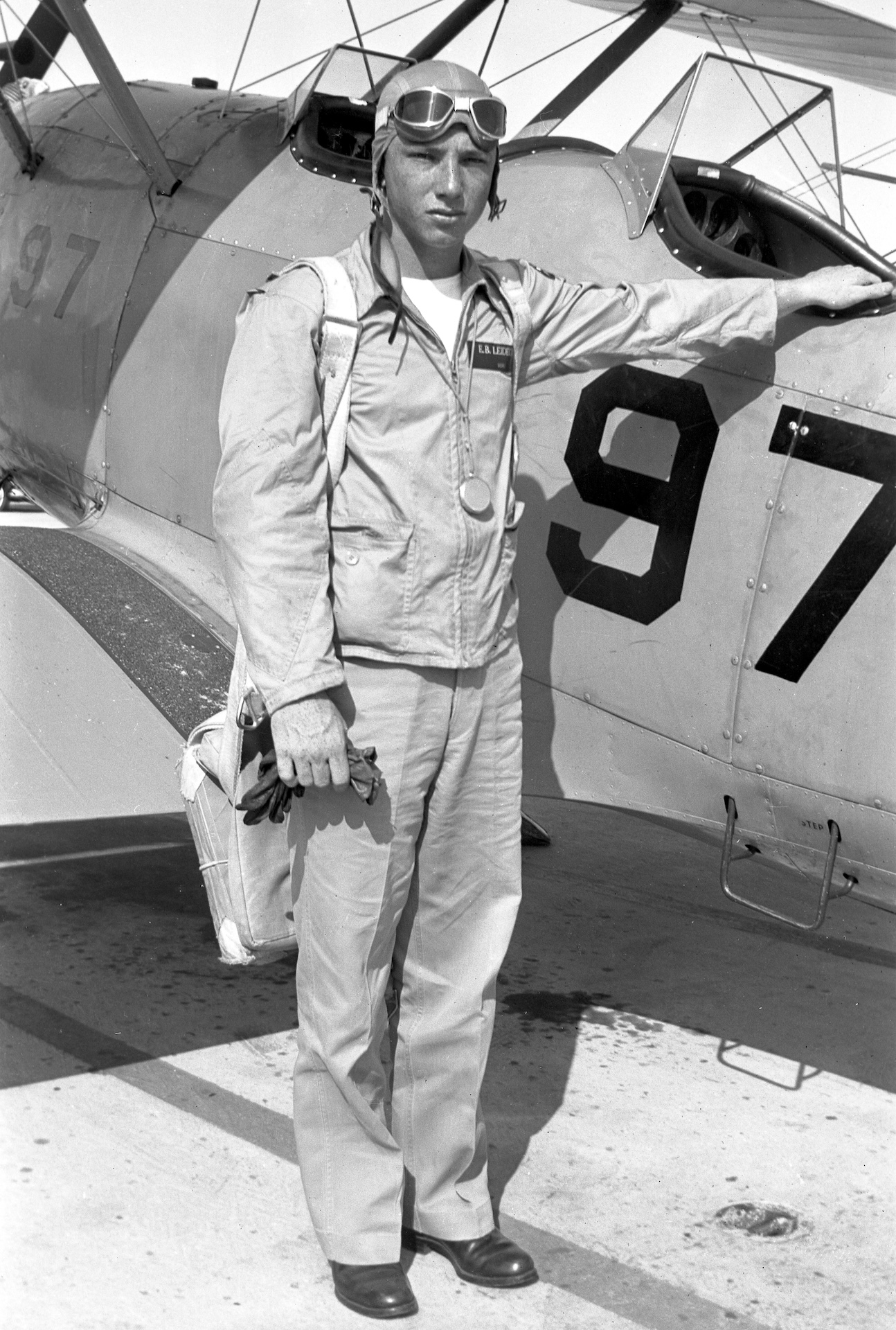
Edward ‘Ed’ Leidecker entered the service in 1940 and earned his wings at Pensacola as an enlisted man. He’s named in the book “Enlisted Naval Aviation Pilots” (Turner Publishing Co. 1995. Thanks to Ed’s wife Mary, we can show several nice photos of Ed from his training days at Pensacola and his USMC career in VMSB-232 (1943), VMTB-143 (1943-44) and VMTB-143 (1944-45). His early days in combat were as a flying Sergeant, but he was promoted to Lieutenant before the cruise of the USS Gilbert Islands. As an example of a crew that stayed together for a long time, his log book shows he flew with gunners Stanley Danielson and Roger Hansen for two years. After the war Ed had a full career as an Eastern Airlines pilot. Edward B. Leidecker passed away in 2002.

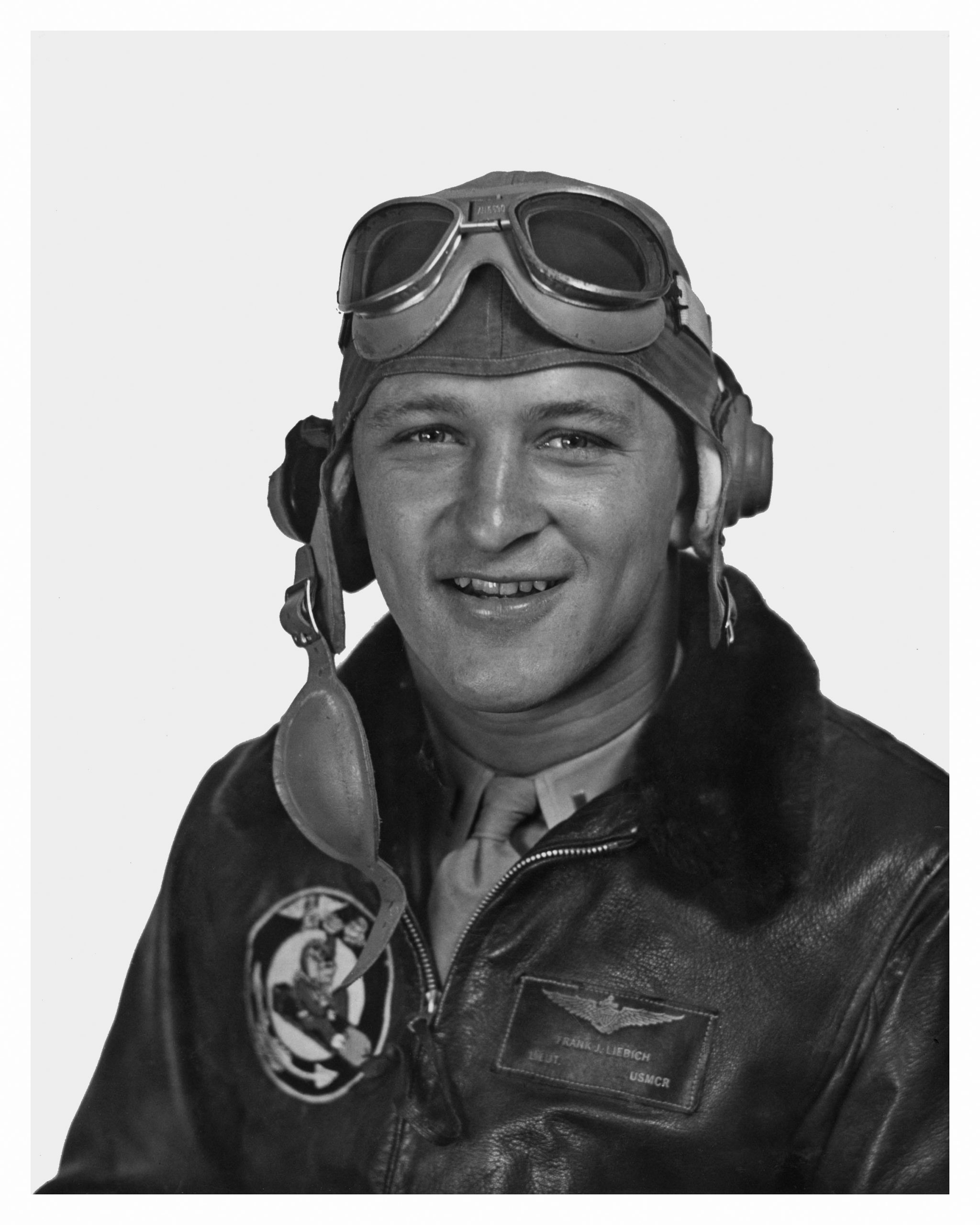
George ‘Fritz’ Liebich and Jack Lally have been lifelong friends. Fritz and Jack grew up near each other, earned their wings in 1943, and served together in VMS-3 and VMTB-143. After the war, Fritz returned to the family brewery business in Wisconsin and was a certified Brew Master. Fritz’s WW2 photo albums have sections that relate to the tour on the USS Gilbert Islands. His son-in-law Mike Christian scanned them and sent me a CD of wonderful photos.

In my experience it’s rare to see nose art on Avengers and Corsairs. Fritz has nice ones of the TBMs of VMTB-143 and the Corsairs of VMF-512 from his time on the carrier. Fritz, Mike and I are pleased to present the photos of the men and planes on the USS Gilbert Islands, 1945.

Edward ‘Ed’ Martin was one of the sergeants who had already served in the Pacific Theater as a member of VMSB-232, the famous ‘Red Devils’. Ed sent some nice pictures including a few reunion photos which are included here. The invasion of Balikpapan was the last invasion of WW2, and Ed included a photo of the wartime map of the area. Sergeant Martin was radio-gunner and he sent a few shots of his space taken in the TBM at the Admiral Nimitz Museum, Fredericksburg Texas. After the war Ed worked 32 years for Capitol Steel Company in Oklahoma.

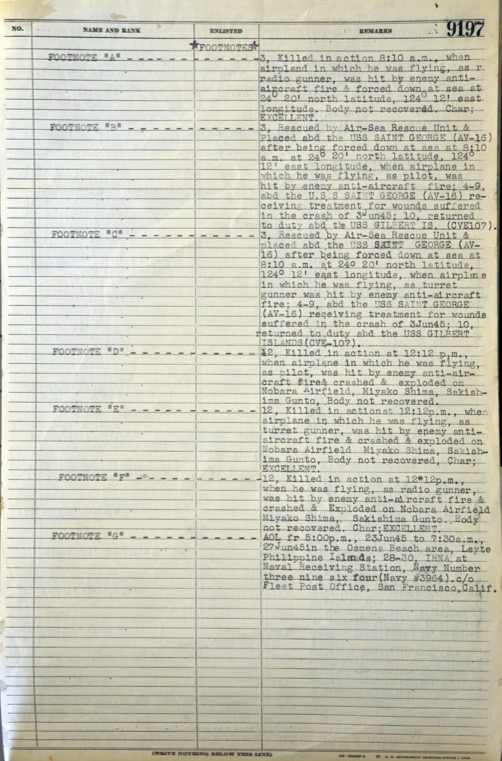
Kelvern ‘KO’ Misamore was killed in action when his TBM was shot down June 12, 1945. Details can be found in the Operations page. After the war, the US government went to Sakishima Gunto and recovered the remains of the crew. Now the three are buried together in a common grave at the Ft. Scott National Cemetery, Kansas. His nephew, Doug Misamore, sent pictures of KO, his two crewmen, and the obituary from his hometown paper The Republican Courier of Findlay, Ohio.

Arthur ‘Bill’ Patterson earned his wings in February, 1943. In May he was sent to Goleta, California where he joined newly created VMTB-134. After the training work-up, the squadron was sent to fight from bases on New Georgia, Bougainville and Green Island. In mid-1944, he was assigned to VMTB-143, sent to Goleta again, but this time to get carrier qualified. Sergeant Press Adams was in Bill’s crew and tells me he was an very, very good pilot and all around great guy. After the war, Bill started his own construction company and retired at the age of 79! Captain Patterson sent a nice set of pictures relating to his experience in VMTB-143 which can be seen in his gallery. I asked him how he got “Bill Patterson” from his given name “Arthur H. Patterson”. His reply: “Daddy said I was born on October 1 and arrived with the rest of the bills.”

Alfred ‘Eddie’ Seamands was a radio-gunner in VMTB-143. Eddie enlisted in January, 1943, and was assigned to VMTB-232, the “Red Devils”. After many combat missions in the Pacific, he was transferred to VMTB-143, and reported for training at MCAS Goleta, CA. Staff Sergeant Seamands was on the USS Gilbert Islands for the 1945 tour. Eddie sent some of his personal photos, and it’s a pleasure for us to present them here. After the war Eddie bought a floral shop and managed the business until he retired. Sergeant Seamands passed away December 8, 2007. Rest in peace, friend.

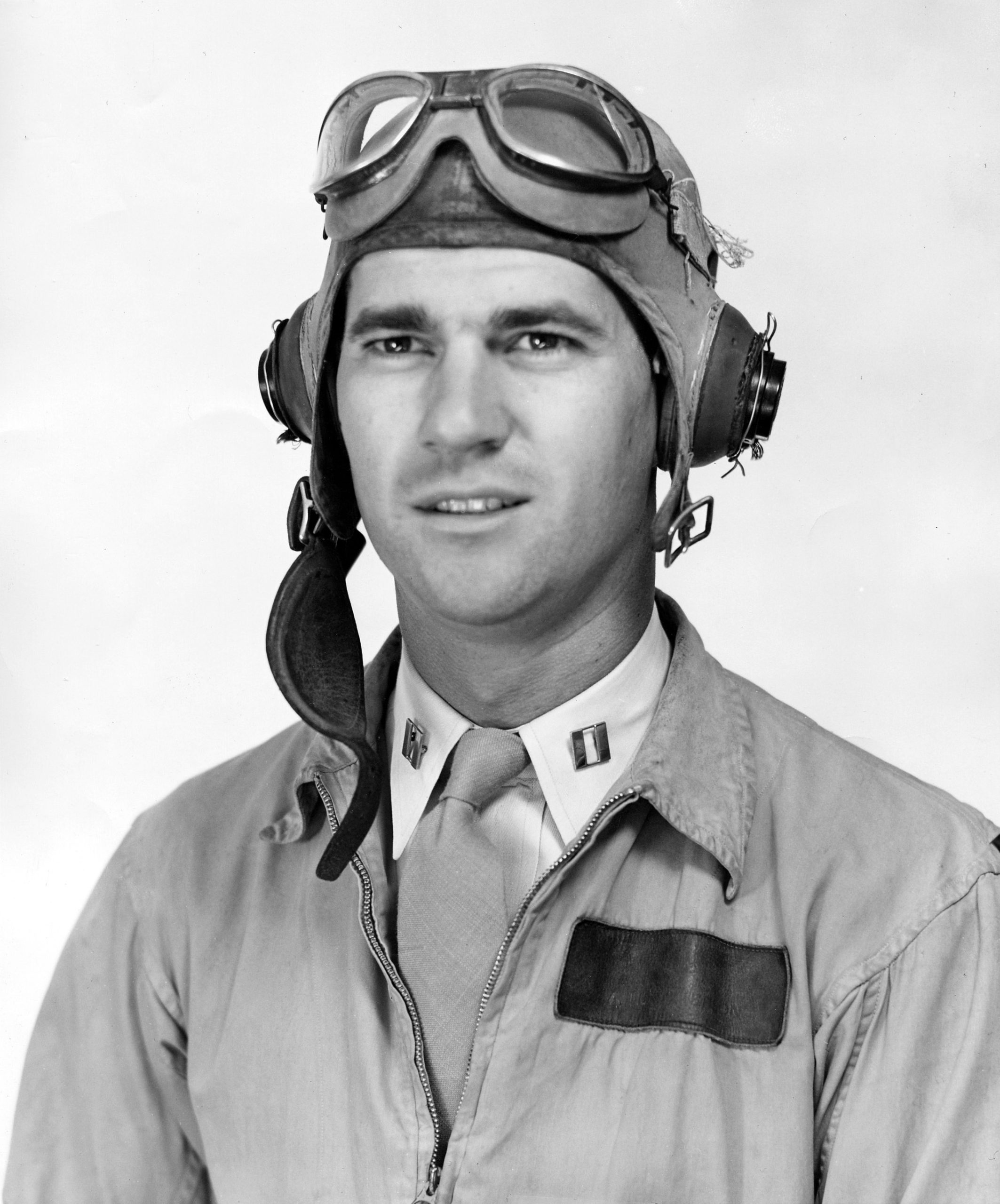
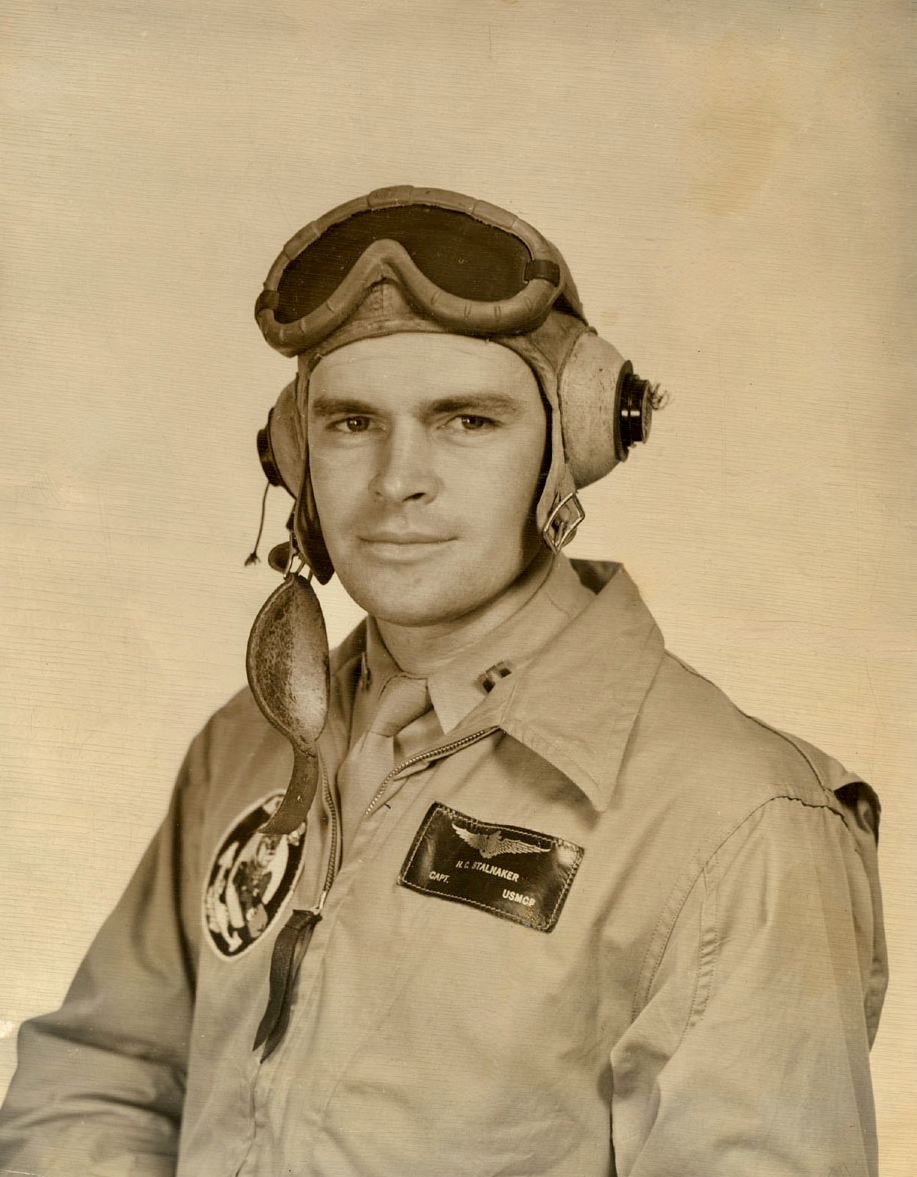
Henry ‘Casey’ Stalnaker was a TBM pilot and flight leader aboard the USS Gilbert Islands. His daughter Sheryl McDonald sent a large contribution of several photo albums and service papers. I would be remiss if I did not mention Dan Rapp, who researched the 1943-44 history of the squadron, and Sheryl’s uncle Mike Geremia. Dan and Mike contributed to this page – thank you. The tour of this material content takes you from 1939 to 1948 and touches on all his stops along the way. In June of 1939, Casey graduated from North Georgia College. He had already enlisted in the Marines in April of the same year as a private. He served two years, then returned to civilian life where he worked as a brakeman for the Southern Railroad, earning the inevitable nickname ‘Casey’. In October of 1941, just before Pearl Harbor, he signed up again, but this time went to flight school, earning his wings in 1942. After TBM training at Ft. Lauderdale, Casey was sent to the Solomon Islands as part of VMTB-143. When VMTB-143 reformed in June of 1944 in Goleta, California, he stayed in the squadron and was named Executive Officer, a post he held until war’s end. After the war, now Captain Stalnaker, returned to civilian life and a job on the railroad. This was not the life for him so he resigned his commission in the Reserves and joined the regular Marines. His new rank was Staff Sergeant and he was sent to Quantico where he died tragically in an airplane accident Dec 2, 1948 while a passenger observing close air support exercises. Sheryl, Mike, Dan and I are pleased to present this collection of his photos and papers.

Con Ward sent a few pictures including one from a 1990’s reunion. One shows some of the Sergeants from VMTB-232 who were later assigned to VMTB-143. It’s a great shot of some long-time buddies enjoying each other’s company. What could be better? I was delighted to receive one of the reunion T-shirts from Con. I’m wearing it in the photo on the About page.

Morgan Webb was a Guadalcanal veteran and one of the flight leaders in VMTB-143 on the USS Gilbert Islands cruise. Morgan was called up for Korean service, like many WW2 vets who were in the reserves, and there he commanded VMF-113. There’s a picture of Major Webb from this later period on his photo gallery. After the war, Morgan earned a degree in botany and taught at the collegiate level until he retired. Morgan passed away several years ago. His widow Mrs. Eugenia Webb kindly sent some photos for the web site.

Francis ‘Frank’ Whalen entered the Service in 1942. He earned his wings in October, 1943 at Corpus Christi, Texas. Before being assigned to VMTB-143, he spent time at the Naval Air Stations in Deland, Florida and San Pedro, California. Lieutenant Whalen sent some pictures home during his training days in Goleta, California, and while aboard the carrier. They were annotated at the time which makes them a valuable part of the historical record. They were sent to me courtesy of his daughter Carol Restivo and wife Margaret.

John Worlund was already in the Marines when the war started. He went to flight school in early 1942 earning his wings the same year. John served in VMTB-143 in the Solomons campaign before being sent to Goleta, California in June of 1944 as the squadron was reformed. He became the Commanding Officer on January 2, 1945. This was a position he held until after the Japanese surrender. John stayed in the Marine Corps after the war and specialized in flying photo-reconnaissance. His reconnaissance planes included the F4U-5P Corsair, F7F-3P Tigercat, and the F2H-2P Banshee. In the Banshee, he flew secret missions over China and Russia from Korean base K-3 during and after the Korean War. He retired in May 1964.

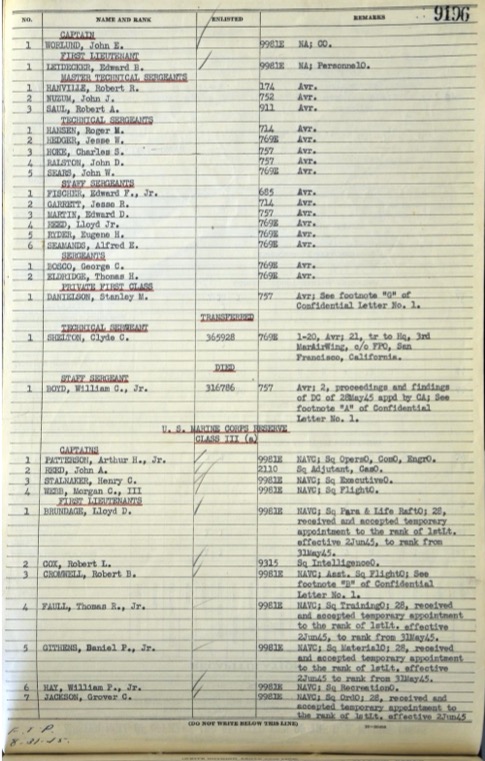
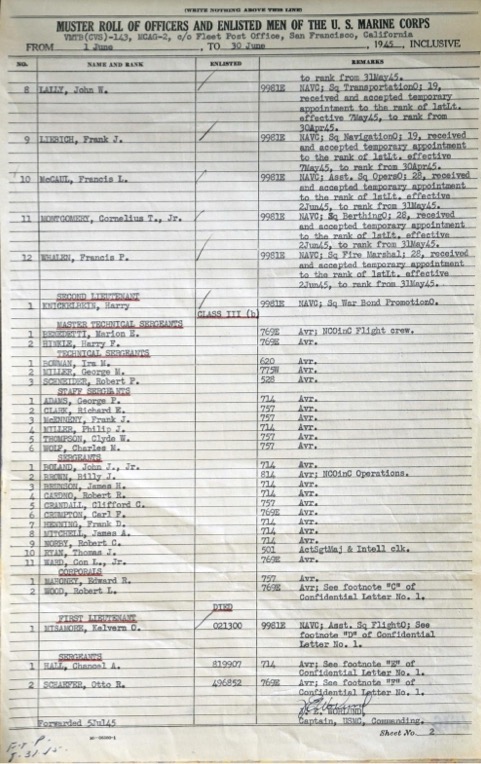
Here is the Muster Role from June 30, 1945 listing the men associated with VMTB-143, their rank, position and special notes about them.

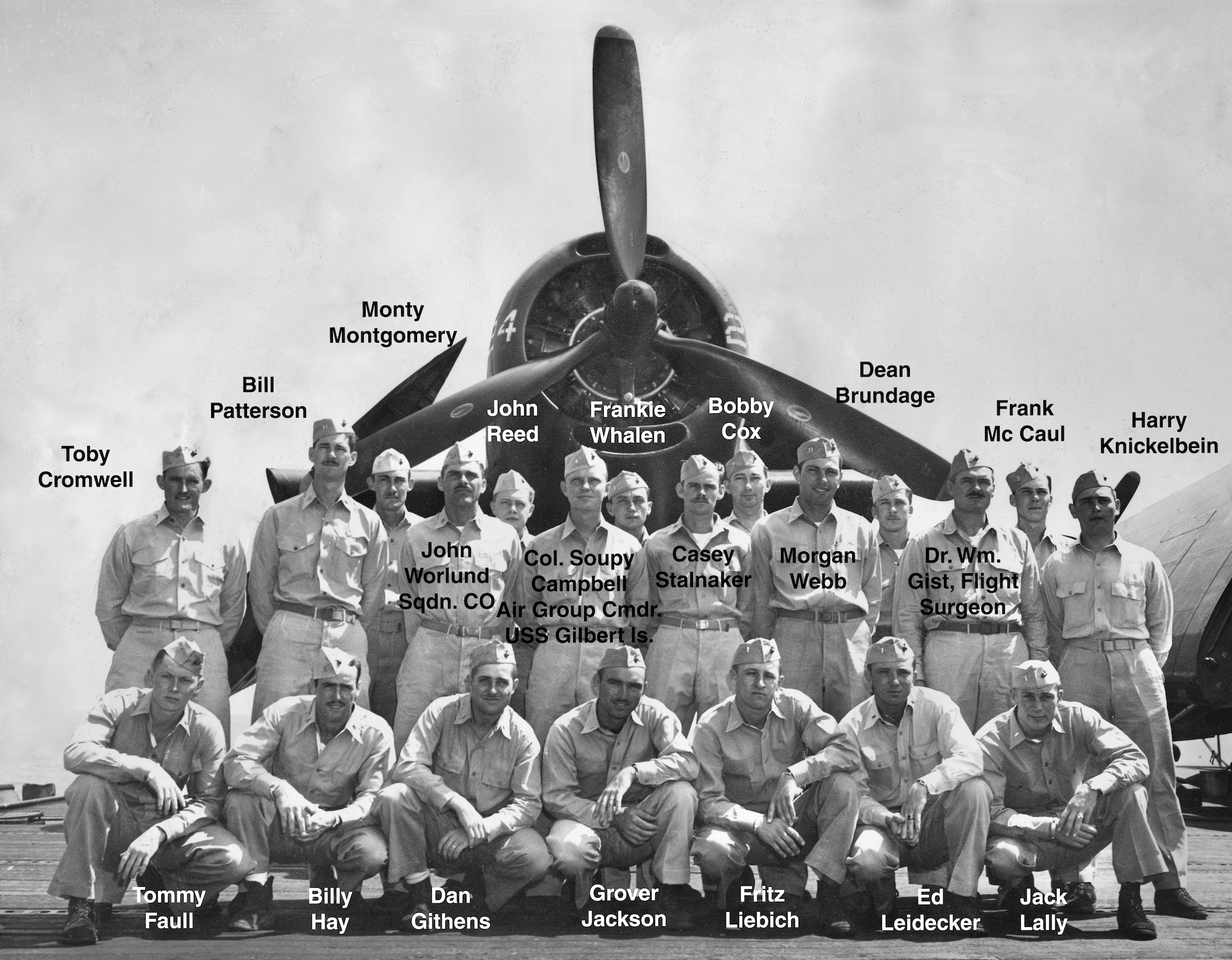
This is a photo of the 21 Officers of VMTB-143 named.  It includes Colonel Campbell who is the Commander of the entire Air Group.  Squadron VMTB-143 Commanding Officer, Captain John E. Worlund, was one of the original pilots of the squadron when it was first commissioned on 7 September 1942, and is, therefore, one of the first Marine torpedo bomber pilots.  He is generally recognized as one of the most outstanding torpedo bomber pilots in the Marine Corps.

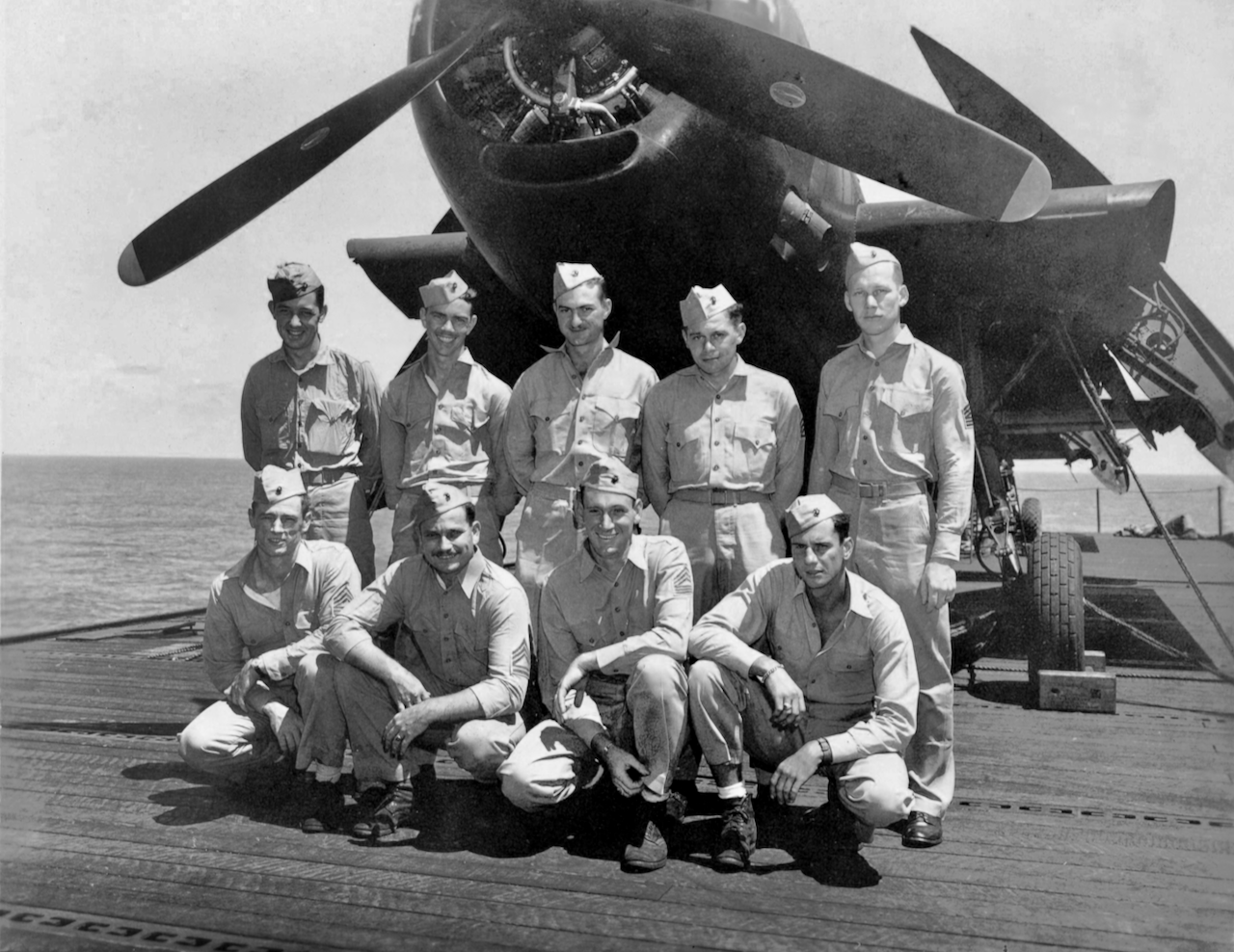
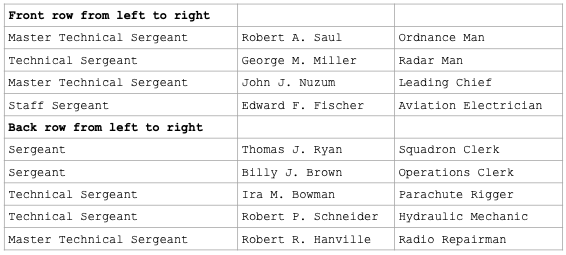
All but nine of the enlisted men were flight crew for the TBMs, and all but three were Sergeants. The total number of enlisted men assigned to VMTB-143 during the cruise of the USS Gilbert Islands comprises 41 aircrew and 9 support personnel.   Here is a picture of the nine support personnel and their names, ranks, and duties.

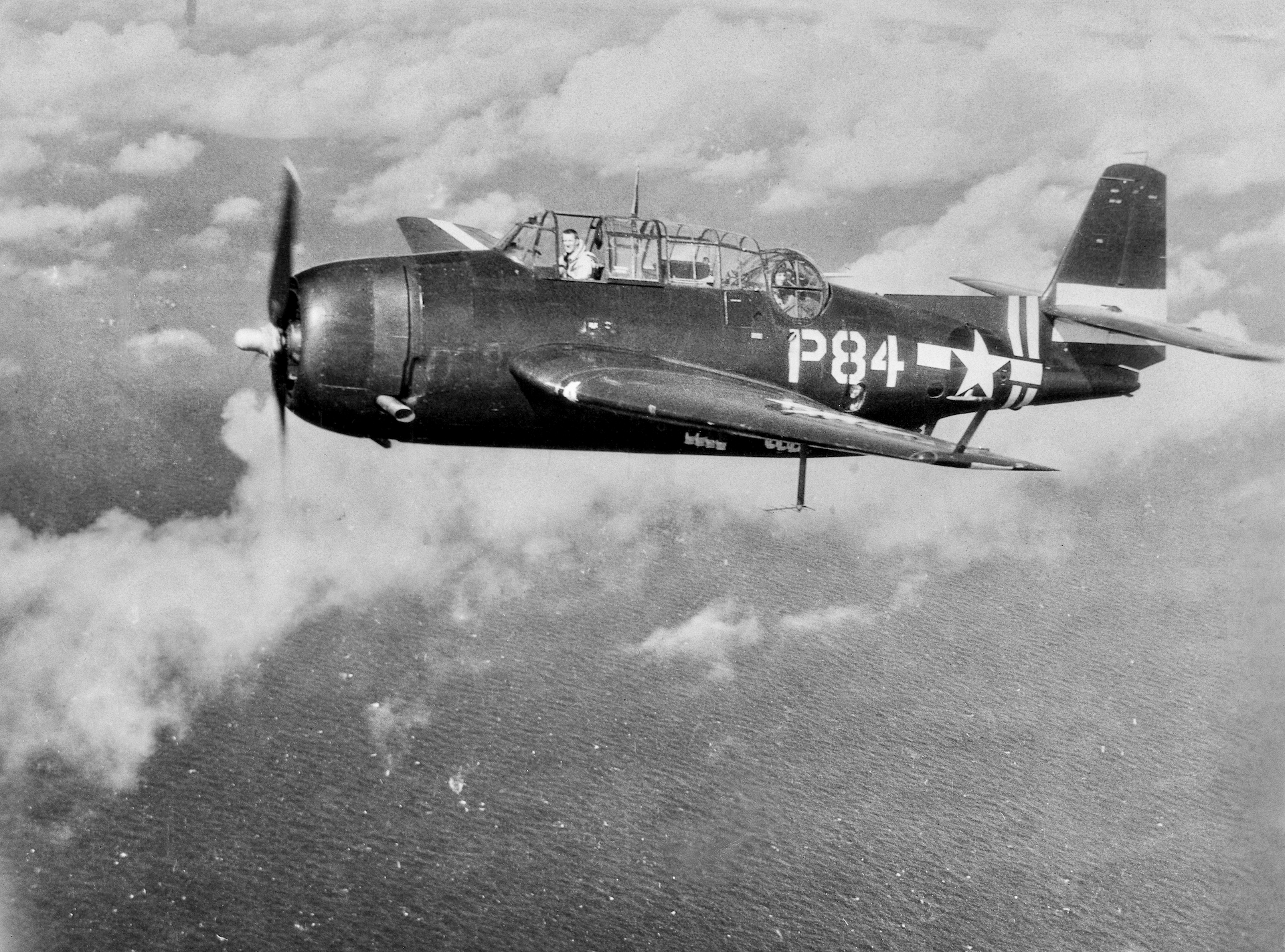
In this photo you can get an idea of the size of the Avenger and can see all three of the aircrew.  If you zoom into the window below the number 8 you will see the radioman- gunner who also manned the tail belly gun.

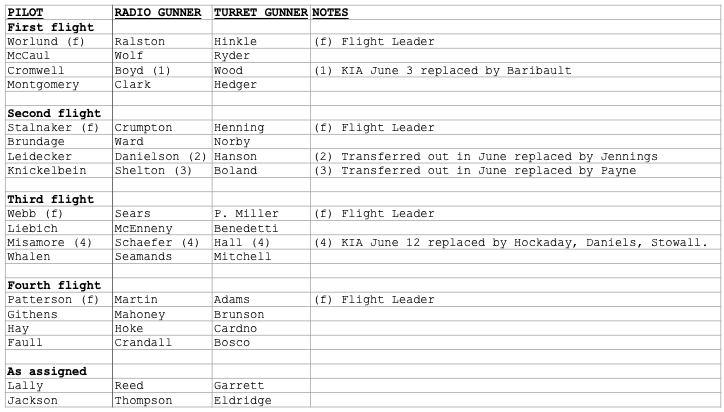
Here is how the aircrews were typically organized into flights.  As you can see, there were some personnel lost in combat.  Please refer to the Operations page for more details on those incidents. 

The squadron was active during this final phase of the war, during which they provided close air support during the Battle of Okinawa from May to July 1945. After that they also supported the Australian 7th Division during the Battle of Balikpapan in Borneo. Please refer to the Operations page for more details on their actions.  On December 6, 1945, after nine months at sea, the USS Gilbert Islands steamed into port and was berthed alongside the San Diego Naval Air Station, CA. The squadron returned to Marine Corps Air Station El Toro, CA and was deactivated on March 10, 1946 as part of the post war drawdown of forces.